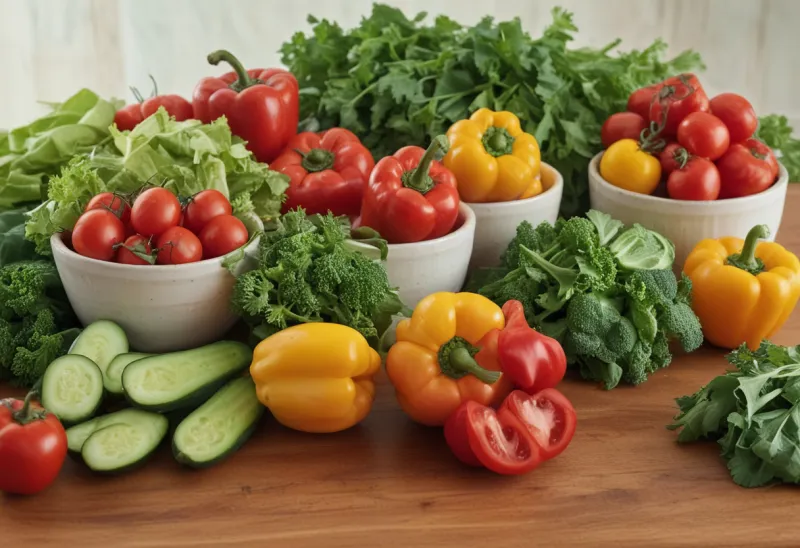
Can you really eat more food and still lose weight?
Yes — and it isn't a trick. The volumetrics diet is built on one solid, well-studied idea: energy density. Foods that carry few calories per gram (mostly because they're full of water and fibre) let you eat a big, satisfying volume for relatively few calories. In a controlled trial, lowering the energy density of meals let women eat a larger weight of food, report less hunger, and lose more weight over a year than a standard calorie-cutting diet (Ello-Martin et al., 2007). You're not eating less food — you're eating different food.
The practical version is a simple volumetrics diet food list sorted into four categories by calorie density, so you know what to pile high and what to keep small.
Eating big, low-calorie plates — what would keep you fullest?
Browse the rangeThe volumetrics food list: 4 categories
| Category | Energy density | Examples | How to use |
|---|---|---|---|
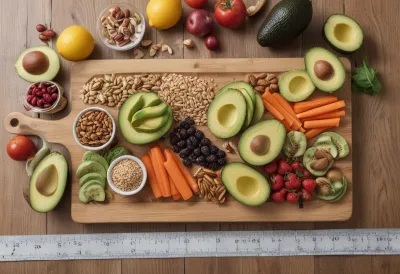
| 1 — Very low | < ~0.6 kcal/g | Non-starchy veg, broth soups, salad greens, most fruit | Eat freely; build the plate base |
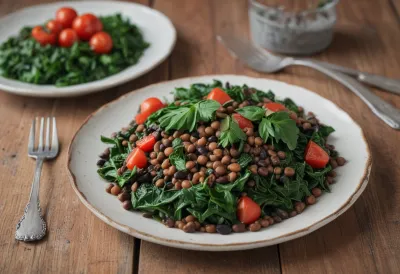
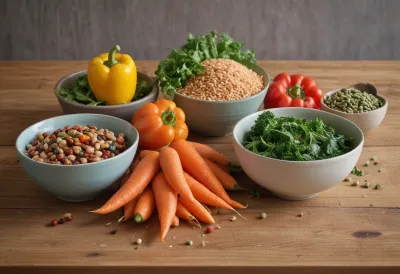
| 2 — Low | ~0.6–1.5 kcal/g | Whole grains, legumes, lean protein, low-fat dairy, starchy veg | Generous portions |
| 3 — Medium | ~1.5–4 kcal/g | Bread, cheese, lean meats, dried fruit | Moderate, mind the size |
| 4 — High | > ~4 kcal/g | Oils, butter, nuts, crackers, chocolate, fried food | Small amounts, used as flavour |
The goal isn't to ban category 4 — fats and nuts have real nutritional value — it's to make categories 1 and 2 the bulk of the plate so the total calories drop while the volume (and your fullness) stays high.
Why energy density beats willpower
Here's the mechanism in plain terms: people tend to eat a fairly consistent weight of food per day, somewhat regardless of its calories. So if you lower the calories-per-gram, you naturally eat fewer total calories while feeling just as full. In lean and normal-weight women, simply varying a meal's energy density changed how many calories they ate without changing how full they felt (Bell et al., 1998). That's the whole game — fill the volume cheaply.
Practical calorie-density swaps
These are the everyday swaps that make volumetrics effortless:
- Add water-rich bulk: stir extra vegetables or beans into pasta, rice, soups and stir-fries to cut the dish's calorie density.
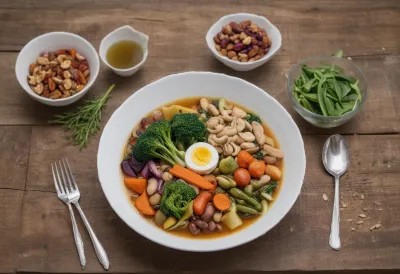
- Start with soup or salad: a broth-based starter takes the edge off appetite before the calorie-dense main.
- Swap dried for fresh fruit: fresh grapes for raisins, fresh apple for fruit leather — same flavour, far more volume.
- Stretch high-cal foods: keep cheese, oils and nuts, but use them as accents, not the base.
- Choose intact over refined grains for more fibre and slower digestion.
Protein and fibre are the two nutrients that make volume eating stick. Protein is the most filling and thermogenic macro, so a scoop of OstroVit 100% Whey Protein 700g Biscuit Dream or ICONFIT Whey Protein 80 Strawberry 1kg keeps a low-calorie plate satisfying — see protein. And viscous fibre slows digestion and boosts fullness; if your day is light on plants, 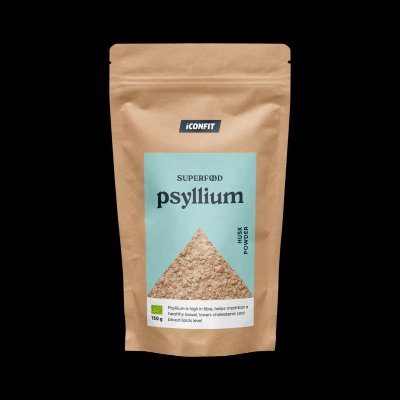 ICONFIT Superfoods Organic Psyllium Husk Powder€8.90 In stock 150g is an easy top-up. Browse fibre.
How to build filling plates without feeling deprived
The trick to enjoying volumetrics long-term is abundance, not restriction. Build every plate so half (by volume) is category-1 vegetables and fruit, a quarter is category-2 protein, and a quarter is category-2 whole-food carbs — then add a small flourish of category-3 or -4 for flavour. You end up with a big, colourful plate that feels generous, not punishing. That psychological framing is a real reason volumetrics tends to be sustainable: nobody sticks with feeling hungry.
What the science actually says
Volumetrics rests on some of the cleanest evidence in weight management. Year-long trial data show that reducing dietary energy density let people eat more total food, feel less hungry, and lose more weight than a comparison diet (Ello-Martin et al., 2007), and short-term lab work pins down the mechanism: energy density drives intake even when fullness ratings don't change (Bell et al., 1998). It also dovetails with the whole-food message — people overate by ~500 kcal/day on ultra-processed food despite matched macros (Hall et al., 2019), and ultra-processed foods tend to be energy-dense.
The honest limits: "eat more, lose weight" is true within reason — you still can't ignore total calories, and drowning category-1 veg in oil or cheese erases the benefit. Volumetrics is a strategy for easier adherence, not a license to ignore energy balance. As always, this is general information, not medical advice.
Practical takeaways
- Build plates from low-energy-density foods (categories 1–2) to eat more for fewer calories.
- Water and fibre, not magic, drive the fullness.
- Keep category-4 foods as flavour accents, not the base.
- Add protein and fibre to make low-calorie plates genuinely satisfying.
MaxFit (maxfit.ee) stocks protein and fibre to round out a volumetrics approach — but a big plate of water-rich whole foods does the real work.
References
Ello-Martin, J. A., Roe, L. S., Ledikwe, J. H., et al. (2007). Dietary energy density in the treatment of obesity: a year-long trial comparing 2 weight-loss diets. American Journal of Clinical Nutrition, 85(6), 1465–1477. https://pubmed.ncbi.nlm.nih.gov/17556681/
Bell, E. A., Castellanos, V. H., Pelkman, C. L., et al. (1998). Energy density of foods affects energy intake in normal-weight women. American Journal of Clinical Nutrition, 67(3), 412–420. https://pubmed.ncbi.nlm.nih.gov/9497184/
Hall, K. D., Ayuketah, A., Brychta, R., et al. (2019). Ultra-processed diets cause excess calorie intake and weight gain. Cell Metabolism, 30(1), 67–77.e3. https://pubmed.ncbi.nlm.nih.gov/31105044/
FAQ
What foods are on the volumetrics list?
Foods are sorted into four energy-density categories. Category 1 (non-starchy veg, broth soups, most fruit) and category 2 (whole grains, legumes, lean protein, low-fat dairy) form the bulk; categories 3 and 4 (cheese, bread, oils, nuts, chocolate) are used in smaller amounts.
Does volumetrics actually work for weight loss?
The evidence is strong: lowering meal energy density let people eat more food by weight, feel less hungry, and lose more weight over a year than a standard diet (Ello-Martin et al., 2007). It works by making a calorie deficit feel less restrictive.
Can I eat unlimited low-density food?
Almost — but total calories still count. Category-1 foods are very hard to overeat, yet adding lots of oil, cheese or sugar to them raises the energy density and cancels the advantage, so keep the high-calorie extras small.