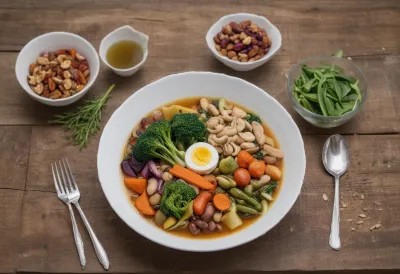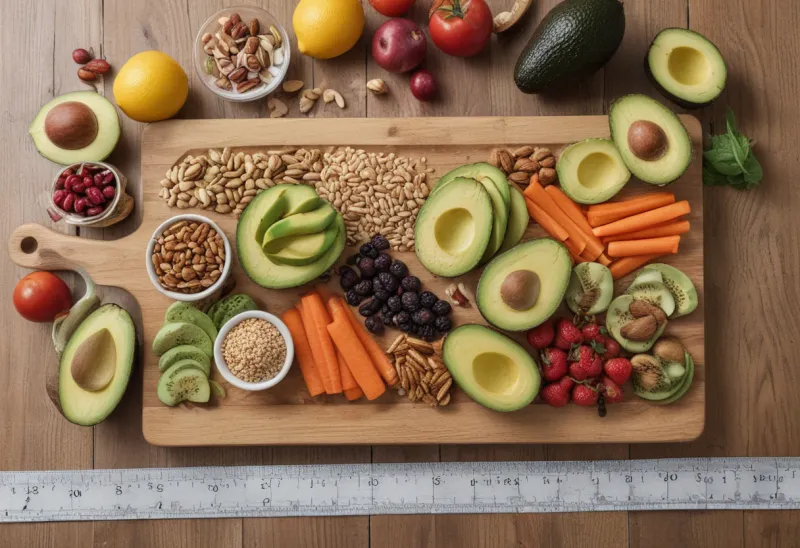
So which one actually burns more fat?
Here's the answer the diet wars don't want you to hear: when calories and protein are matched, high-carb low-fat and low-carb high-fat lose almost identical amounts of fat. In the year-long DIETFITS trial — 609 adults randomised to a healthy low-fat or healthy low-carb diet — weight loss differed by a statistically insignificant ~0.7 kg, and neither genetics nor baseline insulin levels predicted who did better (Gardner et al., 2018). The macro split is not the lever most people think it is.
That doesn't mean the two approaches feel the same, suit the same people, or perform the same in the gym. The interesting part is the details.
Whichever carb-to-fat split you pick — what would support your fat loss most?
Browse the rangeSame fat loss — so what actually differs?
Think of it as two routes to the same destination: a calorie deficit. Each route has different scenery.
| Factor | High-carb, low-fat | Low-carb, high-fat |
|---|---|---|
| Fat loss (calories matched) | Roughly equal | Roughly equal |
| Early scale drop | Slower | Faster (water/glycogen) |
| Hunger | Varies by person | Often lower for some |
| High-intensity training fuel | Strong | Can blunt top-end work |
| Fat oxidation at rest | Lower | Higher |
| Best fit | Big trainers, endurance, carb-lovers | People who feel calmer on fewer carbs |
The "low-carb melts fat faster" feeling in week one is mostly glycogen and water leaving — real on the scale, not extra body fat. Over months, the body-fat numbers converge.
Metabolic flexibility: the real concept under the hype
Low-carb does raise resting fat oxidation — your body burns more fat for fuel because you've given it less carbohydrate. That's genuine. But "burning more fat as fuel" is not the same as "losing more body fat." If calories are equal, the deficit — not the fuel mix — decides what comes off you.
The more useful idea is metabolic flexibility itself: a healthy body should be able to switch smoothly between burning carbs and burning fat depending on what you eat and how hard you train. You don't have to live at one extreme to build that adaptability. Plenty of people run a higher-carb week with a couple of lower-carb, lower-activity days and feel their best — using carbs to fuel the hard sessions and easing off on rest days. That kind of carb cycling captures much of what each camp claims, without forcing you to pick a side. The point isn't which macro is morally superior; it's matching your carbohydrate intake to your training demand for that day.
Where the difference becomes real: performance
This is where macros stop being interchangeable. In elite endurance athletes, a ketogenic low-carb high-fat diet raised fat oxidation but worsened exercise economy and erased the race-time improvement seen on high-carb diets (Burke et al., 2017). If you do hard intervals, sprints or heavy high-rep lifting, carbohydrate is the better fuel. For lower-intensity, steady work, the gap shrinks.
Who each approach suits
- Choose higher-carb, lower-fat if: you train hard or do endurance, you feel flat without carbs, and you can keep portions in check.
- Choose lower-carb, higher-fat if: carbs trigger overeating for you, you prefer fewer-but-bigger meals, and your training is mostly low-to-moderate intensity.
- Either way: keep protein high. Across both diets, protein is the constant that protects muscle and keeps you full.
A fat-loss assistant some people add is L-carnitine, which has a genuine role in transporting fatty acids into the mitochondria for burning — products like OstroVit L-Carnitine 1250 60caps or ICONFIT Capsules L-Carnitine 90caps are popular for that reason. The honest caveat: in trials the body-composition effect is modest, so treat it as a small helper, not a switch. Browse fat burners.
Don't forget protein and hydration
Whatever your carb-to-fat split, protein does the heavy lifting for body composition. A scoop of OstroVit 100% Whey Protein 700g Biscuit Dream or MyProtein Impact Whey Protein 1 kg Strawberry Cream makes hitting roughly 1.6 g/kg/day easy — see protein. And low-carb in particular flushes more water and electrolytes early on, so adding a balanced electrolyte mix can ease the "keto flu" fatigue.
What the science actually says
The big picture from controlled trials is consistent: macro ratio is a minor variable for fat loss once calories and protein match (Gardner et al., 2018). The thing that does reliably change intake is food quality — in a tightly controlled inpatient study, people ate ~500 kcal/day more on ultra-processed food despite identical macros (Hall et al., 2019). So "low-carb vs high-carb" matters far less than "mostly whole foods vs mostly processed."
Performance is the real fork in the road: high-carb wins for hard, glycolytic training (Burke et al., 2017), while low-carb shines for some people's appetite and steady-state energy. Pick the one you can actually stick to — adherence beats the macro math every time. None of this is medical advice; if you have a metabolic condition, plan diet changes with a clinician.
Practical takeaways
- For fat loss, the deficit and protein matter more than the carb-to-fat ratio.
- Low-carb's fast week-one drop is mostly water, not extra fat.
- For hard, high-intensity training, carbs are the better fuel.
- Choose the split you can sustain; food quality beats macro religion.
MaxFit (maxfit.ee) carries protein, electrolytes and L-carnitine to support either route — but the route you'll stick to is the one that wins.
References
Gardner, C. D., Trepanowski, J. F., Del Gobbo, L. C., et al. (2018). Effect of low-fat vs low-carbohydrate diet on 12-month weight loss in overweight adults. JAMA, 319(7), 667–679. https://pubmed.ncbi.nlm.nih.gov/29466592/
Burke, L. M., Ross, M. L., Garvican-Lewis, L. A., et al. (2017). Low carbohydrate, high fat diet impairs exercise economy and negates the performance benefit from intensified training in elite race walkers. The Journal of Physiology, 595(9), 2785–2807. https://pubmed.ncbi.nlm.nih.gov/28012184/
Hall, K. D., Ayuketah, A., Brychta, R., et al. (2019). Ultra-processed diets cause excess calorie intake and weight gain. Cell Metabolism, 30(1), 67–77.e3. https://pubmed.ncbi.nlm.nih.gov/31105044/
FAQ
Does low-carb burn more fat than high-carb?
It raises fat oxidation (you burn more fat for fuel), but it doesn't lose more body fat when calories and protein are matched — the year-long DIETFITS trial found only a non-significant ~0.7 kg difference (Gardner et al., 2018).
Why do I lose weight so fast on low-carb at first?
Most of that first-week drop is glycogen and the water bound to it leaving your body. It's real on the scale but it isn't extra fat, and the curves converge over the following months.
Which is better for the gym?
For hard intervals, sprints and high-rep lifting, higher-carb is the better fuel — a ketogenic diet worsened exercise economy in elite athletes (Burke et al., 2017). For low-to-moderate steady work the difference is small.