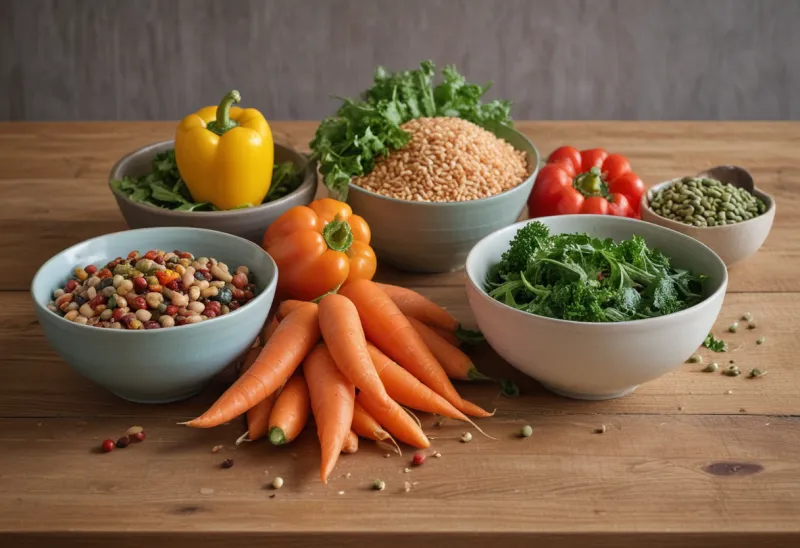
Can a week of eating really move your blood pressure?
The honest answer is: yes, more than most people expect — and faster. The DASH diet (Dietary Approaches to Stop Hypertension) is one of the most rigorously tested eating patterns in nutrition science, and the original controlled trial saw measurable blood-pressure changes within two weeks, with the full effect by week three to four (Appel et al., 1997). So a single well-built week won't "cure" anything, but it can start the trend — and it teaches you what the rest of the month should look like.
The DASH idea is simple: eat more vegetables, fruit, whole grains, legumes, low-fat dairy, fish, nuts and seeds, and dial back salt, red meat, sweets and ultra-processed food. The magic isn't one food — it's the pattern, which is naturally high in potassium, magnesium, calcium and fibre and low in sodium.
Building a DASH week — what would help most right now?
Browse the rangeA practical 7-day DASH meal plan
This sample week aims for roughly 1,500–2,300 mg sodium per day (the trial tested both an intermediate ~2,300 mg and a lower ~1,500 mg level) and leans hard on potassium- and magnesium-rich plants. Adjust portions to your own calorie needs.
| Day | Breakfast | Lunch | Dinner |
|---|---|---|---|
| Mon | Oats + berries + walnuts | Lentil & spinach salad | Baked salmon, quinoa, broccoli |
| Tue | Greek yoghurt + banana + seeds | Chickpea bowl, tomato, cucumber | Chicken breast, sweet potato, kale |
| Wed | Wholegrain toast + avocado + egg | Bean & vegetable soup | White fish, brown rice, courgette |
| Thu | Smoothie: spinach, kefir, frozen berries | Turkey & avocado wrap (wholegrain) | Tofu stir-fry, peppers, buckwheat |
| Fri | Overnight oats + chia + apple | Mixed-bean salad, olive oil | Baked cod, potatoes, green beans |
| Sat | Veg omelette + wholegrain bread | Quinoa tabbouleh + grilled chicken | Lentil dahl, brown rice, spinach |
| Sun | Cottage cheese + peach + almonds | Sardines on rye, tomato salad | Roast vegetables, chickpeas, bulgur |
Snacks across the week: unsalted nuts, plain yoghurt, fruit, raw veg sticks, a boiled egg. Drink water; if you train hard and sweat a lot, a balanced electrolyte mix helps you replace what you lose.
Why potassium matters as much as cutting salt
Most blood-pressure advice fixates on sodium, but potassium is the other half of the equation — it helps the body handle sodium and relax blood-vessel walls. A DASH week loaded with leafy greens, beans, potatoes, bananas and yoghurt naturally lifts potassium. That's the part many low-salt diets miss.
Magnesium: the quiet co-star
DASH is naturally magnesium-rich (greens, legumes, nuts, whole grains). Magnesium contributes to normal muscle function and normal nervous-system function (recognised EFSA health relationships), and many people simply run low. If your diet is patchy, a supplement such as OstroVit Magnesium Glycinate 90 Caps or BIOTECHUSA Magnesium + Chelate 60caps can help top up — but on a real DASH week, food does most of the work. Explore options in magnesium.
Meal-prep tips that make a DASH week actually happen
- Batch-cook a grain and a legume on day one (brown rice, lentils) — they slot into half your meals.
- Pre-chop vegetables so the "more plants" rule is effortless.
- Taste before you salt. Lemon, herbs, garlic and vinegar replace most of the salt you think you need.
- Read labels. Bread, sauces and deli meats hide huge sodium loads; one ultra-processed inpatient trial showed people ate ~500 kcal/day more on processed food despite matched macros (Hall et al., 2019).
- Protein each meal. Yoghurt, fish, beans and a scoop of whey like OstroVit 100% Whey Protein 700g Biscuit Dream make plates filling so you don't drift back to salty snacks. See protein.
What the science actually says
The foundational DASH trial fed 459 adults a controlled diet and found the full DASH pattern lowered systolic blood pressure significantly versus a typical American diet — without weight loss or salt restriction, and with the biggest effect in people who already had high readings (Appel et al., 1997). The follow-up DASH-Sodium trial then layered in salt: combining the DASH diet with the lowest sodium level produced the largest reductions of all (Sacks et al., 2001).
DASH overlaps heavily with the Mediterranean pattern, which in a large trial cut major cardiovascular events by roughly 30% over about five years in high-risk adults (Estruch et al., 2018). The takeaway is consistent: a plant-forward, lower-sodium, whole-food pattern is genuinely protective — far more than any single "superfood."
A fair caveat: DASH is a blood-pressure and heart pattern, not a weight-loss gimmick. It can support weight management because it's filling and whole-food based, but the real win is the cardiovascular pattern. None of this replaces medical care — if you take blood-pressure medication, change your diet with your doctor, not instead of them.
Practical takeaways
- Build the pattern, not a single perfect meal: plants, whole grains, legumes, fish, low-fat dairy, nuts.
- Cut sodium and raise potassium — both matter.
- Give it two to four weeks before judging; the original trial needed that long.
- Use food first; supplements (magnesium, protein, electrolytes) fill gaps, not the foundation.
MaxFit (maxfit.ee) stocks magnesium, protein and electrolyte options if you want to round out a DASH week — but the plate does the heavy lifting.
References
Appel, L. J., Moore, T. J., Obarzanek, E., et al. (1997). A clinical trial of the effects of dietary patterns on blood pressure. New England Journal of Medicine, 336(16), 1117–1124. https://pubmed.ncbi.nlm.nih.gov/9099655/
Sacks, F. M., Svetkey, L. P., Vollmer, W. M., et al. (2001). Effects on blood pressure of reduced dietary sodium and the Dietary Approaches to Stop Hypertension (DASH) diet. New England Journal of Medicine, 344(1), 3–10. https://pubmed.ncbi.nlm.nih.gov/11136953/
Estruch, R., Ros, E., Salas-Salvadó, J., et al. (2018). Primary prevention of cardiovascular disease with a Mediterranean diet supplemented with extra-virgin olive oil or nuts. New England Journal of Medicine, 378(25), e34. https://pubmed.ncbi.nlm.nih.gov/29897866/
Hall, K. D., Ayuketah, A., Brychta, R., et al. (2019). Ultra-processed diets cause excess calorie intake and weight gain. Cell Metabolism, 30(1), 67–77.e3. https://pubmed.ncbi.nlm.nih.gov/31105044/
FAQ
How quickly does the DASH diet lower blood pressure?
In the original controlled trial, blood pressure began dropping within about two weeks, with the full effect by three to four weeks (Appel et al., 1997). So a single DASH week starts the process; keep going for a month to see where you land.
Do I have to cut salt to almost nothing?
No. The DASH-Sodium trial tested two levels (~2,300 mg and ~1,500 mg/day). Both helped, and combining the lower sodium with the DASH pattern was best (Sacks et al., 2001). Aim lower than you do now rather than chasing zero.
Is DASH a weight-loss diet?
Not primarily. It's a blood-pressure and heart pattern that happens to be filling and whole-food based, so it can support fat loss in a calorie deficit — but its proven strength is cardiovascular, not the scale.