What do 30 days of the slow-carb diet actually get you?
Let's answer the question honestly first. People following the slow-carb diet for 30 days commonly report losing somewhere in the range of 2–5 kg, with a faster drop in the first week and a slower, steadier trend after. The catch: a meaningful chunk of that first-week loss is water and glycogen, not pure fat — and the real engine behind the results isn't anything exotic. It's a high-protein, high-fibre, legume-heavy way of eating that quietly puts most people in a calorie deficit without counting calories.
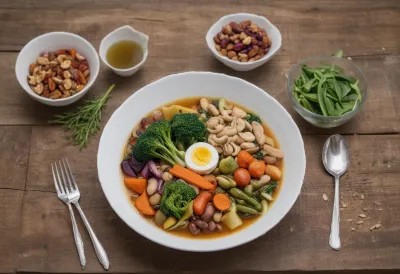
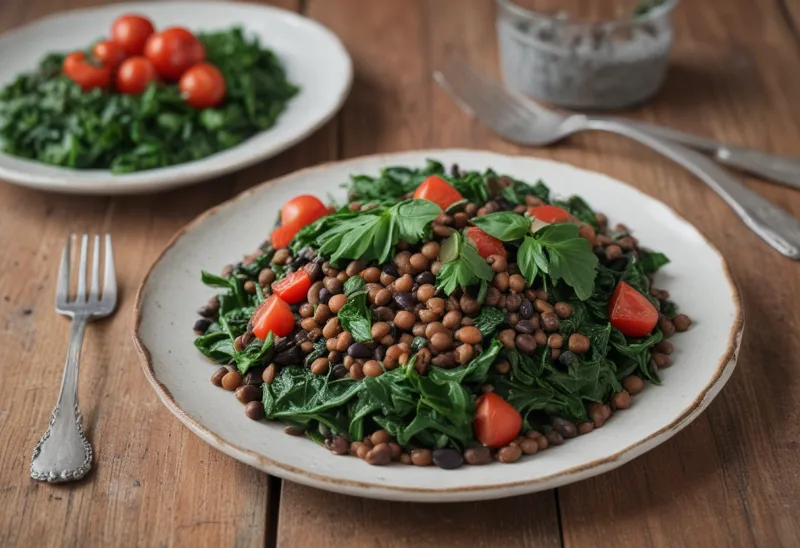
The slow-carb approach has a few simple rules: build meals from lean protein, legumes (beans, lentils) and vegetables; avoid "white" starchy carbs, fruit and dairy on the six dieting days; drink water and black coffee; and take one weekly "cheat day" where anything goes.
Starting a slow-carb deficit — what makes it stick for you?
Browse the rangeWhy the slow-carb structure works (when it works)
Strip away the branding and you find three evidence-backed levers doing the work:
| Lever | Why it drives results |
|---|---|
| High protein | Protects muscle in a deficit and is the most filling macro |
| Legumes + fibre | Slow-digesting, very satiating, steadies blood sugar |
| No "white" carbs | Removes the easiest-to-overeat calorie-dense foods |
| Repeatable meals | Less decision fatigue, fewer impulse calories |
The diet's clever trick is making a calorie deficit feel automatic. Beans and lentils are extremely filling per calorie, and a protein-forward plate keeps hunger low. In a tightly controlled study, people ate ~500 kcal/day more on ultra-processed food despite matched macros (Hall et al., 2019) — slow-carb essentially flips that by leaning on whole, slow-digesting foods.
The cheat day: smart or self-sabotage?
The weekly cheat day is the most argued-about feature. Its honest purpose is twofold: psychological (a release valve that makes six strict days sustainable) and a refeed that briefly tops up glycogen. For most people the sustainability angle is the real benefit — one indulgent day rarely undoes six disciplined ones. But it's also where progress stalls if "cheat" becomes a 5,000-calorie binge. Treat it as a planned meal or a generous day, not a free-for-all, and the weekly average stays in deficit.
There's a useful way to think about the maths. If six strict days leave you ~2,500 kcal under maintenance, you have a real buffer before a cheat day erases the week — but a genuinely unrestrained binge can wipe out a couple of thousand calories in a single sitting. So the cheat day isn't free; it's a budget. The people who get the best slow-carb results tend to keep the spirit of the rest day (a satisfying, normal-sized indulgence) without turning it into a contest. If a full cheat day reliably triggers a binge for you, a single planned cheat meal often delivers the same psychological relief with far less damage.
Realistic 30-day body-composition outcomes
Here's the nuance the before-and-after photos skip: how much of your loss is fat versus muscle depends mostly on protein and your rate of loss. In athletes, losing slowly (about 0.7% of body weight per week) actually added lean mass, while fast loss (1.4%/week) added none (Garthe et al., 2011). And with high protein plus training, people on a deficit gained 1.2 kg of lean mass while losing 4.8 kg of fat — real recomposition (Longland et al., 2016).
So the best slow-carb result isn't the biggest scale drop — it's losing fat while keeping muscle. That means hitting protein every day. A scoop of OstroVit 100% Whey Protein 700g Biscuit Dream or Scitec 100% Whey Protein Professional 2350g Coconut makes the daily target easy on busy days. Browse protein.
Don't overlook fibre and hydration
Slow-carb is naturally fibre-rich, which is great for fullness, but a sudden jump in beans can cause bloating — ease in, and supplemental fibre like ICONFIT Superfoods Organic Psyllium Husk Powder 150g can smooth the transition. See fibre. Because legume-heavy, lower-starch eating shifts your fluid balance, keep water and electrolytes up, especially in the first week.
What the science actually says
There's no large randomised trial of the exact slow-carb protocol, so the honest framing is: its results come from well-established principles, not a magic mechanism. High protein during a deficit preserves muscle and improves body composition (Longland et al., 2016); slower loss protects lean mass better than crash dieting (Garthe et al., 2011); and whole, less-processed food naturally curbs overeating (Hall et al., 2019). Put together, that's exactly why a legume-and-protein template tends to work.
The limits are equally honest: the cheat day can erase a week if it's extreme, dropping fruit and dairy isn't necessary for fat loss (it's a rule that simplifies choices, not a metabolic requirement), and the diet isn't superior to any other deficit you can actually stick to. None of this is medical advice — if you have a health condition, check with a clinician before big changes.
Practical takeaways
- Expect ~2–5 kg over 30 days, with week one inflated by water loss.
- The real drivers are protein, fibre and removing easy-to-overeat carbs.
- Lose slowly and keep protein high to retain muscle, not just lose weight.
- Keep the cheat day planned, not a binge, so the weekly average stays in deficit.
MaxFit (maxfit.ee) stocks protein, fibre and electrolytes to support a slow-carb month — but the bean-and-protein plate does the heavy lifting.
References
Hall, K. D., Ayuketah, A., Brychta, R., et al. (2019). Ultra-processed diets cause excess calorie intake and weight gain. Cell Metabolism, 30(1), 67–77.e3. https://pubmed.ncbi.nlm.nih.gov/31105044/
Garthe, I., Raastad, T., Refsnes, P. E., et al. (2011). Effect of two different weight-loss rates on body composition and strength in elite athletes. International Journal of Sport Nutrition and Exercise Metabolism, 21(2), 97–104. https://pubmed.ncbi.nlm.nih.gov/21558571/
Longland, T. M., Oikawa, S. Y., Mitchell, C. J., et al. (2016). Higher compared with lower dietary protein during an energy deficit combined with intense exercise promotes greater lean mass gain and fat mass loss. American Journal of Clinical Nutrition, 103(3), 738–746. https://pubmed.ncbi.nlm.nih.gov/26817506/
FAQ
How much weight can you lose on slow-carb in 30 days?
Many people see about 2–5 kg, but the first week is inflated by water and glycogen loss. The steady, fat-driven part of the trend shows up over weeks two to four, and depends on staying in a calorie deficit.
Does the cheat day ruin progress?
Not if it's a generous day rather than an all-out binge. Its real value is making six strict days sustainable; the weekly average is what matters, so keep one big day from undoing the other six.
Will I lose muscle on slow-carb?
You can protect muscle by keeping protein high and losing slowly — slower loss preserved lean mass in athletes (Garthe et al., 2011), and high protein in a deficit even built muscle while cutting fat (Longland et al., 2016).