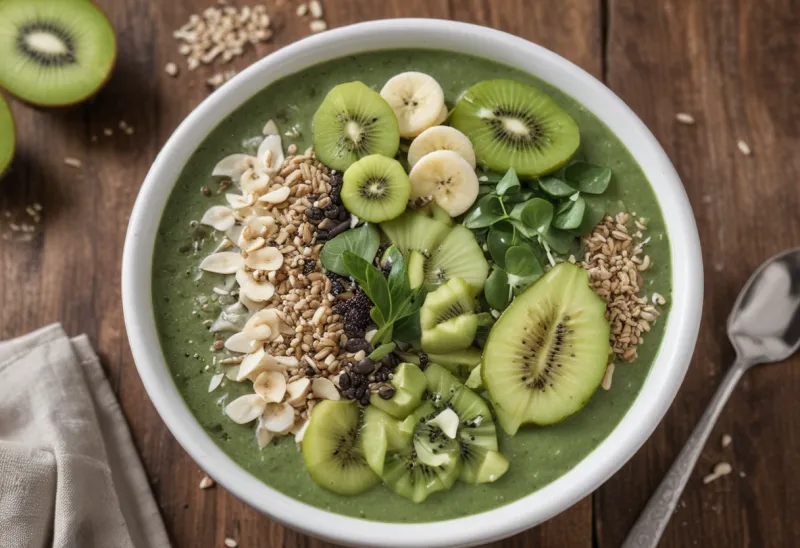
Vegan Protein Smoothie Bowl: 40g Plant Protein With Zero Animal Products
Can a plant-based bowl really hit 40 g of protein and still taste like dessert? Yes — and the honest secret is that it is mostly about stacking a few protein-dense plant ingredients rather than relying on fruit alone. A scoop of plant protein, some soy milk, frozen banana and a spoon of peanut butter will quietly push a single bowl well past 30 g, and a second scoop or some silken tofu takes you to 40 g.
The other half of the appeal is texture: a proper smoothie bowl is thick enough to eat with a spoon, not drink with a straw. Below is how to get that spoonable consistency, how to reach the protein number with no animal products, and what the science actually says about whether plant protein builds muscle as well as whey.
Building a 40g plant-protein bowl — which protein fits?
Browse the rangeThick enough to eat with a spoon, loaded with plants
The difference between a runny shake and a spoonable bowl is the frozen-to-liquid ratio. Use lots of frozen fruit and just enough liquid to let the blender catch. A reliable 40 g base:
- 1 frozen banana
- 1 cup frozen berries or mango
- 1–2 scoops plant protein
- 200 ml soy or pea milk (soy is highest in protein)
- 1 tbsp peanut butter or hemp seeds
- Optional: 100 g silken tofu for extra protein and creaminess
A scoop of BioTechUSA Vegan Protein 500g Forest Berries carries the protein load; for a meal-style bowl, OstroVit Vegan Meal Shake 1000g Strawberry adds protein plus carbs in one go. Blend thick, scrape into a bowl, and top with granola, seeds and fresh fruit.
The texture trick
Blend the frozen fruit first with the minimum liquid, stopping to scrape down rather than adding more milk. Every extra splash thins the bowl. If it seizes the blender, add liquid one tablespoon at a time. The goal is soft-serve, not a drink.
What the science actually says
The big question is whether plant protein builds muscle as well as animal protein. The reassuring answer: when total protein is matched, the source barely matters. In a 12-week trial, young men following a high-protein vegan diet and a protein-matched omnivorous diet at ~1.6 g/kg/day gained identical leg lean mass (1.2 vs 1.2 kg) with resistance training (Hevia-Larraín et al., 2021).
There is a nuance, though. Individual plant proteins are less anabolic gram-for-gram — they tend to have lower digestibility, less leucine, and lower lysine or methionine — but blending sources, using higher doses, and adding leucine closes most of the gap (Berrazaga et al., 2019). That is exactly why a smart vegan bowl combines soy, pea and seed proteins rather than leaning on one, and why a slightly larger scoop makes sense.
Dose still rules. Around 25–30 g of high-quality protein per serving maximally stimulates muscle protein synthesis, with under ~20 g blunting it (Paddon-Jones & Rasmussen, 2009), and leucine is the trigger amino acid at roughly 2.5–3 g per meal (Norton & Layman, 2006). A two-scoop, soy-milk, tofu-boosted bowl comfortably clears both thresholds.
Is a vegan smoothie bowl a complete meal?
With ~40 g protein plus the carbs from fruit and the fats from nut butter or seeds, it can be. Just make sure the protein is genuinely there — fruit and milk alone will not get you to 40 g, so the scoops and tofu do the heavy lifting.
Where the protein actually comes from
The most common mistake is assuming the fruit carries the bowl. It does not. Mapping the protein makes the 40 g target concrete:
| Ingredient | Approx. protein |
|---|---|
| 2 scoops plant protein | ~40 g (varies by blend) |
| 200 ml soy milk | ~7 g |
| 1 tbsp peanut butter | ~4 g |
| 100 g silken tofu | ~8 g |
| 1 frozen banana + berries | ~2 g |
In other words, the powder is the workhorse and everything else is supporting cast. If you only want one scoop, lean harder on tofu and soy milk to make up the difference. This is also why the choice of plant milk matters: soy milk carries several times the protein of almond or oat milk, so it quietly adds grams that almond milk simply cannot.
Toppings that add protein, not just crunch
The toppings are a chance to push the number higher rather than just decorate. Hemp seeds, pumpkin seeds and a spoon of peanut or soy granola each add a few grams. A scattering of soy nuts or a drizzle of tahini does the same. Fresh fruit and a little granola make it feel like a treat, but build at least one protein-bearing topping into every bowl so the garnish works for you.
Practical takeaways
- Stack protein sources: plant powder plus soy milk plus seeds or tofu, not fruit alone.
- Use soy or pea milk — soy carries the most protein of the plant milks.
- Blend frozen-first with minimal liquid for a spoonable, soft-serve texture.
- Aim for ~1.6 g/kg/day total protein; source matters little when the total is met (Hevia-Larraín et al., 2021).
- Blend plant proteins rather than relying on one to close the amino-acid gap. MaxFit stocks vegan protein in Estonia at maxfit.ee.
Browse plant protein for vegans, protein powders and whey isolates.
References
Hevia-Larraín, V., Gualano, B., Longobardi, I., et al. (2021). High-Protein Plant-Based Diet Versus a Protein-Matched Omnivorous Diet to Support Resistance Training Adaptations. Sports Medicine, 51(6), 1317–1330. https://pubmed.ncbi.nlm.nih.gov/33599941/
Berrazaga, I., Micard, V., Gueugneau, M., & Walrand, S. (2019). The role of the anabolic properties of plant- versus animal-based protein sources in supporting muscle mass maintenance: a critical review. Nutrients, 11(8), 1825. https://pubmed.ncbi.nlm.nih.gov/31394788/
Paddon-Jones, D., & Rasmussen, B. B. (2009). Dietary protein recommendations and the prevention of sarcopenia. Current Opinion in Clinical Nutrition and Metabolic Care, 12(1), 86–90. https://pubmed.ncbi.nlm.nih.gov/19057193/
Norton, L. E., & Layman, D. K. (2006). Leucine regulates translation initiation of protein synthesis in skeletal muscle after exercise. Journal of Nutrition, 136(2), 533S–537S. https://pubmed.ncbi.nlm.nih.gov/16424142/
FAQ
Does plant protein build muscle as well as whey?
When total protein is matched, yes. A 12-week trial found identical leg lean-mass gains on a vegan vs omnivorous diet at ~1.6 g/kg/day with training (Hevia-Larraín et al., 2021). Blending plant sources helps close the per-gram gap (Berrazaga et al., 2019).
How do I make a smoothie bowl thick enough to eat with a spoon?
Blend frozen fruit first with the minimum liquid, scraping down instead of adding more milk. Every extra splash thins it. Add liquid one tablespoon at a time only if the blender seizes.
How do I reach 40g protein in a vegan bowl?
Stack sources: one to two scoops of plant protein, soy milk, and optional silken tofu or seeds. Fruit and milk alone will not reach 40 g — the powder and tofu carry most of it.