Lecithin for Weight Management: Does It Work?
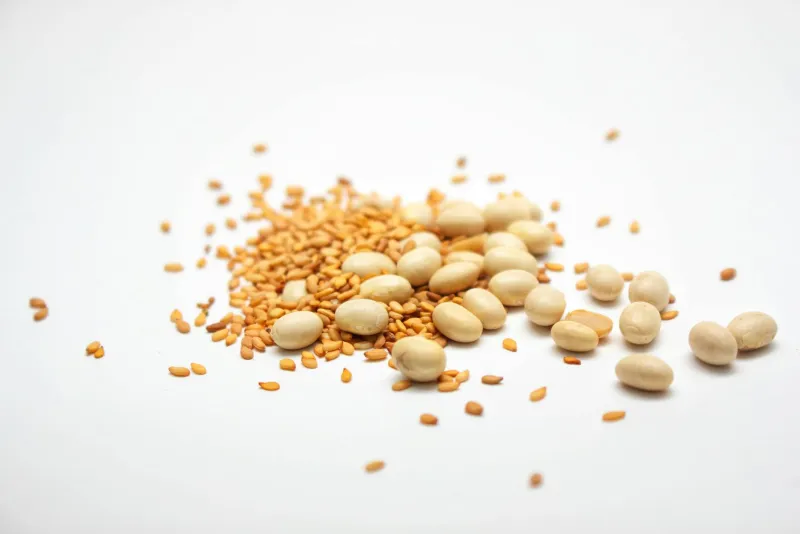
Lecithin is a natural mixture of phospholipids found in egg yolks, soybeans, sunflower seeds, and animal liver. It is one of the most widely sold supplements in health stores, where it is marketed for purposes ranging from liver support to improved memory and -- increasingly -- weight management. The reasoning sounds persuasive at first glance: lecithin helps the body emulsify fats, so surely it must help burn them. But does the evidence support lecithin for weight management?
This article examines the proposed mechanisms, what human clinical data actually show, realistic expectations, and what the stronger alternatives are.
The Proposed Mechanism
The active component underlying most lecithin health claims is phosphatidylcholine (PC), the most abundant phospholipid in soy and sunflower lecithin. PC is a structural component of all cell membranes and plays a central role in lipid transport and metabolism throughout the body.
Phosphatidylcholine is required for the assembly of very-low-density lipoproteins (VLDL) in the liver -- the particles that export triglycerides from liver cells into the bloodstream for use by peripheral tissues. A functioning PC cycle in the liver is essential for preventing hepatic fat accumulation (van der Veen et al., 2017). This is the core of the weight-management rationale: if PC supports fat export from the liver, perhaps supplementing with it could enhance fat mobilisation more broadly.
A secondary mechanism sometimes cited is that lecithin provides choline, a nutrient involved in the synthesis of the neurotransmitter acetylcholine, which plays a role in appetite signalling. However, the clinical evidence connecting choline supplementation to appetite or body weight is weak.
An Honest Look at the Evidence
There are no rigorous, well-powered randomised controlled trials demonstrating that lecithin supplementation reduces body weight or body fat in healthy adults. This is an important starting point.
Most of the research involving lecithin and fat metabolism concerns liver health rather than body weight. Phosphatidylcholine deficiency in animal models causes fatty liver disease, and supplemental PC has been studied for non-alcoholic fatty liver disease (NAFLD) in both animals and humans -- with some positive signals for liver fat reduction (Gundermann et al., 2011). However, reducing liver fat accumulation in a clinical condition is a different outcome from reducing total body fat in healthy people.
Some very small and methodologically limited studies have examined lecithin and lipid profiles in humans, but the results are inconsistent and the quality of evidence is low. There is no replicated finding from high-quality trials that lecithin promotes meaningful weight loss.
The emulsification argument -- that lecithin helps "break down" dietary fat -- is physiologically oversimplified. Bile acids (synthesised from cholesterol in the liver) are the primary emulsifiers of dietary fat in the gut, and supplemental lecithin does not meaningfully alter this process in healthy people with normal bile production.
Effect Sizes: What Can You Realistically Expect?
The honest answer is that there is no reliable human trial showing a meaningful effect size for lecithin on body weight or fat mass in healthy adults. Unlike chromium or evening primrose oil, where at least some small trials exist with mixed results, the direct body weight evidence for lecithin is essentially absent.
This does not mean lecithin is without biological value -- its role in liver function, cell membrane integrity, and nutrient transport is well established (van der Veen et al., 2017). But these are not the same as weight-loss effects.
Realistic Expectations
Lecithin is a nutritionally important compound that the body produces and obtains from food. It supports liver function and cell membrane health. As a weight management supplement, however, it should not be expected to produce measurable fat loss in healthy adults following a normal diet.
If you are interested in lecithin for liver support as part of a broader wellness routine, that is a different conversation with somewhat better (though still not definitive) evidence behind it. If weight management is your explicit goal, lecithin is not where your focus should be.
People with diets very low in choline (strict vegans who avoid soy products and eggs) may have a genuine reason to consider a lecithin supplement for choline adequacy, but this is a nutritional gap question, not a weight-loss question.
Better Levers for Weight Management
If you want to manage body weight effectively, the evidence hierarchy is clear and does not feature lecithin at the top:
Caloric awareness. Understanding your approximate daily energy intake and expenditure is the single most powerful tool for weight management. No supplement replaces this.
Protein intake. Protein is uniquely satiating. A diet providing adequate protein supports lean mass during a caloric deficit and reduces hunger between meals.
Structured physical activity. Both aerobic exercise and resistance training improve body composition through different but complementary mechanisms. Resistance training in particular helps maintain muscle mass during weight loss, which preserves metabolic rate.
Dietary fibre. Adequate fibre intake slows gastric emptying, blunts post-meal glucose and insulin spikes, and supports gut microbiome diversity -- all of which contribute to appetite regulation and metabolic health.
Consistency over perfection. Weight management is a long-term behaviour, not a short-term intervention. Supplements cannot substitute for consistent, sustainable habits. Browse the lecithin category at maxfit.ee for available products.
FAQ
Does lecithin help break down fat in the body?
Not in any proven or clinically meaningful way for healthy adults. The idea that lecithin emulsifies dietary fat to promote weight loss oversimplifies the biochemistry. Normal bile production in healthy individuals handles dietary fat emulsification effectively without supplemental lecithin.
Can lecithin reduce liver fat?
There is some evidence from cell studies and limited clinical research that phosphatidylcholine supplementation may support liver function and reduce fat accumulation in people with existing liver conditions (Gundermann et al., 2011). This is a different question from general weight management in healthy people, and should be discussed with a physician.
Is lecithin safe to supplement?
Lecithin from soy, sunflower, or egg sources is generally well tolerated and considered safe. The most commonly reported side effects at higher doses are digestive -- mild nausea, bloating, or loose stools. People with soy or egg allergies should check the source of their lecithin product carefully.
References
van der Veen, J. N., Kennelly, J. P., Wan, S., Vance, J. E., Vance, D. E., & Jacobs, R. L. (2017). The critical role of phosphatidylcholine and phosphatidylethanolamine metabolism in health and disease. Biochimica et Biophysica Acta -- Biomembranes, 1859(9 Pt B), 1558-1572.
Gundermann, K. J., Kuenker, A., Kuntz, E., & Drozdzik, M. (2011). Activity of essential phospholipids (EPL) from soybean in liver diseases. Pharmacological Reports, 63(3), 643-659. https://pubmed.ncbi.nlm.nih.gov/21857075/