Tribulus for Weight Management: Does It Work?
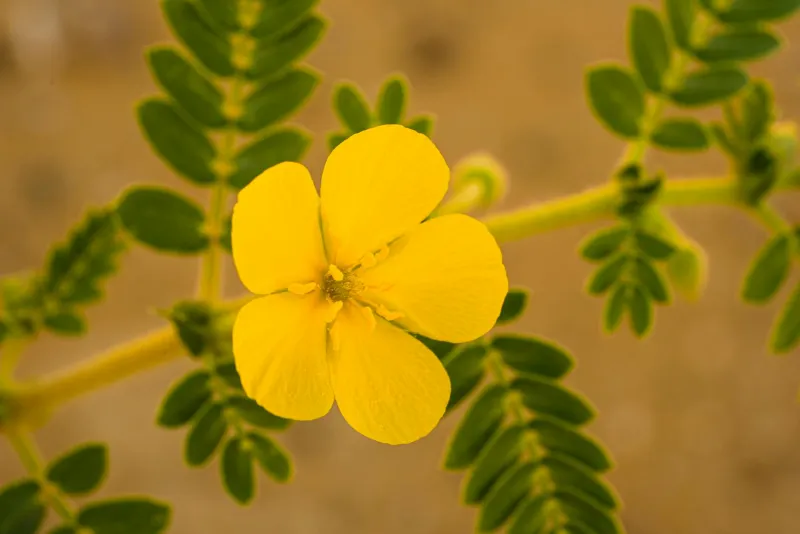
Tribulus terrestris appears in countless sports nutrition products aimed at body composition and weight management. The premise is attractive: a plant compound that naturally shifts hormones in a direction favorable for building lean mass and reducing body fat. The reality, as multiple controlled human trials have now demonstrated, is considerably less impressive.
This article walks through the proposed mechanism, what controlled studies have found, and how to set realistic expectations.
The Proposed Mechanism
Tribulus contains steroidal saponins, with protodioscin being the most studied compound. The theoretical mechanism works as follows: protodioscin stimulates the pituitary gland to release luteinizing hormone (LH); elevated LH signals the testes to produce more testosterone; higher testosterone then shifts body composition toward more lean mass and less adipose tissue; and more lean mass raises resting metabolic rate, which is the link nominally connecting tribulus to weight management.
Animal studies, primarily in rodents, have produced findings consistent with parts of this chain. The critical question is whether this translates to humans in a meaningful way.
What the Research Actually Shows
Testosterone: Null Results in Trained Humans
The most rigorous human trials on tribulus and testosterone have produced consistently null results.
Antonio et al. (2000) conducted one of the first well-controlled RCTs in this area, assigning resistance-trained men to tribulus or placebo for eight weeks alongside a structured training program (Antonio et al., 2000). Testosterone levels at study end did not differ significantly between groups. Lean body mass, fat mass, and exercise performance were also unchanged.
Rogerson et al. (2007) extended this work in elite rugby league players during a demanding five-week preseason program (Rogerson et al., 2007). Despite the physiological demands of elite training, neither testosterone nor body composition outcomes showed a meaningful advantage for the tribulus group over placebo.
These two RCTs are the most cited human studies on this topic, and their null findings have not been overturned by larger trials since.
Body Composition and Weight: No Clear Benefit
Alongside null testosterone findings, both key studies measured body composition directly. Neither found a significant reduction in fat mass or increase in lean mass attributable to tribulus supplementation. There is no well-controlled human trial showing that tribulus causes meaningful body weight or body fat reduction compared with placebo.
Effect sizes across the available human literature are consistently near zero for both testosterone and body composition outcomes. Even optimistic readings of the evidence do not support a clinically meaningful effect.
Realistic Expectations
If weight management is your primary goal, the current evidence does not support tribulus as a useful tool. It is unlikely to produce a measurable shift in fat mass, metabolic rate, or lean body mass when compared with placebo in a controlled setting.
Marketing language around "natural testosterone support" and "weight management" for tribulus outpaces the science. Human physiology is complex, and a compound that raises testosterone slightly in some animal models does not automatically translate into body composition changes in well-trained humans.
What Tribulus May Actually Be Used For
Some smaller studies and traditional-use data suggest potential applications in male sexual health and libido support. The evidence base here is also weaker than is often implied, and anyone with specific health concerns should consult a healthcare professional before using tribulus for this purpose.
For those who want to explore tribulus for its traditional uses, products such as SELF Tribulus Terrestris 100tabs, NOW Tribulus 1000mg 90tabs, ICONFIT Tribulus 90 caps, and MyProtein Tribulus 270caps are available at maxfit.ee. You can browse the full selection in the tribulus category.
Better Levers for Weight Management
The interventions with the most consistent human evidence for weight management include:
- Higher dietary protein intake: Supports satiety, preserves lean mass during a caloric deficit, and raises the thermic effect of feeding.
- Resistance training: Building and maintaining muscle mass raises resting metabolic rate in a meaningful and sustained way.
- Consistent energy management: Managing caloric intake relative to expenditure remains the most robustly supported approach to long-term weight control.
These approaches are less novel than a plant-based hormone modifier, but they are what the evidence consistently supports over years of controlled research.
Honest Verdict
Tribulus terrestris does not have convincing human evidence supporting its use for weight management. The proposed mechanism depends on a testosterone-raising effect that has not been demonstrated in controlled trials with trained individuals. Focusing on protein intake, resistance training, and managing energy balance will produce far more reliable results than tribulus supplementation.
FAQ
Can tribulus help with fat loss?
Based on the controlled human RCTs available, there is no significant effect of tribulus on fat mass. Both major trials found no difference in body fat between tribulus and placebo groups after training programs lasting five to eight weeks.
What dose of tribulus is used in research?
Human studies have tested a range of doses. The exact amounts varied across trials and neither end of the studied range produced consistent results on testosterone or body composition, so dose does not emerge as a clear factor explaining outcomes.
Are there any safety concerns with tribulus?
Short-term use at studied doses has generally been well tolerated in the trials reviewed. Because the hormonal effects are unproven but theoretically possible, anyone with hormone-sensitive conditions or who is taking medications should speak with a physician before starting tribulus.
References
Antonio J, Uelmen J, Rodriguez R, Earnest C. (2000). The effects of Tribulus terrestris on body composition and exercise performance in resistance-trained males. Int J Sport Nutr Exerc Metab, 10(2), 208-215. https://pubmed.ncbi.nlm.nih.gov/10861339/
Rogerson S, Riches CJ, Jennings C, Weatherby RP, Meir RA, Marshall-Gradisnik SM. (2007). The effect of five weeks of Tribulus terrestris supplementation on muscle strength and body composition during preseason training in elite rugby league players. J Strength Cond Res, 21(2), 348-353. https://pubmed.ncbi.nlm.nih.gov/17530942/