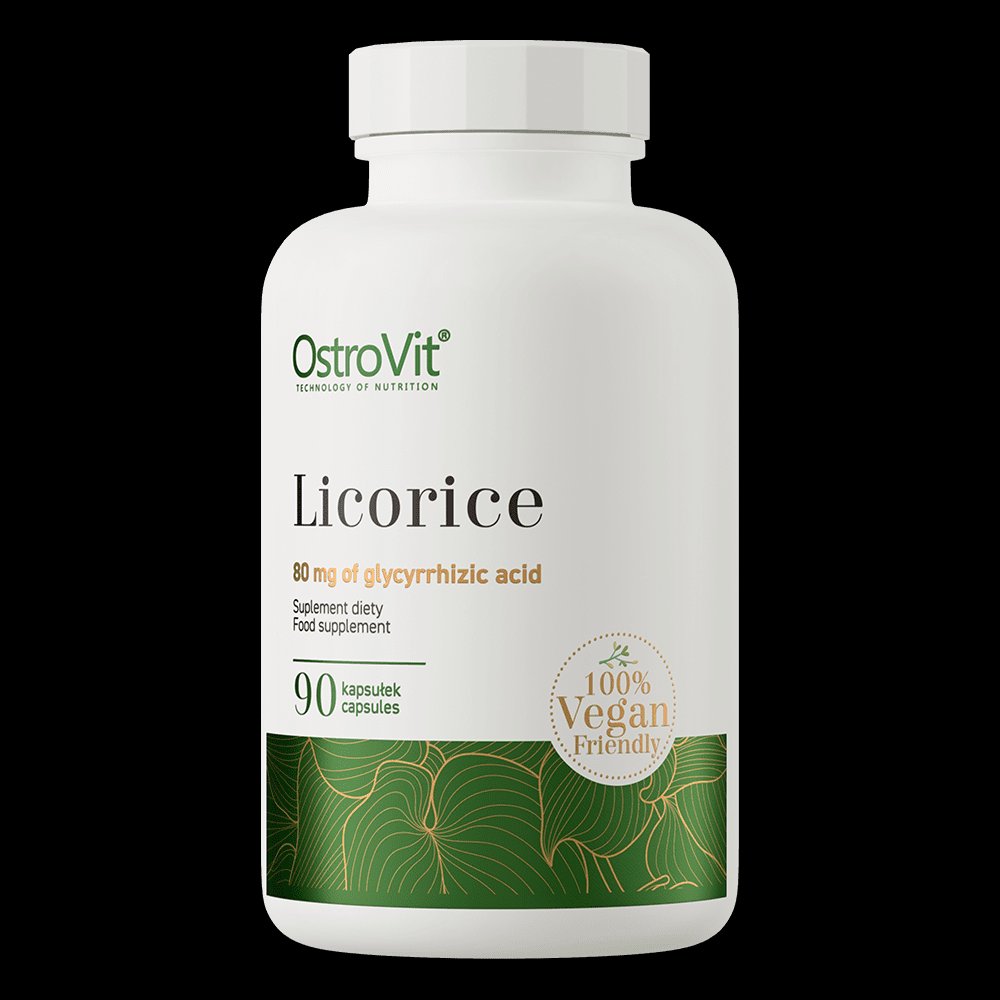
Liquorice root (Glycyrrhiza glabra) is an ancient medicinal herb used for thousands of years to support digestion, soothe respiratory passages, and maintain adrenal health. Its primary active compound, glycyrrhizin, is up to 50 times sweeter than sucrose and possesses anti-inflammatory and antioxidant properties. Liquorice root extracts are available today in supplements in both DGL (deglycyrrhizinated) and full-spectrum forms, depending on the intended purpose.
DGL (deglycyrrhizinated liquorice) has had glycyrrhizin removed, which in large amounts can raise blood pressure. DGL is suitable for long-term digestive support, such as protecting the stomach lining from acid reflux. Regular liquorice extract contains glycyrrhizin and is better for adrenal and respiratory support but is not recommended for prolonged use.
Yes, liquorice root supports digestion in several ways. The DGL form protects the stomach lining by promoting mucus production, creating a protective barrier against stomach acid. Studies show DGL alleviates heartburn and functional dyspepsia. The recommended dose is 380-760 mg of DGL extract taken 20 minutes before meals.
DGL can be safely taken at 380-760 mg up to three times daily. For liquorice with glycyrrhizin, no more than 100 mg glycyrrhizin per day is recommended, and not for longer than 4-6 consecutive weeks. Excessive glycyrrhizin can cause potassium depletion, edema, and elevated blood pressure.
Liquorice with glycyrrhizin can cause elevated blood pressure, potassium depletion, headaches, and edema at high doses. The DGL form has minimal side effects. Liquorice is not recommended for pregnant women or those with high blood pressure. People taking potassium-sparing medications should consult a doctor before use.