What Is Spirulina?
Spirulina is a cyanobacterium (blue-green algae) that has been consumed by humans for centuries, most notably by the Aztec civilization in Mexico and by populations around Lake Chad in Africa. Today it is produced commercially and sold as a powder, tablet, or capsule supplement. Spirulina is genuinely nutrient-dense: it contains approximately 60–70% protein by dry weight (making it one of the highest plant-source protein concentrations available), along with B vitamins, iron, phycocyanin (its characteristic blue pigment with antioxidant properties), gamma-linolenic acid (GLA), and various minerals. It is this nutritional profile that has fueled interest in spirulina for weight management.
Proposed Mechanism
Several mechanisms have been proposed to explain how spirulina might support weight management.
High protein and satiety. Protein is the most satiating macronutrient. Spirulina's exceptional protein density -- far higher than most plant-based protein sources -- means that even a relatively small serving provides meaningful protein. Protein intake is associated with reduced hunger hormones (ghrelin) and increased satiety hormones, and diets higher in protein consistently support better appetite control in research. If spirulina displaces lower-protein foods, it could support a lower calorie intake indirectly.
Phycocyanin and metabolic effects. Phycocyanin, spirulina's blue pigment, has antioxidant and anti-inflammatory properties. Chronic inflammation is associated with impaired metabolic function and insulin resistance, both of which can contribute to weight gain. By reducing oxidative stress and inflammation, spirulina may help maintain more favorable metabolic conditions. However, these effects are largely indirect and speculative as mechanisms for weight loss specifically.
Appetite modulation. Some preliminary evidence suggests spirulina may reduce appetite through effects on satiety peptides. Zeinalian et al. (2017) found in a randomized controlled trial that spirulina supplementation in obese individuals was associated with reduced appetite compared to placebo, though the effect sizes were modest.
Lipid regulation. Some studies show spirulina modestly reduces total cholesterol and triglycerides. While this is not directly a weight management mechanism, dyslipidemia and obesity often co-occur, and addressing lipid profiles may support overall metabolic health.
These are plausible pathways rather than robustly proven mechanisms for spirulina specifically producing clinically meaningful weight loss.
An Honest Look at the Evidence
Spirulatrials for weight management have been relatively small and short-term, often in populations with obesity or metabolic disorders.
Zeinalian et al. (2017) conducted a randomized, double-blind, placebo-controlled trial in 52 overweight and obese individuals who received 1 g of spirulina three times daily for 12 weeks. They found statistically significant reductions in BMI, waist circumference, and appetite scores in the spirulina group compared to placebo. However, the absolute effect sizes on BMI were modest.
Hernandez-Lepe et al. (2018) studied the effects of Arthrospira (Spirulina) maxima combined with a structured exercise program in overweight subjects over 16 weeks. They found that the spirulina group showed improvements in body composition and cardiorespiratory fitness compared to exercise-alone and supplement-alone groups. This study highlights that spirulina's potential weight management benefits may be amplified when combined with exercise rather than used in isolation.
Taken together, these studies suggest that spirulina may offer a modest supportive role in weight management, particularly when combined with other lifestyle interventions. The evidence base is too small and heterogeneous to draw firm conclusions, and no meta-analysis has established spirulina as an effective standalone weight loss intervention.
Effect Sizes: What Is Realistic?
The honest expectation from spirulina for weight management should be modest. Based on available trials:
- Reductions in body weight or BMI where observed were small in absolute terms
- Appetite suppression effects were present but not dramatic
- Benefits were most notable in individuals who were overweight or obese, not already lean
- Studies combining spirulina with exercise showed more consistent improvements than spirulina alone
Spirulina is not a fat burner in the pharmacological sense. It does not increase metabolic rate, block fat absorption, or suppress appetite to a degree comparable to caloric restriction. Its contributions to weight management are as a nutrient-dense food that supports protein intake, reduces appetite modestly, and may improve metabolic markers.
Realistic Expectations
If you are considering spirulina for weight management, realistic expectations are:
- Spirulina is a food, not a weight loss drug. Its benefits are nutritional -- high protein density, micronutrients, antioxidants -- and should be viewed as part of a dietary strategy, not a magic solution.
- Modest appetite and metabolic support is the likely benefit. You may find it helpful for managing hunger between meals, particularly if you add it to a smoothie or other meal that would otherwise be lower in protein.
- Exercise amplifies any benefits. The Hernandez-Lepe (2018) study suggests spirulina works best when combined with a structured exercise program.
- The scale will not move dramatically from spirulina alone. Caloric deficit is the primary driver of weight loss, and spirulina supplementation does not create a meaningful deficit on its own.
Better Levers for Weight Management
If weight management is a primary goal, the following approaches have substantially stronger and more consistent evidence than spirulina:
Adequate protein intake. Aim for 1.6–2.2 g of protein per kg of body weight. This is one of the most evidence-supported dietary interventions for preserving muscle mass during weight loss and reducing appetite. Spirulina can contribute to protein intake but is not the most efficient route.
Resistance training. Building and maintaining muscle tissue raises resting metabolic rate and improves body composition independently of weight. Combined with a moderate caloric deficit, resistance training produces better long-term weight management outcomes than cardio alone.
Consistent sleep. Short sleep duration is associated with increased hunger hormones (ghrelin) and reduced satiety hormones (leptin), making caloric control harder. Sleep is an underrated weight management tool.
Caloric awareness without extreme restriction. Sustainable moderate caloric deficits of around 300–500 kcal per day consistently outperform severe restriction for long-term weight management.
Spirulina fits best as a nutritional addition within this broader framework -- a convenient protein source with additional micronutrient benefits -- rather than as a primary weight loss strategy.
Browse spirulina options like OstroVit Spiruline 250g, 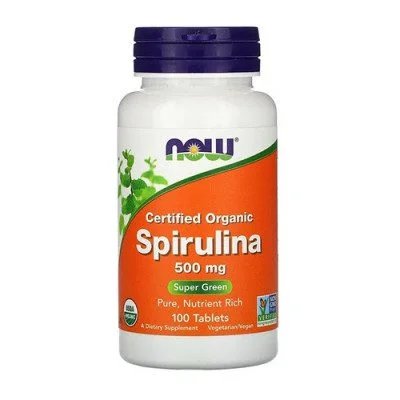 NOW Organic Spirulina€8.90 In stock 500mg 200tabs, and MST Spirulina 90tabs at the spirulina category on maxfit.ee.
FAQ
Can spirulina help me lose weight?
Spirulina may offer modest support for weight management -- mainly through its high protein content supporting satiety and some appetite-modulating effects seen in small trials. It is not a weight loss drug and will not produce meaningful weight loss on its own without a caloric deficit and adequate physical activity.
How much spirulina should I take for weight management?
The study by Zeinalian et al. (2017) used 3 g per day (1 g three times daily) over 12 weeks. Most commercial tablets or powder servings deliver 1–3 g per serving. Start with a lower dose to assess digestive tolerance, as spirulina can cause mild gastrointestinal discomfort in some people.
Is spirulina better than other protein supplements for weight management?
Not necessarily better, but it is nutritionally complementary. Whey protein, for example, has much stronger and more extensive evidence for satiety and muscle preservation during weight loss than spirulina does. Spirulina offers additional micronutrients and phycocyanin that typical protein powders do not, so combining both may offer broader nutritional coverage.
References
Zeinalian R, Farhangi MA, Shariat A, Saghafi-Asl M. (2017). The effects of Spirulina Platensis on anthropometric indices, appetite, lipid profile and serum vascular endothelial growth factor in obese individuals. BMC Complement Altern Med, 17(1), 225. https://pubmed.ncbi.nlm.nih.gov/28431534/
Hernandez-Lepe MA, Lopez-Diaz JA, Juarez-Oropeza MA, Hernandez-Torres RP, Wall-Medrano A, Ramos-Jimenez A. (2018). Effect of Arthrospira (Spirulina) maxima supplementation and a systematic physical exercise program on the body composition and cardiorespiratory fitness of overweight or obese subjects. Mar Drugs, 16(10), 364.