Quercetin for Energy & Fatigue: Does It Help?
Quercetin is a plant-derived flavonoid found in foods such as apples, onions, capers, and berries. It has been studied in sports nutrition for its potential to enhance energy metabolism, reduce exercise-related fatigue, and improve endurance performance. The evidence base is real but mixed — more nuanced than its marketing often implies. This article examines the proposed mechanism, what controlled trials have found, and who is likely to benefit.
What Is Quercetin and How Might It Affect Energy?
Quercetin belongs to the flavonol subclass of flavonoids. In cells, it acts as an antioxidant, inhibits certain pro-inflammatory enzymes, and has been shown in preclinical models to stimulate mitochondrial biogenesis — the process by which cells create new mitochondria. Since mitochondria are the primary sites of aerobic energy production, the theory is that more mitochondria means higher aerobic capacity and reduced perceived fatigue.
Additionally, quercetin inhibits phosphodiesterase enzymes, which can elevate cyclic AMP (cAMP) levels — a cellular signaling molecule associated with increased energy utilization. This mechanism overlaps with caffeine's action, though through a different enzyme pathway.
These mechanisms are well-established in cell and animal models. The central question is whether the doses that produce effects in those models also produce meaningful effects in humans.
What the Human RCTs Show
VO2max and Endurance
Davis et al. (2010) published a randomized, placebo-controlled trial in which participants supplemented with quercetin for several weeks and underwent tests of maximal oxygen uptake and endurance capacity (Davis et al., 2010). The quercetin group showed improvements in VO2max and time-to-fatigue compared with placebo. The effect sizes were statistically significant but modest in absolute terms.
Ganio et al. (2010) conducted a randomized, double-blind crossover trial examining quercetin supplementation and VO2max in trained and untrained men and women (Ganio et al., 2010). The quercetin group showed a small but statistically significant improvement in VO2max compared with placebo across both populations.
Bigelman et al. (2010) tested six weeks of quercetin supplementation versus placebo in ROTC cadets, a physically active but not elite population (Bigelman et al., 2010). Physical performance measures improved modestly in the quercetin group, though effect sizes varied across tests.
Fatigue and Recovery
Some trials have examined subjective fatigue and recovery markers, with mixed results. The more consistent finding across trials is a modest improvement in aerobic capacity rather than a clear reduction in perceived fatigue in daily life. The performance effects appear more reliable than the fatigue-reduction effects.
Who Responds?
Analysis across trials suggests that the response to quercetin may be larger in untrained or moderately trained individuals than in highly trained athletes. This is consistent with a ceiling effect: those who already have high mitochondrial density may see less marginal benefit from mitochondrial biogenesis stimulation.
People under higher physiological stress — such as those in very high training volumes, recovering from illness, or experiencing higher-than-normal oxidative stress — may also respond more clearly, as quercetin's antioxidant and anti-inflammatory actions would have a larger basal state to work against.
Dose and Bioavailability
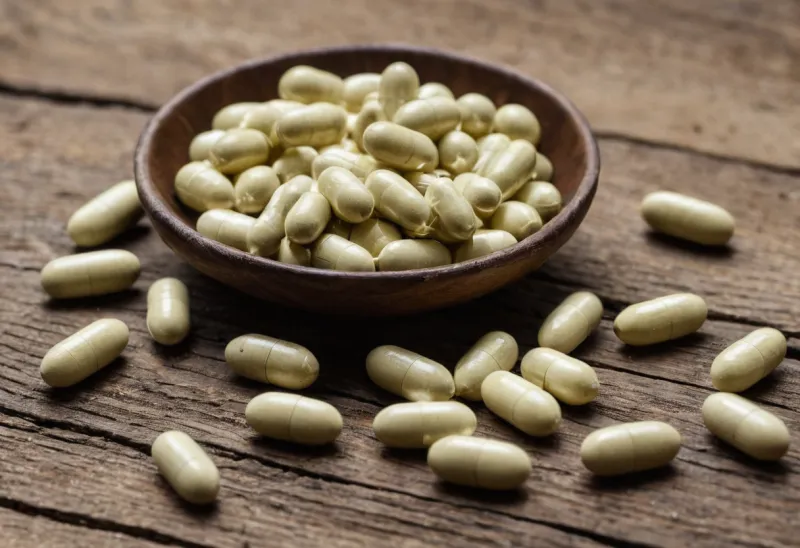
The doses used in human performance trials have typically been in the range of 500 to 1000 mg of quercetin daily. Quercetin has moderate bioavailability when taken alone; combining it with vitamin C or bromelain (as in the formulation of some supplements) is reported to enhance absorption.
For those interested in quercetin supplementation, products including MST Quercetin Bromelain 60caps and OstroVit Quercetin 90caps are available at maxfit.ee. The bromelain combination in the MST product reflects the bioavailability-enhancement approach used in some trials. Browse the quercetin category for the full selection.
Realistic Expectations
Quercetin is not a stimulant and will not produce the immediate energy effect of caffeine. Its proposed mechanism through mitochondrial biogenesis operates over a period of sustained supplementation, not acutely. The human trial data suggests effects that are real but modest:
- Small improvements in aerobic capacity in untrained-to-moderately-trained individuals.
- Possible reduction in oxidative stress markers following exercise.
- No consistent evidence for dramatic fatigue reduction in daily life or large performance gains in already well-trained athletes.
If your primary concern is acute energy or fatigue during day-to-day activities rather than endurance performance, the evidence for quercetin is less directly applicable.
Who Is Likely to Benefit Most
- Recreational athletes aiming to improve aerobic capacity: The VO2max improvements in trials were small but consistent across multiple studies in non-elite populations.
- People in high oxidative-stress environments: Athletes in very high training volumes, or those experiencing recovery stress from illness, may benefit from quercetin's antioxidant properties alongside any mitochondrial effects.
- Those who prefer a non-stimulant approach: Quercetin does not raise heart rate or cause jitteriness, making it suitable for those sensitive to caffeine.
Honest Verdict
Quercetin has a plausible mechanism and a genuine, if modest, human evidence base for improvements in aerobic energy metabolism and endurance-related fatigue. The effects are not dramatic, and highly trained athletes may notice little benefit. For recreational athletes and those with higher-than-usual oxidative stress, quercetin represents a reasonable supplement with a good safety profile and credible, peer-reviewed evidence behind its core claims.
FAQ
How long does it take for quercetin to show effects on energy or fatigue?
The human trials showing VO2max and endurance improvements used supplementation periods of several weeks. Effects are not immediate and should not be expected within a few days. A minimum of two to four weeks of consistent use is a reasonable expectation for the mitochondrial pathway to have meaningful effects.
Can I get enough quercetin from food?
Quercetin is abundant in a diet rich in onions, apples, capers, and berries, but the doses used in performance trials (500-1000 mg daily) are difficult to achieve consistently through diet alone, particularly in populations not regularly consuming these foods. Supplementation provides a reliable, quantified dose.
Is quercetin safe to take alongside other supplements?
Quercetin has a strong safety record at studied doses. It may interact with certain medications, particularly those metabolized by the CYP3A4 enzyme system. If you take prescription medications, check with a pharmacist or physician before adding quercetin supplements.
References
Davis JM, Carlstedt CJ, Chen S, Carmichael MD, Murphy EA. (2010). The dietary flavonoid quercetin increases VO2max and endurance capacity. Int J Sport Nutr Exerc Metab, 20(1), 56-62. https://pubmed.ncbi.nlm.nih.gov/20190352/
Ganio MS, Armstrong LE, Johnson EC, Klau JF, Ballard KD, Michniak-Kohn B, Kaushik D, Casa DJ. (2010). Effect of quercetin supplementation on maximal oxygen uptake in men and women. J Sports Sci, 28(2), 201-208. https://pubmed.ncbi.nlm.nih.gov/20054739/
Bigelman KA, Fan EH, Chapman DP, Freese EC, Trilk JL, Cureton KJ. (2010). Effects of six weeks of quercetin supplementation on physical performance in ROTC cadets. Mil Med, 175(10), 791-798. https://pubmed.ncbi.nlm.nih.gov/20968271/