
Мелатонин Для Сна: Complete Guide 2026
Melatonin — known in Russian as "мелатонин для сна" — is one of the most widely used sleep supplements globally. It is also one of the most misused. Many people take too high a dose, at the wrong time, or expect it to behave like a sedative. This comprehensive guide covers what the research actually shows about melatonin dosing, when and why it works, natural alternatives, sleep hygiene foundations, and why it is especially relevant in the long, dark Estonian winters.
What Is Melatonin?
Melatonin is a hormone produced by the pineal gland, primarily in response to darkness. It does not directly induce sleep but rather signals to the body that it is time for sleep — it is a chronobiological cue, not a sedative. The brain's master clock (the suprachiasmatic nucleus) interprets melatonin as a marker of biological night, adjusting body temperature, alertness, and other circadian rhythms accordingly.
Endogenous melatonin production follows a predictable nightly pattern: levels begin rising roughly two hours before habitual sleep time, peak in the middle of the night, and fall before wake time. Artificial light — especially the short-wavelength blue light emitted by screens — suppresses melatonin production and can delay this pattern.
What the Research Shows: Melatonin Dosing
A meta-analysis of randomised controlled trials found that exogenous melatonin reduced sleep onset latency and increased total sleep time compared with placebo in people with primary sleep disorders (Ferracioli-Oda et al., 2013). An earlier meta-analysis confirmed similar effects, finding that melatonin was particularly effective for circadian rhythm disorders such as jet lag and shift work (Brzezinski et al., 2005).
One of the most important findings from the research is that more melatonin is not necessarily more effective. Studies have found meaningful effects at doses as low as 0.5 mg. Higher doses (5–10 mg, common in North American products) are pharmacologically supraphysiological — they raise melatonin blood levels far above normal nocturnal peaks and may impair next-day alertness without improving sleep quality further. European regulatory guidance and most sleep specialists recommend doses in the 0.5 to 2 mg range for sleep onset support.
Timing Matters More Than Dose
Taking melatonin at the right time is more important than the dose. General guidelines:
- For sleep onset support: Take 0.5 to 1 mg approximately 30 to 60 minutes before desired sleep time.
- For jet lag: Take melatonin at the destination bedtime on the day of travel, not in the morning.
- For shift workers: Melatonin timing should be adjusted based on the shift pattern, ideally with guidance from a sleep specialist.
Taking melatonin too early in the evening can shift the circadian phase in the wrong direction. Consistency of timing is also important for establishing a regular sleep rhythm.
Estonian Winter Darkness and Circadian Disruption
Estonia sits at a latitude where winter day length can fall to under seven hours. By comparison, the body evolved in environments with relatively consistent 12-hour day-night cycles. In Tallinn, December daylight averages just six to seven hours. This extreme photoperiod creates several challenges:
- Delayed circadian phase: When mornings are dark, the brain receives inadequate morning light to robustly anchor the circadian clock. This can cause a drift toward later sleep and wake times.
- Vitamin D deficiency compounding: Low light correlates with low Vitamin D synthesis, and Vitamin D deficiency has been associated with poorer sleep quality in several studies.
- Winter depression (SAD): Prolonged darkness is the primary driver of seasonal affective disorder, in which melatonin rhythm abnormalities and serotonin dysregulation play a central role (Lewy et al., 2006).
For Estonians and others in high-latitude regions, a combination of morning light therapy (10,000 lux lamp for 20–30 minutes at wake time), evening light avoidance, and low-dose melatonin at consistent bedtime may help stabilise circadian rhythms through the dark months.
Natural Alternatives to Melatonin
For those who prefer to avoid supplemental melatonin, several natural approaches can support healthy sleep:
L-Tryptophan and 5-HTP
The body synthesises serotonin (which is then converted to melatonin) from the amino acid L-tryptophan. Foods rich in tryptophan include turkey, chicken, oats, dairy, and bananas. Supplemental 5-HTP (a direct serotonin precursor) may support serotonin production, though it should be used cautiously and not combined with serotonergic medications.
Magnesium Glycinate
Magnesium supports muscle relaxation and nervous system calming. The glycinate form is specifically notable because glycine — the bound amino acid — has been shown in clinical research to improve subjective sleep quality and reduce daytime sleepiness when taken before bedtime. This makes magnesium glycinate one of the most evidence-supported non-melatonin sleep supplements.
Ashwagandha
Ashwagandha (Withania somnifera) is an adaptogen with stress-modulating properties. Reducing cortisol-driven nighttime arousal can indirectly improve sleep onset and quality. Several clinical trials have shown improvements in sleep efficiency and morning alertness with ashwagandha supplementation in stressed adults.
Valerian and Lemon Balm
Valerian root and lemon balm are traditional European herbal sleep aids with mild anxiolytic properties. Evidence quality is mixed across trials, but they are generally considered safe for short-term use.
Sleep Hygiene: The Foundation
No supplement substitutes for good sleep hygiene. Core evidence-based principles:
- Consistent sleep and wake times: The most powerful circadian anchor. Even on weekends.
- Dark bedroom: Light exposure during sleep suppresses melatonin production.
- Cool room temperature: Core body temperature must drop to initiate sleep. A cool room facilitates this.
- Screen curfew: Blue light from phones and computers delays melatonin onset. Aim for 60 to 90 minutes screen-free before bed, or use blue-light filtering glasses.
- Avoid alcohol close to bedtime: Alcohol disrupts REM sleep architecture despite initially promoting drowsiness.
- Limit caffeine after early afternoon: Caffeine has a half-life of approximately five to six hours — an afternoon coffee can still affect sleep onset.
Supplement Stacking for Sleep
For more comprehensive sleep support, some combinations are backed by coherent mechanistic rationale:
- Melatonin (0.5–1 mg) + Magnesium Glycinate: Addresses both circadian timing and nervous system relaxation
- Ashwagandha + Melatonin: Combines cortisol modulation with circadian signalling
- L-Theanine + Melatonin: L-theanine promotes alpha brain wave activity and reduces anxious arousal; combines well with melatonin's sleep-timing signal
Avoid stacking multiple sedating supplements simultaneously without professional guidance, and do not combine melatonin with prescription sleep medication or alcohol.
Who Should Be Careful
- Pregnant and breastfeeding women: Consult a healthcare provider before use
- Children and adolescents: Melatonin is sometimes used under medical supervision for circadian sleep disorders; self-supplementing in children is not recommended without professional guidance
- People on immunosuppressants or anticoagulants: Potential interactions exist
- Those with autoimmune conditions: Melatonin has immune-modulating properties
Products at MaxFit
For melatonin supplementation, maxfit.ee offers ICONFIT Capsules Melatonin N90 as a locally made compact option. 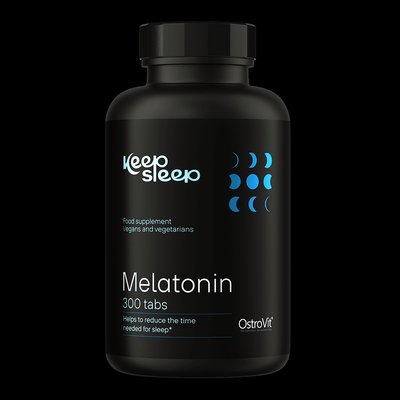 OstroVit Keep Sleep Melatonin€8.90 In stock 300tabs provides an economical long-supply pack. BIOTECHUSA Night 60 caps combines melatonin with other sleep-supporting ingredients for a stacked approach.
 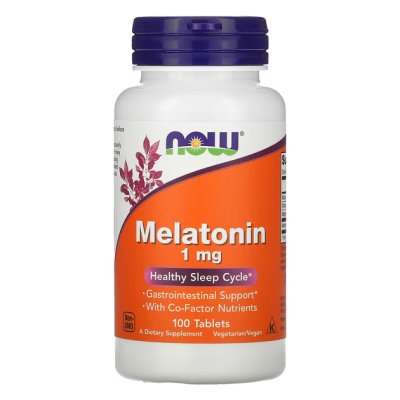 NOW Melatonin 1mg Complex€11.90 In stock 100tabs delivers a low-dose formulation consistent with evidence-based recommendations.
Browse all sleep supplements at the sleep and relaxation category on maxfit.ee.
FAQ
What is the correct melatonin dose for sleep?
The research supports low doses in the range of 0.5 to 2 mg taken 30 to 60 minutes before desired sleep time. Higher doses commonly sold in North American markets are supraphysiological and not more effective for most people.
Does melatonin work for winter sleep problems in Estonia?
Yes. At high latitudes like Estonia, the circadian clock can drift due to insufficient morning light in winter. Low-dose melatonin taken consistently at bedtime, combined with morning light therapy, can help stabilise sleep timing through the dark months (Lewy et al., 2006).
Can I become dependent on melatonin?
Melatonin is not a sedative and does not create physical dependence in the way that prescription sleep medications can. However, habitual nightly use can mean your natural melatonin production adjusts. Using the lowest effective dose and cycling off periodically is reasonable.
References
Ferracioli-Oda E, Qawasmi A, Bloch MH. (2013). Meta-analysis: melatonin for the treatment of primary sleep disorders. PLoS ONE, 8(5), e63773. https://pubmed.ncbi.nlm.nih.gov/23691095/
Brzezinski A, Vangel MG, Wurtman RJ, Norrie G, Zhdanova I, Ben-Shushan A, Ford I. (2005). Effects of exogenous melatonin on sleep: a meta-analysis. Sleep Med Rev, 9(1), 41-50. https://pubmed.ncbi.nlm.nih.gov/15649737/
Lewy AJ, Rough JN, Songer JB, Mishra N, Yuhas K, Emens JS. (2006). The role of melatonin in the circadian system: new perspectives. Proc Natl Acad Sci USA, 103(19), 7414-19. https://pubmed.ncbi.nlm.nih.gov/16648247/