What Is Coenzyme Q10 and Why Do You Need It?
Coenzyme Q10 (CoQ10) is a vital substance found in every cell of your body. It is a vitamin-like compound that your body produces naturally, but levels decline significantly with age. CoQ10's primary role is to participate in ATP production — the universal energy currency of cells — inside the mitochondria.
Without CoQ10, your body cannot convert food into energy. That is why it is most concentrated in organs that demand the most energy: the heart, liver, kidneys, and skeletal muscles. Your heart beats roughly 100,000 times per day — without adequate CoQ10 levels, that work starts to suffer.
Scientifically, CoQ10 is also called ubiquinone — from the Latin word "ubique" meaning "everywhere." This name highlights that CoQ10 is truly present in every cell, though its concentration varies significantly between organs.
Three Critical Functions
Energy Production: CoQ10 is part of the electron transport chain, responsible for 95% of all energy production in the body. This means that without adequate CoQ10 levels, your energy, endurance, and recovery capacity all decline. Every movement, every heartbeat, every thought requires ATP — and ATP production directly depends on CoQ10.
Antioxidant Protection: CoQ10 is one of the few antioxidants that works directly inside mitochondria — where the most free radicals are generated. It protects cellular DNA, protein structures, and lipid membranes from oxidative stress. Unlike many other antioxidants, CoQ10 can regenerate itself, making it an exceptionally effective protector.
Cell Membrane Stabilization: CoQ10 helps maintain the integrity and fluidity of cell membranes. This is important for transporting nutrients into cells and removing waste products.
Why Do CoQ10 Levels Drop?
CoQ10 production in the body peaks around age 20 and then begins a slow decline. After 40, the decline becomes noticeable:
- At 40, CoQ10 levels have dropped by roughly 30%
- At 60, the decline reaches 50% or more
- At 80, heart CoQ10 levels are only 43% of what they were at 20
This decline is not just a theoretical number — it manifests in daily life as fatigue, slower recovery, and cardiovascular issues. Many symptoms attributed to "normal aging" are actually related to CoQ10 deficiency.
Besides age, other factors accelerate CoQ10 depletion:
- Statins (cholesterol medication) — block the same enzyme that produces CoQ10
- Chronic stress and burnout — depletes the body's energy reserves
- Intense exercise — rapidly depletes CoQ10 stores
- Poor diet — low in nutrients needed for CoQ10 synthesis
- Certain diseases — diabetes, heart disease, neurodegenerative conditions
Ubiquinone vs Ubiquinol: Which Form Is Better?
CoQ10 comes in two chemical forms, and the difference matters. Choosing the right form can mean the difference between effective and ineffective supplementation.
Ubiquinone (Oxidized Form)
This is the traditional and cheaper form of CoQ10, studied for over 50 years. Ubiquinone is stable and well-documented, but the body must convert it to ubiquinol before it can be used. Young, healthy individuals do this efficiently, but the conversion becomes less effective with age.
Best for:
- Healthy individuals under 35
- Preventive use at lower doses (30–100 mg)
- Those who prefer a more affordable option
- People with well-functioning digestive systems
Ubiquinol (Reduced Form)
Ubiquinol is the biologically active form of CoQ10 — it is ready for the body to use immediately without any additional conversion. Studies show that ubiquinol's bioavailability is 2–8 times higher than ubiquinone, meaning you achieve the same effect with a smaller dose.
Best for:
- Those over 35
- Statin users (whose CoQ10 conversion is already impaired)
- Athletes training intensely
- Heart health support
- Anyone who wants maximum absorption
Practical tip: If you are over 40 or take statins, always choose ubiquinol. Although it costs more per gram, you need a significantly lower dose to achieve the same effect — which can actually make it more cost-effective overall.
How to Tell on the Label?
Look for on the packaging:
- Ubiquinol — active form (best choice)
- Ubiquinone — standard form
- Kaneka Ubiquinol — recognized global quality standard for ubiquinol
Who Needs Coenzyme Q10?
People Over 40
This is the broadest and most important target group. After 40, the body's CoQ10 production has dropped substantially. Symptoms often dismissed as "just getting older" may actually be related to low CoQ10 levels:
- Chronic fatigue and lack of energy
- Slow recovery after exertion
- Difficulty concentrating and brain fog
- Muscle pain and weakness
- Shortness of breath during moderate activity
- Declining skin tone
If these symptoms sound familiar, checking and restoring CoQ10 levels may bring noticeable improvement in how you feel.
Statin Users
Statins are among the most commonly prescribed medications in the world — in Estonia alone, tens of thousands of people take them. They block the HMG-CoA reductase enzyme, which produces both cholesterol and CoQ10. Studies show that statins can reduce CoQ10 levels by up to 40%.
Many statin side effects — muscle pain, fatigue, general weakness — may be directly linked to CoQ10 deficiency. Some doctors are already prescribing CoQ10 alongside statins.
Important: Experts from the American Heart Association recommend that statin users consider adding CoQ10 to their daily supplement regimen.
Athletes and Active People
Intense training depletes CoQ10 stores in two ways: first, the body needs more ATP, and second, more free radicals are generated that oxidize CoQ10 stores. A study in the Journal of the International Society of Sports Nutrition found that 100–300 mg of CoQ10 per day:
- Improved aerobic capacity by 3–12%
- Reduced recovery time after intense training sessions
- Lowered blood markers of muscle damage (CK and LDH)
- Improved subjective well-being after training
Even recreational athletes who train 3–4 times per week can benefit noticeably from CoQ10 supplementation — faster recovery and less muscle soreness.
Cardiovascular Health Support
The heart is the body's largest CoQ10 consumer — it requires a constant, enormous energy supply. The Q-SYMBIO study (420 patients, 2 years of follow-up) studied CoQ10's role in supporting cardiovascular health. CoQ10 supports:
- Heart pumping ability and contractility
- Blood vessel elasticity and endothelial function
- Maintaining normal blood pressure
Read our in-depth overview of CoQ10's effects on energy and the heart: CoQ10: Key to Energy and Heart Health.
What CoQ10 Dosage Should You Choose?
The optimal dose depends on your age, health status, and goals. Below are science-based recommendations.
Preventive Dose (healthy adults under 40)
30–100 mg per day of ubiquinone or 30–60 mg per day of ubiquinol.
This dose helps maintain CoQ10 levels, supports overall energy, and provides antioxidant protection.
Standard Dose (over 40, active lifestyle)
100–200 mg per day of ubiquinol.
This is the most commonly recommended dose, covering both preventive and performance-supporting needs. Most clinical studies have used this dosage range.
Therapeutic Dose (statins, heart issues)
200–300 mg per day of ubiquinol, split into two doses.
This dose is based on clinical studies and is appropriate for:
- Statin users
- Heart failure (under medical supervision)
- Intensely training endurance athletes
- High oxidative stress situations
Dosage Table by Age
| Age / Situation | Form | Dose |
|---|---|---|
| Under 35, prevention | Ubiquinone | 30–100 mg/day |
| 35–50, active | Ubiquinol | 100–200 mg/day |
| 50+, heart health | Ubiquinol | 200–300 mg/day |
| On statins | Ubiquinol | 200–300 mg/day |
| Intense athlete | Ubiquinol | 100–300 mg/day |
How to Take CoQ10 Correctly
- Always with fat — CoQ10 is fat-soluble, absorbing up to 3 times better with fatty food. Best taken with eggs, avocado, or nuts.
- Split larger doses — divide anything over 100 mg into two doses: morning and midday. This ensures more stable blood levels.
- Avoid taking at night — CoQ10 can boost energy levels and disturb sleep. Best times are with breakfast and lunch.
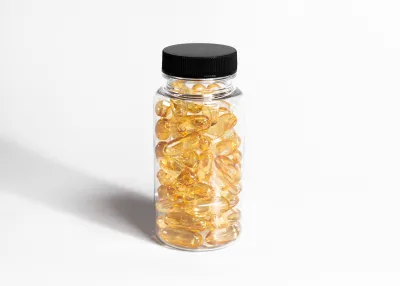
- Good pairings — take with breakfast (eggs, avocado) or alongside omega-3 supplements capsules, which improve absorption.
- Be consistent — the effect accumulates, so take it daily without breaks.
When to Expect Results
CoQ10 does not work instantly — it is not caffeine or a stimulant. The effect builds gradually:
- 2–4 weeks: Blood CoQ10 level rises to therapeutic range
- 4–8 weeks: First energy effects appear, general well-being improves
- 8–12 weeks: Full effect on physical performance and endurance
- 3–6 months: Maximum cardiovascular benefit achieved
Recommendation: Take consistently for at least 3 months before evaluating results.
Where to Buy Coenzyme Q10 in Estonia
If you live in Estonia and are looking for quality CoQ10, you have several options, each with its own advantages.
Pharmacies
The traditional and most familiar option. Estonian pharmacies typically stock a limited selection, often only ubiquinone forms. Prices tend to be higher due to intermediary margins. However, you can ask the pharmacist for advice.
Online Stores
Online shopping provides access to a much wider selection, including ubiquinol forms and various dosages. Prices are often more competitive, and convenience is greater — order from home and pick up at a parcel machine or have it delivered by courier.
MaxFit.ee offers multiple high-quality CoQ10 supplements delivered directly across all of Estonia — to Tallinn, Tartu, and smaller towns alike. Browse our Coenzyme Q10 selection and find the right option for you.
What to Look for When Buying
- Form — ubiquinol is preferred for those over 35; ubiquinone works for younger users
- Dose per capsule — at least 100 mg to avoid needing multiple capsules per day
- Third-party testing — USP, NSF, or ConsumerLab certifications confirm quality
- Oil-based capsules — better absorption than powder form since CoQ10 is fat-soluble
- Minimal additives — fewer fillers and binders is better
- Country of manufacture — prefer established producers from the USA, Japan, or Germany with long quality track records
Research Highlights and Safety
CoQ10 is one of the most extensively studied supplements in the world. Over 500 clinical trials confirm its efficacy and safety, making it one of the most trustworthy supplements available.
Key Studies
- Q-SYMBIO (2014): 420 patients, 2 years — the study explored CoQ10's association with cardiovascular markers.
- KISEL-10 (2013): CoQ10 + selenium was associated with positive cardiovascular markers in elderly patients.
- Meta-analysis (2018): 14 studies showed an association between CoQ10 and blood pressure markers.
- Bioavailability study (2014): Ubiquinol achieved 3.75 times higher blood levels than ubiquinone at the same dose.
Side Effects
CoQ10 is very well tolerated and safe even with long-term use. Rarely, some may experience:
- Mild digestive upset (less than 1% of users)
- Nausea (usually resolves in the first week)
- Headache (rare, often related to too high a dose)
- Insomnia (if taken late at night — avoid evening doses)
Studies show that up to 500 mg per day is safe for long-term use.
Drug Interactions
Consult your doctor if you take:
- Blood thinners (warfarin) — CoQ10 may affect their efficacy because it is structurally similar to vitamin K
- Blood pressure medication — CoQ10 itself lowers blood pressure, so doses may need adjusting
- Diabetes medication — CoQ10 may influence blood sugar levels
- Chemotherapy drugs — only with oncologist approval
Who Should Be Extra Cautious?
- Pregnant and breastfeeding women (insufficient safety data)
- Before planned surgery (stop 2 weeks prior, as CoQ10 affects blood clotting)
- Under 18 (insufficiently studied in this age group)
CoQ10 and Other Supplements
CoQ10 works especially well when combined with other supplements. The right combinations amplify the effect.
CoQ10 + Omega-3: Both support heart health; omega-3 improves CoQ10 absorption thanks to its fatty acid content. This is one of the best heart health combinations available.
CoQ10 + Magnesium: Magnesium is needed to use ATP, CoQ10 produces ATP — an ideal energy combination that supports both muscle and nervous system function. Check out our magnesium selection.
CoQ10 + L-carnitine supplements: Both support fat burning and energy production. Carnitine transports fatty acids into the mitochondria, while CoQ10 helps convert them into ATP.
CoQ10 + Vitamin E: Both are powerful antioxidants. Vitamin E can regenerate CoQ10, extending its antioxidant activity.
CoQ10 + Selenium: The KISEL-10 study showed a positive association between this combination and cardiovascular markers — the synergistic effect is clearly documented.
If you are interested in anti-aging supplements more broadly, read our overview: Anti-Aging Supplements. For women over 40, we also recommend: Supplements for Women Over 40.
Summary
Coenzyme Q10 is an essential substance whose levels decline significantly with age. After 40, supplementation makes particular sense, especially for statin users and active individuals.
Key takeaways:
- Choose ubiquinol if you are over 35 — it absorbs 2–8 times better
- 100–200 mg per day is optimal for most adults
- Take with fat for better absorption
- Expect results within 8–12 weeks of consistent use
- Combine with omega-3, magnesium, and selenium for maximum benefit
- Order conveniently from MaxFit.ee with delivery across Estonia
CoQ10 is not a miracle pill — it is scientifically proven cellular energy support. The sooner you start correcting the deficiency, the more energy and health you will preserve for years to come.
This article is for informational purposes and does not replace medical advice. If you have health conditions or take medications, consult a doctor before adding CoQ10.
Read more: Omega-3 Fish Oil: A Science-Based Guide
References
- Crane FL. (2001). Biochemical functions of coenzyme Q10. Journal of the American College of Nutrition, 20(6), 591-598.
- Mortensen SA, Rosenfeldt F, Kumar A, et al. (2014). The effect of coenzyme Q10 on morbidity and mortality in chronic heart failure: results from Q-SYMBIO: a randomized double-blind trial. JACC: Heart Failure, 2(6), 641-649.
- Sándor PS, Di Clemente L, Coppola G, et al. (2005). Efficacy of coenzyme Q10 in migraine prophylaxis: a randomized controlled trial. Neurology, 64(4), 713-715.
- Garrido-Maraver J, Cordero MD, Oropesa-Ávila M, et al. (2014). Clinical applications of coenzyme Q10. Frontiers in Bioscience, 19(4), 619-633.
- Littarru GP, Tiano L. (2007). Bioenergetic and antioxidant properties of coenzyme Q10: recent developments. Molecular Biotechnology, 37(1), 31-37.