
Why Omega-3 Matters for Children
Children are not simply small adults. Their brains and eyes undergo rapid development during infancy and early childhood, and the fatty acid composition of their diet directly shapes the building blocks available for that growth. Docosahexaenoic acid (DHA) is the dominant omega-3 fatty acid in the brain and retina, where it supports the structural integrity of neural and visual membranes throughout childhood. Without adequate DHA from the diet, the body cannot synthesise sufficient amounts on its own.
Fish oil is one of the most concentrated and well-researched sources of both DHA and eicosapentaenoic acid (EPA) available as a supplement. For families considering nutritional support for their children, kalaõli lastele — fish oil for children in Estonian — deserves careful, informed attention. This guide walks through what the research shows, what to look for in a product, and which options are available at MaxFit.
What to Look for in a Children's Fish Oil
Not all fish oil supplements are equally suitable for children. Several quality criteria carry extra weight when the consumer is still developing:
Purity and mercury testing are non-negotiable. Children are more sensitive to heavy metal exposure than adults. Reputable children's fish oil products undergo independent third-party testing and carry certificates of analysis confirming that mercury, lead, cadmium, and other contaminants fall well below regulatory thresholds. Never buy a children's fish oil that lacks documented purity testing.
Child-appropriate delivery format matters for compliance. Softgels that are easy to swallow, chewable options with mild natural flavouring, or liquid formulations are all more practical for younger children than large standard capsules. The molecular form of the oil matters too: fish oil in triglyceride form is better absorbed than ethyl ester form, and absorption improves further when taken alongside a fat-containing meal.
EPA and DHA per serving should be clearly stated. Children's supplements often provide lower EPA+DHA per unit than adult products, to allow for weight-appropriate dosing. Check that the label shows both EPA and DHA amounts separately, not only total fish oil weight.
Research on DHA and Early Development
The relationship between DHA and early brain development has been an active area of nutritional research for decades. Early research suggests that maternal DHA intake during pregnancy and lactation may support children's cognitive development. A study by Helland et al. (2003) followed children born to mothers who supplemented with very-long-chain n-3 fatty acids during pregnancy and lactation, and found differences in cognitive assessments at four years of age compared to a control group (Helland et al., 2003). The authors interpreted these findings as consistent with DHA's structural role in supporting neural development during the critical early years.
It is important to approach such findings with appropriate scientific caution. Nutritional research in young children involves many confounding variables — diet quality, breastfeeding duration, parental education, and other factors all influence developmental outcomes. No single supplement guarantees any specific developmental result. Nonetheless, the broader literature consistently identifies DHA as a conditionally essential nutrient during early life, present in high concentrations in the developing brain and retina, and dependent on dietary supply because endogenous synthesis is insufficient.
EPA's Role in General Wellness
While DHA receives most of the attention in paediatric nutrition discussions, EPA also contributes to the body's broader physiological balance. Calder (2013) reviewed the evidence on long-chain omega-3 fatty acids and found that both EPA and DHA modulate the production of eicosanoids and other signalling molecules derived from arachidonic acid, which are involved in inflammatory regulation (Calder, 2013). This has relevance for general wellbeing, though EPA's specific contributions in paediatric health are less thoroughly characterised in the literature than DHA's developmental roles.
In practice, most fish oil supplements — whether designed for adults or children — contain both EPA and DHA together, and the combined formulation is consistent with what has been used in research populations studying omega-3 and child health.
Age-Appropriate Dosing
Specific omega-3 dosing recommendations for children vary by age, body weight, and individual health context. It would not be appropriate to state a universal milligram target here without a clinical context. The prudent approach for parents is to consult a paediatrician or healthcare provider for age-specific guidance, particularly for infants and toddlers where needs and tolerances differ most from older children.
What is useful to know: recommended intakes for children are generally lower than those for adults, and well-designed children's fish oil products are formulated so that a standard serving delivers an age-appropriate amount without requiring parents to split or measure capsules. If a product is formulated for adults and labelled only with an adult dose, it is not the right choice for young children.
Lysi and the Icelandic Tradition
Iceland has centuries of tradition in producing and consuming fish-derived foods, and brands like Lysi have made Icelandic fish oil synonymous with Nordic quality standards across the Baltic region. Estonian families familiar with the lysi kalaõli name will recognise this cultural reference — a tradition of fish oil as a natural complement to Northern European dietary patterns built around regular fatty fish consumption. The lysi omega 3 kalaõli brand has long been part of the regional conversation around omega-3 supplementation for all ages, including children.
This Icelandic and Nordic background is not simply marketing. The region's relationship with cod and fish oil as dietary staples reflects an eating pattern that epidemiologists have long associated with favourable health outcomes in Northern European populations. Regular omega-3 intake as part of a balanced diet has been a cultural default, not an afterthought.
Products at MaxFit
MaxFit carries several omega-3 supplements suitable for different stages of family nutrition. OstroVit Omega 3 30caps is a compact, accessible entry point for those beginning an omega-3 routine. ICONFIT Omega-3 60softgels from the Estonian brand ICONFIT is a well-regarded local option with transparent ingredient labelling and consistent quality. 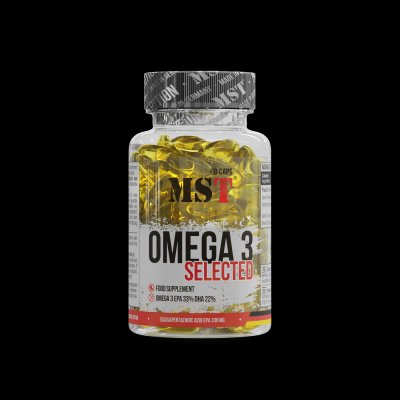 MST Omega 3 Selected€11.90 In stock 60 softgels offers carefully selected fish oil in a practical softgel format, popular with quality-conscious buyers. NOW Omega 3 1000mg 100 Softgels delivers consistent EPA+DHA in a trusted international brand format at accessible value.
For age-specific dosing decisions for children, always consult a healthcare provider alongside reviewing product labels. Browse the full omega-3 range in our omega-3 category.
FAQ
Is fish oil safe for children?
Fish oil is generally well-tolerated by children when given at appropriate doses and from a product that has been tested for purity. The most critical quality criteria are third-party testing for mercury and heavy metals, and age-appropriate dosing. Consult a paediatrician or healthcare provider if you are unsure which product or dose is right for your child's age and weight.
What is the difference between fish oil and cod liver oil for children?
Cod liver oil traditionally contains vitamins A and D alongside EPA and DHA, while standard fish oil provides mainly EPA and DHA without significant amounts of fat-soluble vitamins. In northern latitudes with limited sunlight, the vitamin D in cod liver oil can be a useful addition for children, but it also means vitamin A intake should be monitored across the full diet to avoid excess from multiple sources.
Can plant-based sources replace fish oil for children?
ALA from flaxseed or chia seeds is not efficiently converted into DHA by children — or by adults. If a vegan or vegetarian diet is followed, algae-based DHA is the only direct plant-sourced route to preformed DHA for children. Discuss algae oil supplementation with a healthcare provider to ensure the dose is appropriate for your child's age and stage of development.
References
Helland, I. B., Smith, L., Saarem, K., Saugstad, O. D., & Drevon, C. A. (2003). Maternal supplementation with very-long-chain n-3 fatty acids during pregnancy and lactation augments children's IQ at 4 years of age. Pediatrics, 111(1), e39–44. https://pubmed.ncbi.nlm.nih.gov/12509593/
Calder, P. C. (2013). Omega-3 polyunsaturated fatty acids and inflammatory processes: nutrition or pharmacology? British Journal of Clinical Pharmacology, 75(3), 645–662. https://pubmed.ncbi.nlm.nih.gov/22765297/