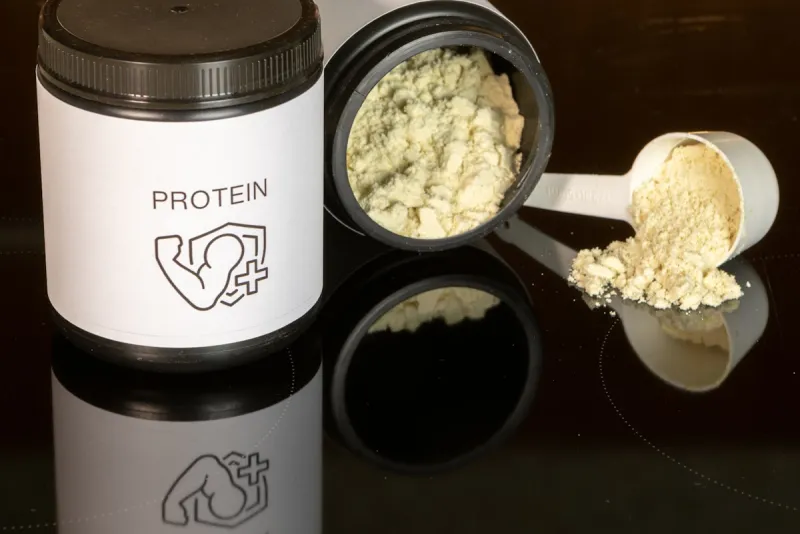
Whey Protein - The Gold Standard
whey proteins is the world's most popular protein supplement, and for good reason. It's a complete protein with all nine essential amino acids, high bioavailability, and fast absorption. But there isn't just one type of whey - there are three main forms, each with its own advantages.
How Whey Protein is Made
All forms of whey protein start from the same source - milk. As a byproduct of cheese production, liquid whey separates and contains about 20% of milk's protein (the remaining 80% is casein).
Production process:
- Liquid whey is dried
- Fats and lactose are partially or completely removed
- Depending on processing level, different end products result
Whey Protein Concentrate (WPC)
What is it?
Concentrate is the least processed form of whey protein. Protein content varies from 35-80%, with most quality products containing 70-80% protein.
Composition (typical WPC80)
- Protein: 70-80%
- Lactose: 4-8%
- Fat: 3-5%
- Minerals: 3-5%
Advantages
Price: Most affordable option - 30-50% cheaper than isolate
Taste: Fat content gives better, creamier taste
Bioactive compounds: Better preserved:
- Immunoglobulins (immune support)
- Lactoferrin (antimicrobial)
- Growth factors
Slower digestion: Fat content slightly slows absorption, which can be beneficial
Disadvantages
Lactose content: Not suitable for lactose intolerant
Lower protein content: More calories per gram of protein
Bloating: May cause gas in some people
Who is it for?
- Healthy people who tolerate lactose
- Budget-conscious athletes
- Those who prefer better taste
- Recreational athletes and beginners
Whey Protein Isolate (WPI)
What is it?
Isolate is more thoroughly processed whey protein, with most lactose and fat removed. Protein content is 90%+.
Composition (typical WPI)
- Protein: 90-95%
- Lactose: <1%
- Fat: <1%
- Minerals: 2-3%
Advantages
High protein content: More protein for fewer calories
Virtually lactose-free: Suitable for most lactose intolerant people
Faster absorption: Low fat content allows faster digestion
Cleaner composition: Less carbs and fat
Disadvantages
Price: 30-50% more expensive than concentrate
Taste: May be slightly watery
Bioactive compounds: Some may be lost during processing
Who is it for?
- Lactose intolerant people
- Those in cutting phase - fewer calories
- Serious athletes
- Those wanting maximum protein with minimum calories
Whey Protein Hydrolysate (WPH)
What is it?
Hydrolysate is pre-digested whey protein, where protein molecules have been broken down into smaller pieces (peptides) using enzymes.
Composition (typical WPH)
- Protein: 80-90%
- Lactose: 0-1%
- Fat: 0-2%
- Degree of hydrolysis: 10-30%
Advantages
Ultra-fast absorption: Reaches bloodstream in 15-30 minutes (vs 1-2h for concentrate)
Almost allergen-free: Suitable even for those with whey allergy
Insulin response: Greater insulin spike, which may support muscle growth
Easy to digest: Minimal load on digestive system
Disadvantages
Price: 2-3x more expensive than concentrate
Bitter taste: Hydrolysis process creates bitter aftertaste
Evidence base: Benefit over regular isolate isn't clearly proven
Who is it for?
- Professional athletes
- Pre/post-workout shakes
- Allergy to whey (but not severe)
- Those with digestive issues with other forms
Comparison Table
| Property | Concentrate | Isolate | Hydrolysate |
|---|---|---|---|
| Protein content | 70-80% | 90-95% | 80-90% |
| Lactose | 4-8% | <1% | 0-1% |
| Fat | 3-5% | <1% | 0-2% |
| Absorption time | 1-2h | 45-90min | 15-30min |
| Price (relative) | € | €€ | €€€ |
| Taste | Best | Good | Bitter |
| Bioactives | Preserved | Partially | Minimal |
Which to Choose? Practical Guide
Choose CONCENTRATE if:
- You don't have lactose intolerance
- Budget is limited
- You prefer better taste
- You're a recreational trainer
- Using shake as meal replacement
Choose ISOLATE if:
- You're lactose intolerant
- You're in cutting phase
- You want to maximize protein per calorie
- You train seriously 4+ times per week
- Taking immediately post-workout
Choose HYDROLYSATE if:
- You're a professional athlete
- You need ultra-fast absorption (during/immediately after workout)
- You have mild whey allergy
- Money isn't an issue
- You have chronic digestive issues
Evaluating Quality
1. Amino Acid Profile
Quality whey protein contains:
- BCAA: 20-25% (leucine 10-12%)
- EAA: 45-50%
- Glutamine: 15-18%
2. Reading Labels
Calculate actual protein content:
Protein per serving ÷ Serving size × 100 = Protein %

Example: 24g protein / 30g serving = 80%
3. Third-Party Testing
Look for certifications:
- Informed Sport
- NSF Certified for Sport
- Labdoor tested
Blends - Worth It?
Many manufacturers offer concentrate and isolate blends. This can be a reasonable compromise:
Advantages:
- Middle-ground price
- Good protein content (82-85%)
- Better taste than pure isolate
Disadvantage:
- May still contain enough lactose to cause issues
When to Take Whey Protein?
Post-workout (30-60 min)
Best choice: Isolate or hydrolysate Reason: Fast absorption, insulin spike
Morning
Best choice: Concentrate Reason: Breaking overnight fast, bioactive compounds
As Snack
Best choice: Concentrate Reason: Slower absorption maintains fullness
Before Bed
Best choice: Casein is better, but if whey, then concentrate
Common Mistakes
1. "Isolate is always better"
Truth: If you tolerate lactose, isolate isn't necessarily better. For muscle growth, total amount matters more than form.
2. "Hydrolysate is a must-have"
Truth: Scientific studies don't show major advantage over regular isolate for practical muscle growth.
3. "Cheap = bad"
Truth: Concentrate from quality manufacturers is an excellent choice. Price doesn't determine quality.
4. "Must take immediately post-workout"
Truth: The anabolic window is wider than thought. Getting protein within 2-3h is perfectly adequate.
Summary
Concentrate is the best choice for most - good price-quality ratio, better taste, preserved bioactive compounds.
Isolate is ideal for lactose intolerant people and those wanting maximum protein with minimum calories.
Hydrolysate is a niche product for professional athletes and those with specific needs.
MaxFit Recommends:
Start with concentrate - if you tolerate it well, there's no reason to pay more. If digestive issues occur or you're a serious athlete in cutting phase, upgrade to isolate.
This article is informational. Specific supplement choice depends on your goals, health status, and budget.
Browse our protein selection at MaxFit.ee →
See also:
- Whey Isolate vs Concentrate: Which One Is Right for You?
- Protein Powder for Beginners: Which One to Choose?
- Casein Protein: Complete Guide to Slow-Release Protein
Related products at MaxFit:
- casein proteins
Read more: Whey Protein Concentrate: Guide
Read more: Whey Protein Isolate: Guide