Sleep – The Most Important Component of Recovery
Training breaks down muscle fibres, food provides the building blocks, but sleep is where growth actually happens. During deep sleep, the pituitary gland releases growth hormone, initiating muscle protein synthesis (Van Cauter et al., 2000). Without adequate sleep this process is disrupted—regardless of how much protein you consume.
Research on elite athletes showed that limiting sleep to six hours reduced next-day performance by 3–8% (Skein et al., 2013). Seven to nine hours is the minimum standard for an athlete; elite competitors often sleep 9–10 hours.
Understanding Sleep Phases
Sleep consists of cycles, each lasting 90–120 minutes:
| Phase | Duration | Primary Function |
|---|---|---|
| N1 (light sleep) | 5–10 min | Transition period |
| N2 (moderate sleep) | 20–30 min | Memory consolidation, heart rate slows |
| N3 (deep sleep) | 20–40 min | Growth hormone, muscle repair |
| REM | 20–30 min | Emotional processing, learning |
For athletes, the N3 phase is especially valuable. It lasts longer in the first half of the night, which is why going to bed early matters.
Core Sleep Hygiene Principles
Consistent Sleep Schedule
Go to bed and wake up at the same time every day—including weekends. The circadian rhythm is a physiological clock that loves stability. Even one night of delayed sleep shifts the rhythm forward by 1–2 hours, requiring several days to normalise (Czeisler & Klerman, 1999).
Bedroom for Sleep Only
The bedroom should be associated only with sleep (and sexual activity). Using phones, laptops, and television in bed teaches the brain that the bed is a wakefulness zone. Set a screen time limit that triggers when you enter the bedroom.
Temperature and Darkness
The optimal sleep temperature is 16–19°C—cooler than intuitively seems necessary. The drop in core body temperature is a signal for sleep onset. Complete darkness is also important: even a small light source interrupts melatonin production.
Cutting Caffeine Early
Caffeine's half-life is 5–6 hours—meaning that coffee consumed at 3 pm still has half its caffeine in your bloodstream at 9 pm. Stop drinking coffee by 2–3 pm at the latest.
Supplements for Sleep Support
Magnesium
Magnesium is critical for GABA receptor regulation—the primary inhibitory neurotransmitter that activates the parasympathetic system and prepares the brain for sleep. OstroVit MgZB 90 tabs contains magnesium, zinc, and B6—a classic combination for athletes. DY Organic Mg + Vitamin B6 Tablets is an alternative using organic sources.
Melatonin
Melatonin is the natural sleep hormone produced by the pineal gland in darkness. Supplementation helps primarily with overcoming time zone shifts and irregular work schedules. 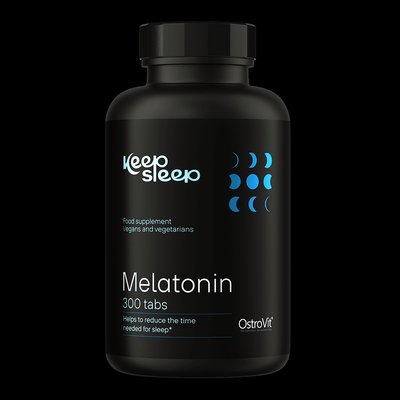 OstroVit Keep Sleep Melatonin€8.90 In stock 300 tabs offers a large, economical pack for regular use.
Night-Time Protein
BIOTECHUSA Night 60 caps is a specialised night formula for muscle support during sleep—contains slow-digesting peptides and recovery-supporting compounds.
Find sleep and relaxation supplements at /en/category/uni-ja-loogastus on MaxFit.
Screens and Blue Light
Blue light emitted by phones and computers suppresses melatonin production for up to two hours. Options:
- Use blue light filters before bedtime (Night Shift, f.lux)
- Avoid screens for the last 60–90 minutes before sleeping
- Read a physical book or listen to a podcast
Training Time and Sleep
Intense training raises body temperature and cortisol levels for 2–3 hours. If training happens late in the evening (after 8 pm), falling asleep may be harder. If your schedule allows, move intense sessions at least 3 hours before bedtime.
FAQ
Does a short daytime nap harm night sleep?
A short nap (10–20 minutes) before 3 pm does not negatively affect night sleep and actually improves alertness and memory recall later in the day. Longer naps (over 30 minutes) may interfere with nighttime sleep.
How long does melatonin take to work?
Melatonin primarily helps speed up sleep onset—it may not significantly change sleep depth. Typical onset is 30–60 minutes after taking it. Doses of 0.5–1 mg are often as effective as 5–10 mg.
Does magnesium really help with sleep?
Yes—clinical trials show magnesium supplements improve sleep quality, reduce wake time, and extend deep sleep duration, particularly when there is a magnesium deficiency, which is common in athletes (Abbasi et al., 2012).
References
- Van Cauter, E., Plat, L., & Copinschi, G. (2000). Interrelations between sleep and the somatotropic axis. Sleep, 21(6), 553–566.
- Skein, M., Duffield, R., & Kelly, B. T. (2013). The influence of sleep deprivation on muscle metabolic and performance responses. Sports Medicine, 43(2), 131–147.
- Czeisler, C. A., & Klerman, E. B. (1999). Circadian and sleep-dependent regulation of hormone release in humans. Recent Progress in Hormone Research, 54, 97–132.
- Abbasi, B., Kimiagar, M., Sadeghniiat, K., Shirazi, M. M., Hedayati, M., & Rashidkhani, B. (2012). The effect of magnesium supplementation on primary insomnia in elderly. Journal of Research in Medical Sciences, 17(12), 1161–1169.
- Chang, A. M., Aeschbach, D., Duffy, J. F., & Czeisler, C. A. (2015). Evening use of light-emitting eReaders negatively affects sleep. PNAS, 112(4), 1232–1237.