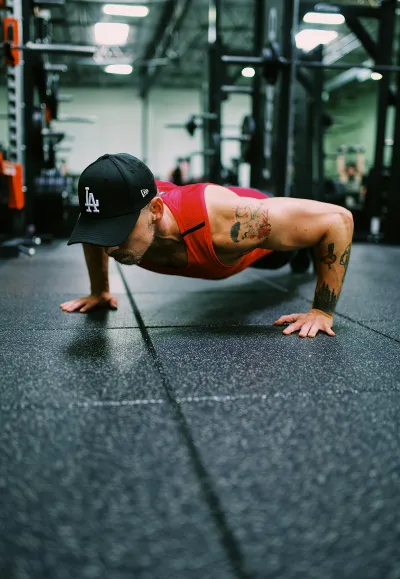
Why Does the Gym Trigger Anxiety?
Gym anxiety is a psychological state in which an unfamiliar environment, uncertainty about equipment use, and fear of others' judgments create discomfort (Gammage et al., 2004). Research shows that up to 50% of people who want to use a gym experience some level of anxiety—especially beginners.
The causes are multi-layered:
- Social comparison: we involuntarily measure ourselves against others
- Unfamiliar environment: complex machines, new terminology
- Fear of judgment: what will others think of my technique?
- Body image: negative self-perception in workout clothes
First Steps to Reduce Anxiety
Familiarise Yourself Before the First Workout
Ask for a brief tour of the gym before your first session. Introduce yourself to a trainer, ask about the equipment. Most gyms offer a free orientation—use it. The unfamiliar becomes safe once it is familiar.
Always Arrive with a Plan
Wandering through the gym randomly increases anxiety. Always go with a clear plan: what you will train, in what order, how many sets. A phone app with a programme is helpful—it gives step-by-step instructions and eliminates the "what do I do next?" confusion.
Use Quieter Times
Peak hours in Estonian gyms are typically 5–7 pm. Morning sessions (7–9 am) and lunchtime (12–2 pm) are calmer—ideal for beginners who prefer fewer people around.
Psychological Techniques
Cognitive-Behavioural Reframing
Deliberately restructuring anxious thoughts is an effective technique (Clark & Beck, 2010). Practice:
- "Everyone is watching me" → "Most people are focused on their own workout"
- "I'm doing everything wrong" → "I'm learning—that's normal at the beginning"
- "I don't belong here" → "I have just as much right to be here as anyone else"
Exposure Hierarchy
Start with smaller steps. Sample plan:
- Visit the gym a few times just to change clothes
- Do a short cardio session (10 minutes on the bike)
- Add one simple strength exercise
- Expand gradually
Training Partner
A friend at the gym significantly reduces anxiety and increases consistency (Irwin et al., 2013). If you do not know anyone who goes, explore group classes—the sense of community is stronger in smaller groups.
Nutrition and Anxiety
Low blood sugar can amplify feelings of anxiety. Never go to the gym on an empty stomach. A light meal 1–2 hours before training stabilises energy levels.
A small amount of caffeine—for example a half serving of C4 Original Pre-Workout—improves focus and motivation. However, a large caffeine dose can amplify anxiety; if you are sensitive, start with half a serving. Find pre-workout supplements at MaxFit in the /en/category/eeltreeningu-toidulisandid category.
Stress and anxiety deplete magnesium—OstroVit MgZB 90 tabs may help regulate nerve function and ease general anxiety levels over a longer period.
When Anxiety Is Chronic
If gym anxiety is part of a broader social anxiety pattern, it may help to:
- Pursue cognitive-behavioural therapy (CBT)
- Start with group training (yoga, group cardio)—less evaluative pressure
- Begin with home workouts before visiting a public gym
FAQ
How long does it take for gym anxiety to decrease?
For most people, anxiety reduces noticeably after 4–6 weeks of regular attendance. The environment becomes familiar, the equipment becomes routine, and social confidence grows. Consistency matters more than perfection.
Does a personal trainer help reduce anxiety?
Yes—a personal trainer is an investment in psychological safety as well as physical. In the first sessions the trainer handles technique and equipment guidance, quickly eliminating the main anxiety triggers.
Does listening to music with headphones help?
Absolutely. Music is an effective tool for detaching from the environment and reducing anxiety caused by social evaluation. Choose a motivating playlist—faster tempo music also increases training intensity.
References
- Gammage, K. L., Martin Ginis, K. A., & Hall, C. R. (2004). Self-presentational efficacy: its influence on social anxiety in an exercise context. Journal of Sport and Exercise Psychology, 26(2), 179–190.
- Clark, D. A., & Beck, A. T. (2010). Cognitive Therapy of Anxiety Disorders: Science and Practice. Guilford Press.
- Irwin, B. C., Scorniaenchi, J., Kerr, N. L., Eisenmann, J. C., & Feltz, D. L. (2012). Aerobic exercise is promoted when individual performance affects the group. Annals of Behavioral Medicine, 44(2), 151–159.
- Martin Ginis, K. A., Prapavessis, H., & Haase, A. M. (2008). The effects of physique-salient exercise videos on women's body image. Body Image, 5(2), 164–172.
- Lindwall, M., & Martin Ginis, K. A. (2006). Moving towards a favorable image: benefits of exercise for self-presentation. Scandinavian Journal of Psychology, 47(3), 209–217.