


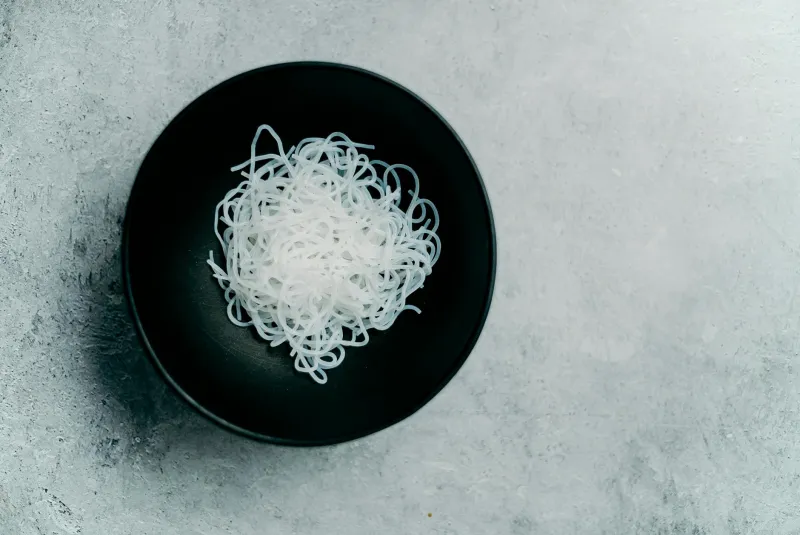
Shirataki Noodles: The Zero-Calorie Pasta Alternative for Weight Management
Who this is for: People on a weight loss journey, keto or low-carb dieters, and diabetics seeking a pasta substitute that will not spike blood sugar. After reading, you will know what shirataki noodles are, how to prepare them properly (this is critical!), and what to realistically expect.
TL;DR
- Shirataki noodles are made from konjac (Amorphophallus konjac) root; the main component is glucomannan fiber
- Calories: 5–15 kcal per 200g serving (regular pasta ~300 kcal)
- Glucomannan provides long-lasting satiety (Walsh et al., 1984)
- EFSA confirmed: glucomannan consumption with a low-calorie diet supports weight loss (EFSA, 2010)
- Post-meal blood sugar spike is significantly lower (Vuksan et al., 2000)
- They require special preparation — rinsing and dry-frying are mandatory
What Are Shirataki Noodles?
Shirataki (Japanese for "white waterfall") are translucent, gelatinous noodles made from the corm of the konjac plant. Their main ingredient is glucomannan fiber — a water-soluble dietary fiber that absorbs up to 50 times its weight in water (Keithley & Swanson, 2005).
The result is a noodle that is 97% water and 3% fiber. Calories are nearly zero.
Sounds too good? There is a catch: taste and texture differ significantly from regular noodles. Preparation is everything.
Nutritional Comparison
| Nutrient | Shirataki (200g) | Regular Pasta (200g) |
|---|---|---|
| Calories | 5–15 kcal | ~300 kcal |
| Carbs | 0–1 g | ~60 g |
| Protein | 0–1 g | ~10 g |
| Fat | 0 g | ~1.5 g |
| Fiber | 3–5 g (glucomannan) | ~2.5 g |
| Sodium | Varies | Varies |
Evidence-Based Benefits
1. Weight Loss Support
EFSA has approved an official health claim for glucomannan: "Glucomannan contributes to weight loss in the context of an energy-restricted diet" (EFSA, 2010). The effective daily dose is 3 g of glucomannan fiber (split into three 1 g doses before meals with a glass of water).
A meta-analysis by Sood et al. (2008) across 14 studies confirmed that glucomannan reduced body weight by an average of 0.79 kg more than placebo over a 5-week period.
2. Blood Sugar Control
Vuksan et al. (2000) found that glucomannan reduced postprandial blood sugar spikes by 22% in patients with insulin resistance syndrome. The mechanism: viscous fiber slows gastric emptying and glucose absorption.
For diabetics, this can be a significant advantage — replacing regular pasta with shirataki dramatically reduces the carbohydrate load.
3. Cholesterol
Sood et al. (2008) also found reductions in total cholesterol (-19.3 mg/dL) and LDL cholesterol (-16.0 mg/dL) in glucomannan consumers.
4. Satiety
Walsh et al. (1984) showed that taking a glucomannan capsule before meals reduced food intake and prolonged satiety. In shirataki noodles, the fiber is already integrated into the food format — a double effect: physical volume plus fiber content.
How to Prepare Shirataki Noodles PROPERLY
This is the most important part of this guide. Poorly prepared shirataki are rubbery, fishy-smelling, and off-putting. Well-prepared shirataki are neutral and absorb sauces beautifully.
Step-by-Step:
- Rinse the noodles from the package under cold running water for 2–3 minutes. The packaging liquid smells fishy — this is normal and disappears with rinsing.
- Boil the noodles for 2–3 minutes in boiling water. This removes residual odor.
- Drain thoroughly.
- Dry-fry in a pan — place noodles on a dry, hot pan (no oil!) and heat for 2–3 minutes until they "squeak." This removes excess moisture and significantly improves texture.
- Add your sauce — the noodles are now ready to absorb flavor. They soak up sauces well.
Best Combinations:
- Stir-fry — soy sauce, garlic, ginger, chicken or tofu
- Bolognese — meat ragout in tomato sauce (calories come from the sauce, not the noodles)
- Asian soup bowl — miso or tom yum broth
- Pad Thai — peanut sauce (e.g. OstroVit 100% Peanut butter smooth 1000g, €13.90 at the time of writing), lime, cilantro
Tip: if you prefer a hint of sweetness in a sauce without sugar, use a small amount of a sugar substitute such as ICONFIT Stevia Sweetener 350g (€6.90) — it keeps the meal low-carb.
Comparison With Other Low-Calorie Alternatives
| Product | Calories (200g) | Carbs | Fiber | Protein | Taste |
|---|---|---|---|---|---|
| Shirataki | 5–15 kcal | ~0 g | 3–5 g | 0 g | Neutral |
| Zucchini noodles | ~40 kcal | ~6 g | ~2 g | ~2 g | Mild, vegetal |
| Legume pasta | ~260 kcal | ~34 g | ~12 g | ~22 g | Rich, slightly grainy |
| Whole wheat pasta | ~300 kcal | ~58 g | ~6 g | ~12 g | Classic |
Common Mistakes
- Skipping the rinse — the packaging liquid smells unpleasant. Always rinse and boil.
- Expecting shirataki to taste like regular pasta — it is NOT a 1:1 pasta replacement. It is a low-calorie fiber carrier that needs a good sauce.
- Over-relying on shirataki alone — 0 g protein means you need protein from elsewhere, for example a protein powder such as Optimum-nutrition Gold Standard 100% Whey 450g Maasikas (€24.90 at the time of writing). Do not replace all meal carbs with shirataki — variety matters.
- Eating too much at first — glucomannan can cause bloating and gas if your system is not used to it. Start with smaller portions.
Frequently Asked Questions
Are shirataki noodles suitable for keto?
Yes, perfectly. 0–1 g carbs per serving makes them an ideal keto pasta alternative.
Are shirataki noodles suitable for children?
In moderate amounts, yes. But children need calories and nutrients for growth — do not use shirataki as a primary food source.
Can I buy shirataki noodles in Estonia?
Yes. They are sold in most health food stores and online shops. Prices range from €2–4 per package (200–400g). MaxFit's selection includes quality konjac products.
Do glucomannan capsules give the same effect?
For weight loss purposes, yes — the EFSA health claim applies to glucomannan capsules (3 g/day). The advantage of shirataki noodles is that the fiber comes with a food experience, which enhances satiety.
Is shirataki safe for diabetics?
Yes, and especially recommended — near-zero carb content means minimal blood sugar impact. However, consult your doctor if you take blood sugar-lowering medications, as glucomannan fiber may enhance their effect.
Estonia-Specific Notes
In Estonia's climate, where winter food variety can be more limited, shirataki noodles are a practical pantry staple for weight-conscious individuals. They store long-term at room temperature (dry packs) or in the fridge (wet packs). Prices in Estonia: €2–4 per pack, making daily use affordable. You'll find other low-calorie healthy-eating products in MaxFit's healthy food category.
References
- EFSA Panel on Dietetic Products (2010). Scientific opinion on the substantiation of health claims related to konjac mannan (glucomannan). EFSA Journal, 8(10), 1798. https://doi.org/10.2903/j.efsa.2010.1749
- Sood N, Baker WL, Coleman CI. (2008). Effect of glucomannan on plasma lipid and glucose concentrations, body weight, and blood pressure: systematic review and meta-analysis. American Journal of Clinical Nutrition, 88(4), 1167–1175. https://pubmed.ncbi.nlm.nih.gov/18842808/
- Vuksan V, Sievenpiper JL, Owen R, et al. (2000). Beneficial effects of viscous dietary fiber from konjac-mannan in subjects with the insulin resistance syndrome. Diabetes Care, 23(1), 9–14. https://pubmed.ncbi.nlm.nih.gov/10857960/
- Keithley J, Swanson B. (2005). Glucomannan and obesity: a critical review. Alternative Therapies in Health and Medicine, 11(6), 30–34. https://pubmed.ncbi.nlm.nih.gov/16320857/
- Walsh DE, Yaghoubian V, Behforooz A. (1984). Effect of glucomannan on obese patients: a clinical study. International Journal of Obesity, 8(4), 289–293. https://pubmed.ncbi.nlm.nih.gov/6096282/
- Kraemer WJ, Vingren JL, Silvestre R, et al. (2007). Effect of adding exercise to a diet containing glucomannan. Metabolism, 56(8), 1149–1158. https://pubmed.ncbi.nlm.nih.gov/17618964/
Also read: Stevia-to-Sugar Conversion Chart: How Much Replaces 1 Cup of Sugar? and Best Sugar-Free Hot Sauces for a High-Protein Diet.


