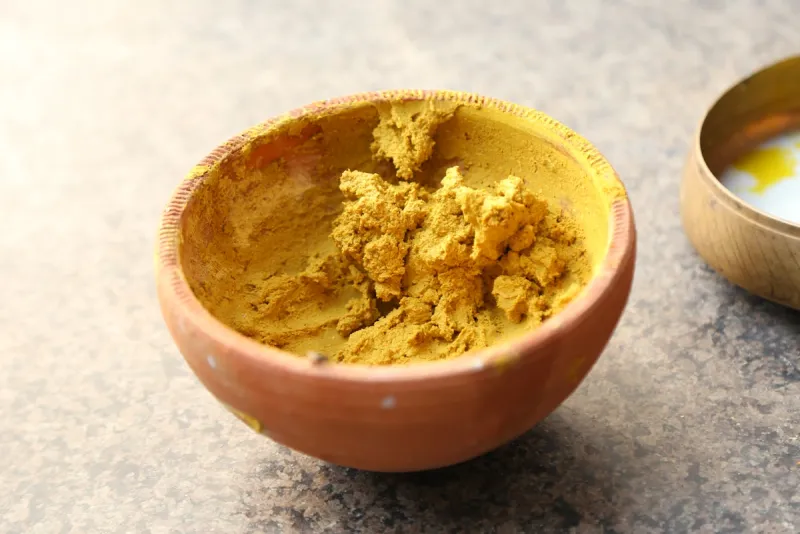
What is glucomannan?
Glucomannan is a water-soluble dietary fiber obtained from the root of the konjac plant (Amorphophallus konjac). This plant originates from Southeast Asia, where it has been used as a food ingredient and in traditional practices for centuries.
Glucomannan is one of the most viscous fibers found in nature -- it can absorb up to 50 times its weight in water (Devaraj et al., 2019), forming a thick gel. This property is the basis of its biological effects.
How glucomannan works
Glucomannan works through several mechanisms:
- Satiety: When it swells in water, glucomannan forms a viscous gel in the stomach and intestines, slowing gastric emptying and prolonging feelings of fullness
- Calorie reduction: Increased satiety may naturally reduce food portions
- Slowed digestion: The viscous gel slows nutrient absorption, including the absorption of sugars and fats
- Cholesterol: Glucomannan may bind bile acids in the intestine, which may affect cholesterol levels (Sood et al., 2008)
- Prebiotic effect: As a fiber, glucomannan provides food for beneficial gut bacteria
Evidence and EFSA-approved claims
Glucomannan is one of very few supplements with specific EFSA (European Food Safety Authority) approved health claims:
EFSA-approved claim 1 -- Body weight: "Glucomannan in the context of an energy-restricted diet contributes to weight loss." Conditions: at least 3 g per day, divided into three 1 g doses, with 1-2 glasses of water before meals. This claim is approved and may legally be used.
EFSA-approved claim 2 -- Cholesterol: "Glucomannan contributes to the maintenance of normal blood cholesterol levels." Condition: 4 g per day.
These are specific EFSA-approved claims based on reviewed scientific evidence. This distinguishes glucomannan from many other weight-related supplements that lack such claims.
Important: The weight loss claim applies ONLY in the context of an energy-restricted diet. Glucomannan alone, without dietary adjustment, will not lead to weight loss.
How to take glucomannan
EFSA-approved dose for weight support: 3 g per day, divided into three 1 g doses. Each dose is taken with 1-2 glasses of water before meals.
EFSA-approved dose for cholesterol support: 4 g per day.
CRITICALLY IMPORTANT -- water: Glucomannan MUST be taken with sufficient water (at least 1-2 glasses with each dose). Because glucomannan swells significantly, insufficient fluid may cause esophageal or intestinal obstruction. MEDICAL CONSULTATION is necessary for people with swallowing difficulties.
Timing: 15-30 minutes before each main meal with plenty of water.
Form: Available as capsules and powder. Capsules are more convenient; powder can be mixed into water (but drink immediately, as it thickens quickly).
Precautions: Not suitable for people with swallowing difficulties or esophageal narrowing. May slow medication absorption -- take medications at least 1 hour before or after glucomannan. Consult your doctor if you take diabetes or cholesterol medications.
Who should consider glucomannan?
Glucomannan may be suitable for:
- People following an energy-restricted diet who want EFSA-approved support for weight loss
- Those who want to support normal cholesterol levels
- People who want to increase their fiber intake
- Those looking for natural satiety support
Frequently asked questions
Is glucomannan the same as konjac noodles? Yes, konjac noodles (shirataki noodles) are made from glucomannan. They are an extremely low-calorie food (nearly 0 calories) popular in low-calorie diets.
Does glucomannan actually help with weight loss? EFSA has confirmed that glucomannan contributes to weight loss (EFSA, 2010), BUT only in the context of an energy-restricted diet and with specific dosing (3x1g before meals). It is not a magic solution -- it is a tool that supports dieting.
Is glucomannan safe? Yes, at recommended doses and with sufficient water, glucomannan is safe. The main risk is insufficient fluid, which may cause intestinal issues. People with swallowing difficulties should avoid it.
Can I take glucomannan with medications? Glucomannan may slow medication absorption. Take medications at least 1 hour before or after glucomannan.
What side effects may occur? The most common side effects are bloating, gas, and abdominal discomfort, especially when starting use. These may diminish as the body adjusts.
How quickly do results appear? The satiety effect is immediate (after each dose). Weight changes depend on the overall energy deficit of the diet and appear over weeks.
References
- EFSA Panel on Dietetic Products, Nutrition and Allergies. (2010). Scientific opinion on the substantiation of health claims related to glucomannan. EFSA Journal, 8(10), 1798.
- Keithley JK, Swanson B, Mikolaitis SL, et al. (2013). Safety and efficacy of glucomannan for weight loss in overweight and moderately obese adults. Journal of Obesity, 2013, 610908.
- Sood N, Baker WL, Coleman CI. (2008). Effect of glucomannan on plasma lipid and glucose concentrations, body weight, and blood pressure: systematic review and meta-analysis. American Journal of Clinical Nutrition, 88(4), 1167-1175.
- Devaraj RD, Reddy CK, Xu B. (2019). Health-promoting effects of konjac glucomannan and its practical applications: a critical review. International Journal of Biological Macromolecules, 126, 273-281.
See also:
Browse fiber and digestive supplements at MaxFit.
Disclaimer
A food supplement is not a substitute for a varied and balanced diet and a healthy lifestyle.