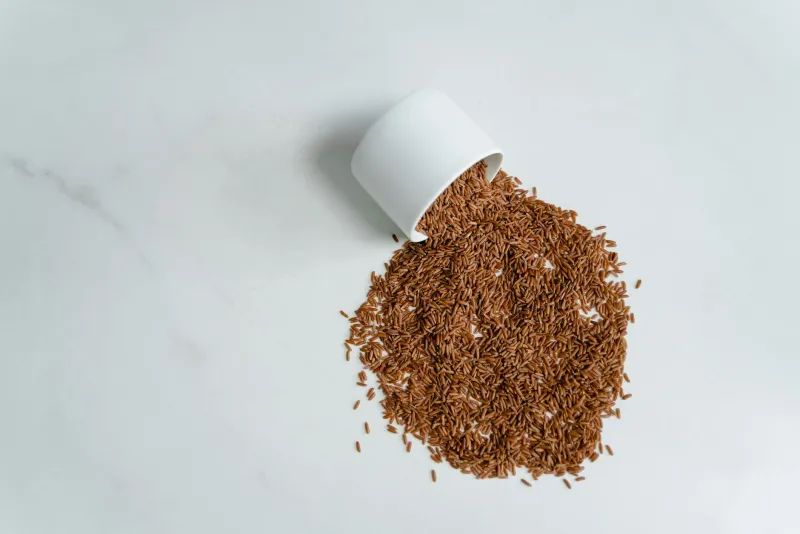
Psyllium Myths vs Facts
Psyllium husk — the outer covering of Plantago ovata seeds — is one of the most studied dietary fibre supplements in the world. It has a well-established evidence base for some specific applications, yet it is also surrounded by myths that overstate its benefits or mischaracterise how it works. This guide separates the real from the exaggerated.
Common Myths About Psyllium
Myth 1: Psyllium cures constipation completely
Psyllium is an effective bulking agent and is widely used for managing constipation. It works by absorbing water and forming a gel in the digestive tract, which softens stool and supports regular bowel movements. However, it is not a laxative in the stimulant sense, and it does not work effectively without adequate fluid intake. Chronic constipation can have multiple causes — structural, motility-related, medication-induced, or dietary — and psyllium addresses only the fibre-deficiency component. For some causes, it will not resolve the problem.
Myth 2: Psyllium causes you to lose weight on its own
Psyllium can be a useful tool in a weight-management approach because its gel-forming viscous fibre slows gastric emptying and may prolong satiety. However, it does not cause weight loss independently of dietary control. A systematic review by Gibb et al. (2015) found that psyllium supplementation produced modest reductions in body weight and BMI as part of dietary intervention programmes, not as a stand-alone intervention. Adding psyllium to a calorie-surplus diet will not produce weight loss.
Myth 3: All fibre supplements are equivalent
Fibre supplements differ enormously in their properties. Psyllium is a viscous, soluble, fermentable fibre — a rare combination that gives it specific advantages for blood glucose management and cholesterol reduction. Insoluble fibres like wheat bran do not share these properties. If you need a fibre supplement for a specific clinical reason, the choice of fibre type matters considerably.
Myth 4: More psyllium is always better
Like all high-fibre products, psyllium must be introduced gradually and accompanied by sufficient water intake. Taking large amounts without adequate fluid can cause intestinal blockage. Start at a small dose and increase gradually, always with a full glass of water.
What the Evidence Actually Shows
The strongest evidence for psyllium is in three areas:
Cholesterol reduction. A meta-analysis by Wei et al. (2009) found that psyllium supplementation was associated with a statistically significant reduction in LDL-cholesterol. The effect is attributed to psyllium's viscous gel interrupting the enterohepatic recirculation of bile acids, which causes the liver to draw on cholesterol stores to produce more bile. This mechanism is well understood and this is one of psyllium's more convincing benefits.
Blood glucose management. Psyllium's viscosity slows carbohydrate absorption, blunting the post-meal glucose spike. This has been studied in people with type 2 diabetes and healthy adults.
Bowel regularity. The evidence for psyllium improving stool consistency and frequency is robust and long-established.
Marketing Claims vs Reality
| Claim | Reality |
|---|---|
| "Detoxifies the gut" | No scientific meaning; psyllium supports transit but does not "detox" anything |
| "Cures IBS" | May reduce some IBS-constipation symptoms; does not cure IBS |
| "Melts fat" | No fat-burning mechanism; promotes satiety, not fat loss |
| "Lowers cholesterol" | Yes — this is one of psyllium's better-supported benefits (Wei et al., 2009) |
Grey Areas
Psyllium's effects on the gut microbiome are still being characterised. As a fermentable fibre, it acts as a prebiotic for some gut bacteria, but the clinical significance of microbiome changes from psyllium supplementation is not yet clear. Research is active in this area.
Psyllium is generally well tolerated, but some individuals experience gas, bloating, or loose stools, particularly during the initial period. People with intestinal narrowing or difficulty swallowing should not use psyllium.
Bottom Line
Psyllium is one of the better-evidenced fibre supplements with real, specific benefits for cholesterol, blood glucose, and bowel regularity. It is not a weight-loss product and it is not a cure-all. Use it as part of a balanced diet with adequate fluid, start slowly, and do not expect benefits beyond what the evidence supports.
At maxfit.ee you can find ICONFIT Superfoods Organic Psyllium Husk Powder 150g and NOW Psyllium Husk 500mg 200 veg caps — both well-formulated options for psyllium supplementation. Explore the kiudained category for related fibre products.
FAQ
How much water should I drink with psyllium?
A standard recommendation is at least one full glass of water (200-250 ml) per dose. Inadequate fluid intake is the main reason psyllium can cause digestive problems rather than solve them.
Can psyllium lower cholesterol?
Yes — this is one of psyllium's most robustly supported effects. The gel formed by psyllium in the gut binds bile acids and reduces their reabsorption, which causes the liver to convert more cholesterol into bile, thereby lowering circulating LDL-cholesterol (Wei et al., 2009).
Does psyllium interact with medications?
Psyllium can reduce the absorption of certain medications by binding them in the gut. It is advisable to take prescription medications at least one to two hours apart from psyllium doses. This is particularly relevant for thyroid medication, diabetes drugs, and cholesterol-lowering medication.
References
Wei, Z. H., Wang, H., Chen, X. Y., Wang, B. S., Rong, Z. X., Wang, B. S., Su, B. H., & Chen, H. Z. (2009). Time- and dose-dependent effect of psyllium on serum lipids in mild-to-moderate hypercholesterolemia: a meta-analysis of controlled clinical trials. European Journal of Clinical Nutrition, 63(7), 821-827. https://pubmed.ncbi.nlm.nih.gov/18985059/
Gibb, R. D., McRorie, J. W., Russell, D. A., Hasselblad, V., & D'Alessio, D. A. (2015). Psyllium fiber improves glycemic control proportional to loss of glycemic control: a meta-analysis of data in euglycemic subjects, patients at risk of type 2 diabetes mellitus, and patients being treated for type 2 diabetes mellitus. American Journal of Clinical Nutrition, 102(6), 1604-1614. https://pubmed.ncbi.nlm.nih.gov/26561625/



