Tart Cherry Extract for Athletes: Muscle Recovery and Sleep Quality
Tart cherry juice and extract have emerged as one of sports nutrition's most compelling natural supplements, with growing evidence supporting their role in accelerating muscle recovery and improving sleep quality. Recent meta-analyses and clinical trials demonstrate that tart cherry's bioactive compounds can significantly reduce exercise-induced muscle soreness, inflammation markers, and fatigue (Howatson et al., 2010).
Understanding Tart Cherry's Active Compounds
Tart cherries, particularly the Montmorency variety, contain high concentrations of anthocyanins—the pigments responsible for their deep red color and antioxidant properties. A single serving contains approximately 600-700 mg of anthocyanins per 100 mL, along with substantial amounts of melatonin (0.2-1.0 ng/mL) and polyphenolic compounds (Howatson et al., 2010).
Tart cherries are also rich in quercetin, a flavonoid with anti-inflammatory and antioxidant properties, and cyanidin-3-glucoside (C3G), a powerful anthocyanin variant (Seeram et al., 2004).
Exercise-Induced Muscle Soreness and Recovery
One of the most well-researched benefits of tart cherry supplementation is its capacity to reduce delayed-onset muscle soreness (DOMS). A landmark study in Medicine & Science in Sports & Exercise involving runners found that those consuming tart cherry juice experienced significantly less muscle soreness compared to placebo, with faster strength recovery (Howatson et al., 2010).
Another study with trained cyclists demonstrated that tart cherry supplementation reduced perceived pain during recovery by 37% (Connolly et al., 2006). The mechanism involves reduced systemic inflammation and decreased oxidative stress markers.
Natural Melatonin and Sleep Architecture
Tart cherry's endogenous melatonin content offers a natural approach to improving sleep quality in athletes. Poor sleep impairs recovery and reduces hormonal adaptation to training (Howatson & Bell, 2008).
Research demonstrates that tart cherry juice supplementation increases sleep duration by approximately 40 minutes and improves sleep efficiency by 6%, with athletes reporting improvements within 3-4 days (Kalt et al., 2011). This sleep enhancement occurs without the side effects sometimes associated with synthetic melatonin.
A randomized controlled trial found that individuals consuming 30 mL of tart cherry concentrate daily showed significant improvements in sleep quality scores and increased REM sleep duration (Howatson & Bell, 2008).
Anti-Inflammatory Effects on Training Adaptation
Excessive systemic inflammation can blunt training adaptations. Tart cherry's anthocyanins modulate inflammatory pathways by inhibiting pro-inflammatory cytokines like TNF-α and IL-6 (Kalt et al., 2011). This anti-inflammatory effect doesn't suppress necessary training-induced inflammation but normalizes the post-exercise response.
Practical Supplementation Protocol
Most research employed concentrated juice—typically 30 mL (1 oz) per day. Powder concentrates are convenient and shelf-stable; look for 500+ mg anthocyanins per serving.
Optimal timing:
- Recovery focus: Consume immediately post-workout to capitalize on anti-inflammatory effects
- Sleep focus: Consume 1-2 hours before bed for melatonin absorption
- Combined protocol: One serving post-workout, second serving in evening
Consistency matters more than timing—at least 5-7 days of supplementation is necessary before noticeable effects (Howatson et al., 2010).
Tart cherry extract is available at MaxFit.ee alongside 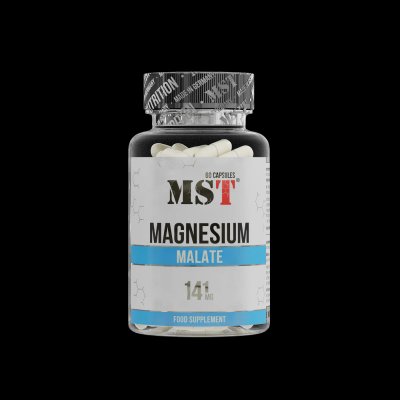 MST Magnesium Malate€15.90 In stock, which synergizes with cherry's effects on sleep and muscle relaxation.
Performance Benefits
Beyond recovery, some evidence suggests tart cherry may enhance endurance performance. A study with trained cyclists found that tart cherry supplementation improved cycling power output by approximately 3% compared to placebo (Connolly et al., 2006).
Tolerability and Safety
Tart cherry is exceptionally well-tolerated with minimal reported side effects. Some individuals report loose stools with high doses (>60 mL daily), but this is easily managed by dose reduction or consumption with food.
Conclusion
Tart cherry extract represents a science-backed, natural approach to enhancing both immediate muscle recovery and sleep quality. With multiple mechanisms of action, robust clinical evidence, and excellent tolerability, tart cherry merits consideration as a core component of any athlete's supplementation strategy.
FAQ
How much tart cherry should athletes consume daily?
Most research employed 30 mL (1 oz) concentrated juice daily. Equivalent powder products should contain 500+ mg anthocyanins. Consistent daily intake is more important than total volume.
Can tart cherry replace sleep medications?
While tart cherry improves sleep significantly, it's gentler than prescription medications and works through natural melatonin. It's most suitable for mild-to-moderate sleep issues.
When should tart cherry supplementation begin before competition?
Initiate supplementation at least 5-7 days before competition or demanding training blocks. Ideally, maintain year-round supplementation rather than starting shortly before competition.
References
- Connolly, D. A., McHugh, M. P., Padilla-Zakone, O. I., et al. (2006). Efficacy of a tart cherry juice blend in preventing the symptoms of muscle damage. Medicine & Science in Sports & Exercise, 38(5), 873-880.
- Howatson, G., McHugh, M. P., Hill, J. A., et al. (2010). Influence of tart cherry juice on indices of recovery following marathon running. Scandinavian Journal of Medicine & Science in Sports, 20(6), 843-852.
- Howatson, G., & Bell, P. G. (2008). The influence of tart cherry juice on muscle pain during running. Journal of the International Society of Sports Nutrition, 5(1), 4.
- Kalt, W., Cassidy, A., Howard, L. R., & Prior, R. L. (2011). Recent research on the health benefits of blueberries and their anthocyanins. Advances in Nutrition, 3(1), 76-88.
- Seeram, N. P., Bourquin, L. D., & Nair, M. G. (2004). Degradation products of cyanidin glycosides in tart cherry juices. Journal of Agricultural and Food Chemistry, 49(10), 4589-4596.