Omega-3 for Athletes: EPA, DHA and the Science of Faster Recovery
Once considered a "heart health" supplement for older adults, omega-3 fatty acids — specifically EPA and DHA — are now firmly on the radar of athletes and active people. Reviews published through 2025 highlight roles in reducing exercise-induced muscle soreness, supporting recovery and possibly enhancing training adaptation (Thielecke & Blannin, 2020). Here's what the science says — and what it doesn't.
EPA and DHA: not all omega-3 is equal
"Omega-3" is an umbrella term. The plant-derived ALA (from flax, chia) converts only poorly into the biologically active forms EPA and DHA (Calder, 2017). For measurable effects on inflammation and recovery, the marine-sourced EPA and DHA in fish oil are what matter. When comparing products, read the label for actual EPA and DHA milligrams — not just total fish oil.
The recovery angle
Intense or unaccustomed exercise causes muscle damage and an inflammatory response — felt as delayed-onset muscle soreness (DOMS). Omega-3s are precursors to specialised pro-resolving mediators that help "switch off" inflammation at the right time (Calder, 2017). Several trials report that EPA/DHA supplementation reduces muscle soreness and markers of muscle damage after hard sessions (Jakeman et al., 2017; Philpott et al., 2019).
A narrative review concluded that omega-3 supplementation may attenuate muscle soreness, improve recovery and support neuromuscular function, while cautioning that effects on raw performance are modest and inconsistent (Thielecke & Blannin, 2020).
Beyond recovery
The benefits extend past the gym:
- Cardiovascular support. EPA and DHA have well-documented effects on triglycerides and vascular function (Calder, 2017).
- Joint comfort. Their anti-inflammatory action may ease exercise-related joint discomfort.
- Brain and mood. DHA is a structural component of brain cell membranes, relevant during dark Nordic winters when mood often dips.
How much EPA and DHA?
General guidance for active people is roughly 1–3 g of combined EPA + DHA per day for recovery and anti-inflammatory goals, well above the ~250 mg minimum for general health (Philpott et al., 2019). Quality matters: look for products tested for oxidation and heavy metals, since rancid fish oil is both unpleasant and counterproductive.
Choosing at maxfit.ee
The omega-3 category at maxfit.ee covers several potencies. The OstroVit Omega 3 Ultra 90 caps delivers a high EPA/DHA concentration per softgel — useful for hitting the higher recovery-oriented doses. The MST Omega 3 Selected 60 Softgels is a solid everyday option, and the 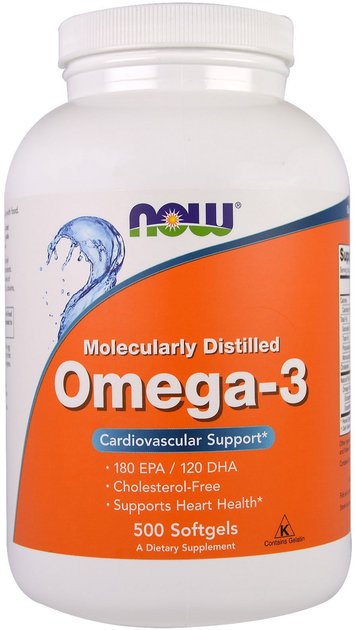 NOW Omega 3 1000mg 500 Soft Gels€44.90 In stock is a large-count, value pick from a brand known for third-party testing — sensible for year-round daily use.
Practical tips
- Take with a meal containing fat to improve absorption.
- Store in a cool, dark place; refrigerate after opening to slow oxidation.
- A "fishy" aftertaste or burps can signal a lower-quality or oxidised product — or simply taking it on an empty stomach.
- Vegetarians can use algae-derived EPA/DHA, though these are less common.
FAQ
How long before omega-3 improves recovery?
Tissue levels of EPA and DHA rise gradually; most studies use 4–8 weeks of supplementation before measuring recovery benefits (Philpott et al., 2019). It's a consistency supplement, not a same-day fix.
Is fish oil enough, or do I need a higher-dose product?
For general health, a standard 1000 mg fish-oil softgel is fine. For recovery-focused goals (1–3 g EPA+DHA daily), a higher-concentration product means fewer capsules to reach the target (Thielecke & Blannin, 2020).
Can omega-3 replace anti-inflammatory painkillers after training?
No. Omega-3s support the body's natural resolution of inflammation but are not a substitute for medication. Routinely blunting all post-exercise inflammation with high-dose painkillers may even impair adaptation (Calder, 2017).
References
- Thielecke, F., & Blannin, A. (2020). Omega-3 fatty acids for sport performance — are they equally beneficial for athletes and amateurs? A narrative review. Nutrients, 12(12), 3712.
- Philpott, J. D., Witard, O. C., & Galloway, S. D. R. (2019). Applications of omega-3 polyunsaturated fatty acid supplementation for sport performance. Research in Sports Medicine, 27(2), 219–237.
- Calder, P. C. (2017). Omega-3 fatty acids and inflammatory processes: from molecules to man. Biochemical Society Transactions, 45(5), 1105–1115.
- Jakeman, J. R., Lambrick, D. M., Wooley, B., Babraj, J. A., & Faulkner, J. A. (2017). Effect of an acute dose of omega-3 fish oil following exercise-induced muscle damage. European Journal of Applied Physiology, 117(3), 575–582.