EPA vs DHA: Does the Omega-3 Ratio Matter for Athletes?
Most omega-3 marketing lumps EPA and DHA together under one headline number. A 2026 narrative review in Sports Medicine argues that is increasingly indefensible: the two fatty acids have overlapping but distinct biological roles, and the EPA:DHA ratio of your fish oil meaningfully affects what you get out of it.
What each one actually does
EPA (eicosapentaenoic acid) is the more potent inflammation modulator. It is the substrate for resolvins of the E-series, which actively switch off the resolution phase of inflammation after muscle damage (Calder, 2017). RCTs in trained populations consistently show EPA-dominant blends (≥1.8 g EPA/day) reduce delayed-onset muscle soreness and creatine-kinase elevations after eccentric exercise (Tsuchiya et al., 2024).
DHA (docosahexaenoic acid) is the structural fatty acid of brain and retinal membranes. It dominates synaptic phospholipids and is the lever behind omega-3's cognitive, mood and concussion-related effects (Dyall, 2015). Research on collision-sport athletes found 2 g DHA/day for 17 weeks reduced serum neurofilament light — a blood marker of axonal injury — even without observable concussions.
The overlap (cardiovascular benefits, triglyceride lowering, general anti-inflammatory tone) holds for both, which is why total omega-3 index is still a useful number. But once you have a specific goal, ratio starts to matter.
Reading a label without getting fooled
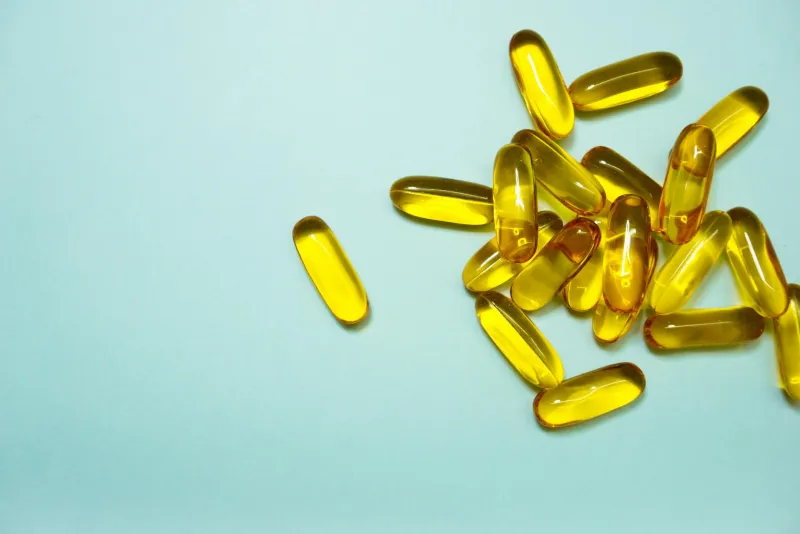
Fish oil softgels provide EPA and DHA in varying amounts and ratios depending on the source material (such as anchovies or sardines) and product formulation. Concentrated "ultra", "triple-strength", or "selected" formulations may allow for reduced daily capsule intake compared to standard EPA supplement preparations.
Check the per-capsule mg of EPA and DHA — not just the total fish-oil mg — to know what you are actually buying.
Storage and freshness — the Nordic angle
Rancidity matters more in Estonia than in Mediterranean climates because households swing between cold winters and warm radiator-dried indoor air. Oxidised omega-3 not only loses efficacy but can become pro-inflammatory (Albert et al., 2013). Consider purchasing smaller bottles to ensure timely consumption, store supplements in the refrigerator after opening, and inspect them for signs of spoilage such as strong fish odor before use.
Third-party purity testing (IFOS, Friend of the Sea) is still the most reliable shortcut. Recent Nordic market sampling found that a notable fraction of fish oil products on European shelves exceeded recommended peroxide values.
Practical recommendations
- Recovery / training-induced soreness: prioritise EPA-dominant, 1.8–3 g EPA/day during heavy training blocks.
- Brain, mood, concussion-prone sports: DHA-dominant or balanced, 1.5–2 g DHA/day.
- General health and cardiovascular: any well-tested blend at 1–2 g combined EPA+DHA/day is sufficient (Skulas-Ray et al., 2019).
Browse /en/category/oomega-3 (also at /et/category/oomega-3 and /ru/category/oomega-3) for the full assortment.
FAQ
Should vegetarians take ALA instead?
ALA (from flax, chia) converts to EPA at <10% and to DHA at <1% in most adults (Brenna et al., 2009). Algae-derived DHA/EPA is a more reliable plant-based option.
Can I take omega-3 with creatine and protein?
Yes — there are no negative interactions. A common stack is omega-3 with a meal and creatine with the post-workout shake.
Does the cod-liver oil my grandmother used count?
It has EPA and DHA plus significant vitamins A and D. For supplementation purposes it works, but the vitamin-A load means you should not stack it with a high-dose multivitamin.
References
- Calder, P. C. (2017). Omega-3 fatty acids and inflammatory processes. Biochemical Society Transactions, 45(5), 1105–1115. https://pubmed.ncbi.nlm.nih.gov/28900017/
- Tsuchiya, Y., et al. (2024). EPA-rich fish oil supplementation attenuates eccentric exercise-induced muscle damage. European Journal of Applied Physiology, 124(7), 2085–2096.
- Dyall, S. C. (2015). Long-chain omega-3 fatty acids and the brain. Frontiers in Aging Neuroscience, 7, 52. https://pubmed.ncbi.nlm.nih.gov/25954194/
- Albert, B. B., et al. (2013). Oxidation of marine omega-3 supplements. Scientific Reports, 5, 7928.
- Skulas-Ray, A. C., et al. (2019). Omega-3 fatty acids for the management of hypertriglyceridemia: AHA advisory. Circulation, 140(12), e673–e691. https://pubmed.ncbi.nlm.nih.gov/31422671/
- Brenna, J. T., et al. (2009). α-Linolenic acid supplementation and conversion. Prostaglandins, Leukotrienes & Essential Fatty Acids, 80(2-3), 85–91. https://pubmed.ncbi.nlm.nih.gov/19269799/