Greens Powders and Multivitamins: Do Active People Actually Need Them?
Scoop a spoonful of bright green powder into a glass, watch it fizz, and you can feel virtuous before breakfast is even on the table. Greens powders have become one of the fastest-growing categories in the supplement world, and multivitamins remain a staple of many gym bags. But do active people genuinely need either — or are they paying for expensive insurance against a problem they do not have?
The Case for Micronutrient Insurance
Training hard raises your needs. Hard exercise increases the turnover of several vitamins and minerals, raises oxidative stress, and — for athletes managing body composition — often comes with calorie restriction that squeezes out food variety. Surveys consistently find that even health-conscious adults fall short on at least one micronutrient. A large analysis of intake data found that a meaningful share of adults are at risk of inadequacy in multiple nutrients at once, particularly vitamin D, magnesium and vitamin E (Bird et al., 2017).
This is the honest argument for a multivitamin: not as a performance booster, but as a low-cost safety net. The recent COSMOS-Mind trial added a notable data point — a daily multivitamin modestly slowed cognitive ageing in older adults over three years compared with placebo (Baker et al., 2023). It is not a dramatic effect, but it is a real one, from a large, well-designed study.
A multivitamin like 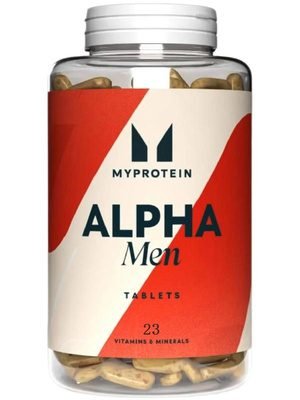 MyProtein Alpha Men Multivitamins€19.90 In stock 240 Tabs is designed exactly for this role: a broad, daily baseline of vitamins and minerals for active men whose diets are not perfect every single day.
Where Greens Powders Fit — and Where They Do Not
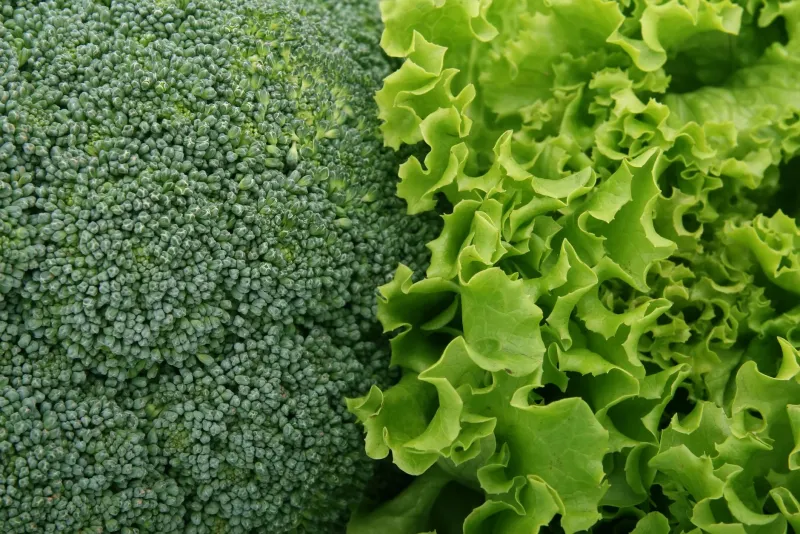
Greens powders are a different proposition. Most blend dried vegetables, fruits, algae, grasses and herbs into a single scoop, and they are marketed as a convenient way to 'get your greens'. The marketing implies they can stand in for vegetables. The evidence does not support that claim.
The strongest data on the protective power of produce comes from whole fruits and vegetables. A major dose-response meta-analysis linked higher fruit and vegetable intake to lower risk of heart disease, cancer and early death, with benefits continuing up to around 800 g per day — roughly ten portions (Aune et al., 2017). That protection comes from the whole food: its fibre, its water, its full matrix of polyphenols, and the way it displaces less healthy choices on the plate.
A systematic review of mixed fruit and vegetable concentrates — the category greens powders belong to — found they can raise blood levels of certain antioxidants and modestly reduce some markers of oxidative stress and inflammation, but the clinical evidence remains limited and inconsistent (Esfahani et al., 2011). In other words: a greens powder may add some polyphenols, but it is not a replacement for the vegetables on your plate. A typical scoop also contains very little fibre compared with a real serving of vegetables.
That does not make greens powders worthless. For a traveller, a shift worker, or anyone going through a stretch of poor eating, a product like Mutant Big Greens Berry 30 Servings can be a reasonable top-up — a way to add some plant compounds on days when fresh produce is genuinely hard to come by. The mistake is treating it as a licence to skip vegetables.
A Practical Hierarchy
If you want to spend your money well, think in this order:
- Food first. Aim for a variety of vegetables and fruit across the day. Nothing in a tub beats this.
- Target known gaps. In Estonia, vitamin D is the clearest example — most people are low through the dark months, and a specific supplement makes more sense than hoping a multivitamin covers it.
- A multivitamin as a safety net. If your diet is genuinely inconsistent, a daily multivitamin is cheap, low-risk insurance.
- A greens powder as a convenience, not a cure. Useful on bad-eating days; not a substitute for the produce aisle.
One caution: more is not better. Fat-soluble vitamins (A, D, E, K) and minerals like iron can accumulate. Stacking a multivitamin, a greens powder and several single-nutrient products can quietly push some intakes too high. Read the labels and add up the overlaps.
The Bottom Line
Active people do not strictly need a greens powder or a multivitamin — but for many, a multivitamin is sensible, low-cost insurance against the gaps that a busy, calorie-controlled or winter diet leaves behind. Greens powders are best understood as a convenience product: a modest source of plant compounds for imperfect days, not a replacement for vegetables. Spend on whole food first, patch known gaps second, and treat the tubs as backup.
Multivitamins and greens blends are available at maxfit.ee, with free delivery on orders over €50.
FAQ
Can a greens powder replace eating vegetables?
No. The strongest evidence for the health benefits of produce comes from whole fruits and vegetables, including their fibre and full nutrient matrix (Aune et al., 2017). A greens powder may add some polyphenols and is handy on bad-eating days, but it contains little fibre and should be seen as a top-up, not a substitute.
Do I need a multivitamin if I already eat fairly well?
Not necessarily. If your diet is varied and your calories are adequate, you may cover your needs from food. A multivitamin is most useful as insurance when your eating is inconsistent, your calories are restricted, or you know your diet has gaps.
Can I take a multivitamin and a greens powder together?
Usually yes, but check for overlap. Fat-soluble vitamins and some minerals can accumulate if several products stack the same nutrients. Add up the labels and avoid routinely exceeding recommended amounts.
References
- Aune, D., Giovannucci, E., Boffetta, P., et al. (2017). Fruit and vegetable intake and the risk of cardiovascular disease, total cancer and all-cause mortality—a systematic review and dose-response meta-analysis of prospective studies. International Journal of Epidemiology, 46(3), 1029–1056.
- Baker, L. D., Manson, J. E., Rapp, S. R., et al. (2023). Effects of cocoa extract and a multivitamin on cognitive function: A randomized clinical trial. Alzheimer's & Dementia, 19(4), 1308–1319.
- Bird, J. K., Murphy, R. A., Ciappio, E. D., & McBurney, M. I. (2017). Risk of deficiency in multiple concurrent micronutrients in children and adults in the United States. Nutrients, 9(7), 655.
- Esfahani, A., Wong, J. M. W., Truan, J., et al. (2011). Health effects of mixed fruit and vegetable concentrates: a systematic review of the clinical interventions. Journal of the American College of Nutrition, 30(5), 285–294.