Cordyceps: The Story of the Sports Mushroom
Cordyceps entered the international sporting world's spotlight in 1993, when a Chinese women's middle-distance running team shattered three world records at the Chinese National Games in Beijing. Coach Ma Junren claimed the athletes used cordyceps mushroom. While the link was never proven, the event triggered a wave of research that continues today.
What Is Cordyceps?
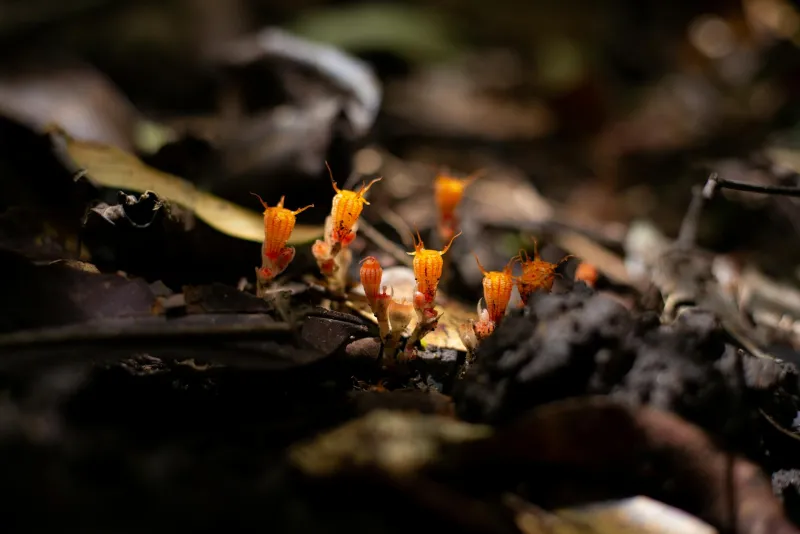
Cordyceps is a genus of fungi, with the most studied species being:
- Cordyceps sinensis — a rare, wild species growing on the Tibetan Plateau. Extremely expensive (up to $50,000/kg)
- Cordyceps militaris — a cultivated species used in most supplements. Affordable and sustainable
Most modern supplements use C. militaris, since C. sinensis cannot be cultivated in laboratories and wild harvesting is ecologically problematic.
Active Compounds
- Cordycepin (3'-deoxyadenosine) — an adenosine analogue, the primary bioactive compound
- Adenosine — important for energy transfer and vascular regulation
- Polysaccharides — immunomodulatory properties
- Ergosterol — a vitamin D precursor
Research Results: Mixed but Intriguing
Hirsch et al. (2017): Systematic Review
This thorough review analysed existing research on cordyceps and physical performance.
Conclusions:
- Results on VO2max (maximal oxygen uptake) are mixed
- Some studies showed improvement, others did not
- Differences may stem from dosages, study populations and cordyceps type
- Larger, higher-quality studies are needed
Chen et al. (2010): Older Adults
- Participants: 20 healthy older adults (50–75 years)
- Product: Cs-4 cordyceps extract
- Duration: 28 days
- Results: VO2max improved to a statistically significant degree
- Note: Small sample, older participants — results may not apply to younger athletes
Yi et al. (2004): Lactate Threshold
- Participants: Healthy adults
- Results: Lactate threshold (the intensity at which lactic acid begins to accumulate) improved
- Significance: A higher lactate threshold allows longer training at high intensity (Yi et al., 2004)
How Might Cordyceps Work?
Researchers have proposed several possible mechanisms:
- Improved oxygen utilisation — cordycepin and adenosine may affect red blood cell oxygen-carrying capacity
- ATP production — as an adenosine analogue, cordycepin may support cellular energy production (Tuli et al., 2014)
- Vasodilation — adenosine's vasodilating effect may improve blood flow to muscles
- Antioxidant protection — reduction of oxidative stress during exercise
These mechanisms have been largely observed in laboratory and animal studies. Human research is still clarifying these processes.
Practical Guide
What Do Studies Use?
- Dose: 1–4 g cordyceps mushroom extract per day
- Duration: At least 2–4 weeks (acute consumption appears ineffective)
- Type: Cs-4 (fermentation-based) or C. militaris fruiting body extract
- Timing: Daily consumption, not just pre-workout
Who Might Be Interested in Cordyceps?
- Endurance athletes (running, cycling, cross-country skiing)
- Active older adults
- People seeking natural ways to support training
Who Should Be Cautious?
- People taking medications (especially blood sugar-lowering drugs)
- People with autoimmune conditions
- Pregnant and breastfeeding women (insufficient safety data)
The Sustainability Angle
Wild Cordyceps sinensis overharvesting on the Tibetan Plateau is a serious ecological concern. It has placed local populations under pressure and driven prices to astronomical levels.
Cultivated Cordyceps militaris is a sustainable alternative that often contains even more cordycepin than the wild species.
Summary
Cordyceps is an intriguing sports supplement with promising but still limited evidence. Some studies show positive results for oxygen uptake and lactate threshold, but results are mixed and larger studies are needed.
Based on current evidence, cordyceps may be an interesting addition for endurance athletes, but one should not expect a miracle pill.
References
- Hirsch KR, Smith-Ryan AE, Roelofs EJ, Trexler ET, Mock MG. (2017). Cordyceps militaris improves tolerance to high-intensity exercise after acute and chronic supplementation. Journal of Dietary Supplements, 14(1), 42-53.
- Chen S, Li Z, Krochmal R, Abrazado M, Kim W, Cooper CB. (2010). Effect of Cs-4 (Cordyceps sinensis) on exercise performance in healthy older subjects: a double-blind, placebo-controlled trial. Journal of Alternative and Complementary Medicine, 16(5), 585-590.
- Yi X, Xi-zhen H, Jia-shi Z. (2004). Randomized double-blind placebo-controlled clinical trial and assessment of fermentation product of Cordyceps sinensis (Cs-4) in enhancing aerobic capacity and respiratory function of the healthy elderly Chinese. Chinese Journal of Integrative Medicine, 10(3), 187-192.
- Tuli HS, Sandhu SS, Sharma AK. (2014). Pharmacological and therapeutic potential of Cordyceps with special reference to cordycepin. 3 Biotech, 4(1), 1-12.
Read more:
- Mushroom extract products at MaxFit
Disclaimer
Dietary supplements are not a substitute for a varied, balanced diet and healthy lifestyle. The research findings presented do not constitute approved health claims.