Beta-Alanine for High-Intensity Training: Performance and Muscle Buffering
Beta-alanine has emerged as one of the most rigorously researched supplements in sports nutrition, with consistent evidence demonstrating meaningful improvements in high-intensity exercise performance. Unlike supplements that work through energy provision, beta-alanine operates through a unique biochemical mechanism: elevating intramuscular carnosine concentrations, which buffers acidic byproducts of intense exercise (Boldyrev et al., 2013).
Understanding Carnosine and Muscle pH
During high-intensity exercise lasting 1-7 minutes—such as repeated sprint intervals, heavy resistance training sets, or competitive efforts in sports like rugby, basketball, or sprinting—muscles accumulate hydrogen ions (H+), leading to decreased pH and muscle acidosis. This pH reduction impairs muscle force production, neuromuscular transmission, and calcium handling, contributing to fatigue (Boldyrev et al., 2013).
Carnosine, a dipeptide composed of beta-alanine and histidine, acts as an intramuscular buffer. In muscles with higher carnosine concentrations, this buffering capacity is enhanced, allowing athletes to sustain higher power outputs before fatigue-inducing pH drops occur (Hill et al., 2007).
Mechanism: Beta-Alanine's Route to Performance
Beta-alanine supplementation increases plasma beta-alanine concentrations, which facilitates greater muscle uptake. Once inside the muscle cell, beta-alanine combines with histidine via the enzyme carnosine synthase, synthesizing carnosine (Boldyrev et al., 2013).
Histidine availability is not a limiting factor—most individuals have sufficient histidine from dietary protein. Beta-alanine bioavailability and muscle uptake capacity are the rate-limiting steps, making consistent supplementation essential for carnosine loading.
Performance Benefits: What the Research Shows
A meta-analysis published in Medicine & Science in Sports & Exercise examined 57 studies and concluded that beta-alanine supplementation provides modest but consistent 2-3% improvements in exercise performance lasting 1-10 minutes (Hobson et al., 2012). For athletes, this seemingly small improvement translates to substantial competitive advantages.
For example:
- Repeated sprint intervals: Studies with cyclists, runners, and team sport athletes found 1-3% improvements in mean power output or speed across multiple sprints, with larger improvements (3-5%) in later sprints when fatigue accumulates (Hobson et al., 2012)
- Resistance training: Beta-alanine supplementation increased total repetitions performed to muscular failure, particularly in higher-rep sets (8-15 reps), where muscle pH reduction is pronounced (Hill et al., 2007)
- Sport-specific performance: Soccer players, wrestlers, and combat athletes showed improved performance in sport-specific high-intensity protocols
Optimal Dosing Strategies
Beta-alanine requires specific dosing protocols to maximize muscle carnosine loading:
Loading Phase
Most research employed: 3-6 grams per day, divided into 3-4 doses of 0.8-1.6 grams each, taken over 4-8 weeks. This loading approach allows muscle carnosine to reach near-maximal concentrations.
Maintenance Phase
Following the loading phase, a maintenance dose of 1.6-3.2 grams per day (divided into 2-3 doses) sustains elevated carnosine levels. Without maintenance dosing, muscle carnosine decreases, returning to baseline within 4-6 weeks (Hill et al., 2007).
Timing Considerations
While exact timing is less critical than total daily intake, evidence suggests:
- Taking beta-alanine with carbohydrates and protein may enhance absorption
- Spacing doses throughout the day maintains consistent plasma availability
- Pre-workout timing is less important since benefits accrue from chronic supplementation
Side Effects and Tolerability
Beta-alanine's most commonly reported side effect is paresthesia—a harmless tingling sensation in the skin, particularly in the face and hands, occurring 10-60 minutes after dosing. This sensation:
- Is benign and completely reversible
- Diminishes with continued supplementation
- Can be minimized by dividing the daily dose into smaller amounts
- Does not indicate any adverse physiological effects
No serious adverse effects have been documented in over 20 years of research. Long-term supplementation (>52 weeks) shows no negative effects on liver or kidney function (Hill et al., 2007).
Population Specificity: Who Benefits Most?
Beta-alanine is most effective for athletes competing in protocols involving:
- Duration: 1-10 minute high-intensity efforts
- Intensity: 75-100% of maximal aerobic power
- Sport examples: Sprinting, rowing, judo, wrestling, combat sports, team sports with repeated efforts
Athletes engaged primarily in aerobic endurance (>30 minute continuous efforts) show minimal benefit. Similarly, single-effort events show less benefit.
Synergies with Other Supplements
Beta-alanine works synergistically with:
- Sodium bicarbonate (baking soda): Acts as an extracellular buffer, complementing intramuscular carnosine buffering
- Creatine monohydrate: Different mechanisms, both support high-intensity training performance
- Carbohydrate and electrolyte solutions: Enhance beta-alanine absorption
Available at MaxFit.ee, quality beta-alanine products combine well with 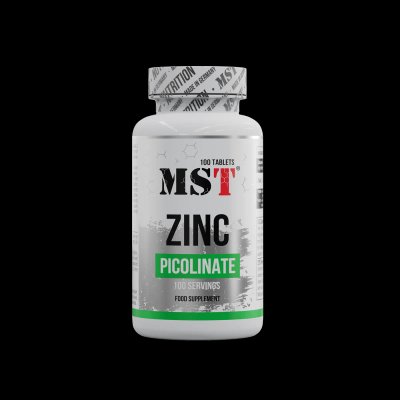 MST Zinc Picolinate€13.90 In stock, which supports testosterone production and training recovery.
Practical Implementation Recommendations
- Initiate loading 4-8 weeks before target competition
- Divide daily dose into smaller amounts (0.8-1.6g per dose) to minimize paresthesia
- Maintain consistency: Sporadic supplementation is ineffective—commit to daily supplementation for minimum 3-4 weeks
- Track subjective performance: Most athletes notice improvements in high-rep strength or repeated sprint capacity
- Combine with intelligent training: Beta-alanine enhances training capacity; pair with appropriately designed high-intensity training blocks
Individual Response Variation
Response to beta-alanine varies based on:
- Genetic factors: Some individuals have naturally higher muscle carnosine synthase activity
- Dietary patterns: Vegetarians may have lower baseline carnosine
- Training history: Well-trained athletes with high baseline carnosine show smaller improvements
- Muscle fiber composition: Athletes with higher Type II (fast-twitch) fiber proportion show larger responses
Many athletes follow a trial protocol: supplement for 4-8 weeks, discontinue for 4 weeks, then reassess performance changes.
Conclusion
Beta-alanine represents a well-researched, evidence-backed supplement offering consistent 2-3% improvements in high-intensity exercise performance. Combined with intelligent training design, beta-alanine supplementation can be a valuable component of comprehensive performance enhancement strategies for competitive athletes.
FAQ
How long before beta-alanine provides benefits?
Measurable performance improvements typically emerge after 3-4 weeks of consistent daily supplementation. Peak muscle carnosine concentrations are reached by 4-8 weeks. Some athletes notice subjective improvements within 2-3 weeks.
What if I experience paresthesia from beta-alanine?
Paresthesia is benign and resolves spontaneously. To minimize: (1) divide the daily dose into smaller amounts, (2) take with meals, (3) understand tolerance typically develops within 1-2 weeks.
Should I cycle beta-alanine supplementation?
Muscle carnosine decreases within 4-6 weeks of discontinuation, suggesting consistent year-round supplementation is superior to cycling. However, some athletes prefer cycling to reduce cost.
References
- Boldyrev, A. A., Aloisi, F., Brambilla, R., & Norenberg, M. D. (2013). Carnosine and related compounds: Structures, distribution and biological roles. Advances in Drug Delivery Reviews, 65(9), 1150-1162.
- Harris, R. C., Tallon, M. J., Dunnett, M., et al. (2006). The absorption of orally supplied beta-alanine and its effect on muscle carnosine synthesis. Amino Acids, 30(3), 279-289.
- Hill, C. A., Harris, R. C., Kim, H. J., et al. (2007). Influence of beta-alanine supplementation on skeletal muscle carnosine concentrations. Amino Acids, 32(2), 225-233.
- Hobson, R. M., Saunders, B., Ball, G., Harris, R. C., & Sale, C. (2012). Effects of beta-alanine supplementation on exercise performance: A meta-analysis. Amino Acids, 43(1), 25-37.