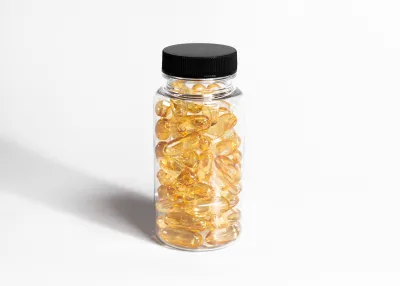
MegaRed by Schiff: Honest Krill Oil Supplement Review
MegaRed is Schiff Nutrition's krill oil brand, marketed as a superior alternative to standard fish oil. Smaller capsule, better absorption, less fishy aftertaste — those are the promises. But does the science support these claims? Let us take an honest look.
Who This Review Is For
People considering buying MegaRed, wanting to understand the differences between krill oil and fish oil, or looking for an honest assessment of this product.
TL;DR
- MegaRed contains krill oil where omega-3 is bound to phospholipids, not triglycerides
- Phospholipid form absorbs well, but the absolute EPA+DHA dose is low (typically 250–350 mg per capsule)
- Contains astaxanthin — a natural antioxidant that protects omega-3 fatty acids from oxidation
- Price per milligram of EPA+DHA is high compared to concentrated fish oil
- Suits those who cannot tolerate fish oil taste and want a smaller capsule
- High therapeutic doses (>1000 mg EPA+DHA) are difficult to achieve
What Is MegaRed?
MegaRed is a brand by Schiff Nutrition, a subsidiary of Reckitt Benckiser. The product line includes:
- MegaRed Superior Omega-3 Krill Oil — base product, 350 mg krill oil
- MegaRed Advanced 4in1 — higher concentration variant
- MegaRed Heart Health — targeted at cardiovascular health
- MegaRed Joint Care — targeted at joint health, with hyaluronic acid
Ingredient Analysis
Krill Oil vs Fish Oil: Key Differences
| Property | Krill Oil (MegaRed) | Fish Oil (standard) |
|---|---|---|
| Omega-3 form | Phospholipids | Triglycerides/ethyl esters |
| EPA+DHA per capsule | 250–350 mg | 300–750 mg |
| Absorption | Good (Ulven et al., 2011) | Form-dependent |
| Astaxanthin | Yes (natural) | No |
| Fishy aftertaste | Minimal | Variable |
| Capsule size | Small | Larger |
| Price per mg EPA+DHA | High | Lower |
The Phospholipid Advantage
Krill oil omega-3 fatty acids are bound to phospholipids rather than triglycerides. This matters because cell membranes are also composed of phospholipids.
Ulven et al. (2011) showed that krill oil and fish oil achieved similar plasma omega-3 levels, even though krill oil contained less total EPA+DHA. This suggests better bioavailability per gram.
But here is the catch: better absorption per gram does not compensate for a lower total amount when the goal is a high therapeutic dose.
Astaxanthin
Krill oil's natural red color comes from astaxanthin — a potent antioxidant:
- Protects omega-3 fatty acids from oxidation within the capsule (Barros et al., 2014)
- Provides additional benefit for skin protection and anti-inflammatory action
- MegaRed typically contains 0.5–1 mg astaxanthin — less than a standalone supplement (4–12 mg)
Pros and Limitations
| Pros | Cons |
|---|---|
| Phospholipid form — good absorption | Low absolute EPA+DHA amount |
| Small capsule — easier to swallow | High price per mg |
| Minimal fishy aftertaste | Hard to reach therapeutic doses |
| Natural astaxanthin | Limited independent research on MegaRed specifically |
| Well-known brand, widely available | Environmental concerns about krill fishing |
Who Should Choose MegaRed
Good fit:
- People who cannot tolerate fish oil taste
- Those who struggle swallowing large capsules
- General health maintenance goal (250–500 mg EPA+DHA daily)
- Additional value from astaxanthin
Concentrated fish oil is better when:
- You need high doses (>1000 mg EPA+DHA)
- You want better value for money
- The goal is triglyceride reduction
- Budget is limited
Dosing Comparison
| MegaRed Product | EPA+DHA/capsule | Capsules for 1000 mg | Price/capsule |
|---|---|---|---|
| Superior Omega-3 | ~250 mg | 4 | ~$0.65 |
| Advanced 4in1 | ~350 mg | 3 | ~$0.85 |
| Standard fish oil (30%) | ~300 mg | 3–4 | ~$0.15 |
| Concentrated fish oil (60%+) | ~600–750 mg | 1–2 | ~$0.40 |
As the table shows, MegaRed costs 3–4x more per milligram of EPA+DHA than concentrated fish oil.
Sustainability
Antarctic krill (Euphausia superba) represents the world's largest biomass, but krill fishing raises environmental questions:
- Krill forms the base of the Antarctic food chain — food for whales, penguins, and seals
- MSC (Marine Stewardship Council) certification is an important quality marker
- Aker BioMarine (MegaRed's supplier) holds MSC certification
- Some scientists remain concerned about growing catch volumes' ecosystem impact
If sustainability matters to you, algae-based omega-3 is the most environmentally friendly option.
MegaRed vs Alternatives
| Product | Best For | EPA+DHA/capsule | Price/mg |
|---|---|---|---|
| MegaRed Superior | Small capsule, less fishy | ~250 mg | High |
| MegaRed Advanced | Higher dose from krill | ~350 mg | High |
| Concentrated fish oil rTG | Best cost-effectiveness | 600–750 mg | Medium |
| Algae-based DHA | Vegan, sustainable | 200–500 mg | Medium |
| Astaxanthin + fish oil separately | Best customizability | Individual | Variable |
Common Mistakes
- Mistake: Assuming MegaRed's small capsule contains as much omega-3 as a large fish oil capsule. Fix: Always check EPA+DHA milligrams, not capsule size.
- Mistake: Expecting significant triglyceride reduction from MegaRed. Fix: That requires 2000+ mg EPA+DHA, which would need 6–8 MegaRed capsules daily.
- Mistake: Storing in light. Fix: Although astaxanthin protects, keep in a cool, dark place.
Frequently Asked Questions
Is MegaRed better than regular fish oil?
Depends on the goal. For general health maintenance (250–500 mg EPA+DHA), MegaRed is a convenient choice with a small capsule and good absorption. For higher doses, concentrated fish oil is more practical and affordable.
Is MegaRed safe during pregnancy?
Krill oil is generally safe, but fish oil has more research behind it for pregnant women. Consult your doctor.
Does MegaRed cause fishy burps?
Significantly less than regular fish oil. This is one of the product's main advantages.
Does MegaRed contain heavy metals?
Krill sits low on the food chain and accumulates fewer heavy metals than larger fish. This is a natural advantage of krill oil.
Is MegaRed safe with shellfish allergy?
Krill oil is not suitable for people allergic to crustaceans (shrimp, crab), as krill is a crustacean.
Estonia-Specific Notes
MegaRed is available in Estonian pharmacies and health stores, though the selection may be more limited than on the US market. The price in Estonia is typically EUR 20–35 per month. Concentrated fish oil from MaxFit offers better value, especially if you need higher doses.
References
- Ulven, S.M., Kirkhus, B., Lamglait, A., Basu, S., Elind, E., Haider, T., Berge, K., Vik, H. & Pedersen, J.I. (2011). Metabolic effects of krill oil are essentially similar to those of fish oil but at lower dose of EPA and DHA, in healthy volunteers. Lipids, 46(1), 37–46.
- Barros, M.P., Poppe, S.C. & Bondan, E.F. (2014). Neuroprotective properties of the marine carotenoid astaxanthin and omega-3 fatty acids, and perspectives for the natural combination of both in krill oil. Nutrients, 6(3), 1293–1317.
- Ramprasath, V.R., Eyal, I., Zchut, S. & Jones, P.J. (2013). Enhanced increase of omega-3 index in healthy individuals with response to 4-week n-3 fatty acid supplementation from krill oil versus fish oil. Lipids in Health and Disease, 12, 178.
- Calder, P.C. (2017). Omega-3 fatty acids and inflammatory processes: from molecules to man. Biochemical Society Transactions, 45(5), 1105–1115.
- Dyerberg, J., Madsen, P., Moller, J.M., Aardestrup, I. & Schmidt, E.B. (2010). Bioavailability of marine n-3 fatty acid formulations. Prostaglandins, Leukotrienes and Essential Fatty Acids, 83(3), 137–141.
See also:
- Exogenous Ketones: Can a Supplement Replace Ketosis?
- Kõige Pood: Complete Guide 2026
- Stevia (Стевия): A Guide for Russian-Speaking Shoppers in Estonia
Browse our omega-3 and krill oil selection at MaxFit.ee
See also: