Do 'Fat-Burning Foods' Actually Burn Fat?
You've almost certainly seen the lists: eat more chili, grapefruit, celery, apple cider vinegar, green tea, and the fat will melt away. It's a seductive idea. It's also, for the most part, not how human metabolism works.
Let's look at what the evidence actually says — and at the one nutrition strategy that genuinely moves the needle.
Which fat-loss tool are you actually missing?
Browse the rangeThe Thermogenic Foods Story
The phrase 'thermogenic food' isn't made up. Some foods and compounds really do raise your metabolic rate slightly — that is, they cause your body to burn a few more calories for a few hours after you consume them. The problem is scale.
Green tea extract is the most studied example. A landmark trial found that a green tea extract rich in catechins and caffeine raised 24-hour energy expenditure by around 4% in healthy young men (Dulloo et al., 1999). Four percent of a 2,000-calorie daily budget is 80 calories — roughly the energy in a single digestive biscuit. Meaningful for a researcher measuring it in a calorimeter; invisible against the backdrop of a diet that isn't otherwise dialled in.
Caffeine on its own? A systematic review and dose-response meta-analysis of randomised controlled trials found caffeine produces a modest, dose-dependent reduction in body weight, but the effect sizes are small and the longest trials show blunting over time as tolerance develops (Tabrizi et al., 2019).
What about conjugated linoleic acid (CLA), marketed aggressively in fat-burner supplements? A meta-analysis pooling human trials calculated the average fat loss at around 0.09 kg per week compared with placebo — less than 100 grams per week even under idealised conditions (Whigham et al., 2007). Over a full month that is under 400 grams. Calling that 'fat burning' is a stretch.
Celery, grapefruit, and most 'negative-calorie' foods? The thermogenic effect of these foods exists but is so small it essentially doesn't register in real-world conditions. No food creates a negative caloric balance on its own — you still have to create one through your overall intake.
The One Lever That Actually Works: Protein
If thermogenic foods deliver marginal effects, one macronutrient stands apart: protein.
Protein has a thermic effect of food (TEF) of approximately 20–30% of the energy it provides (Halton & Hu, 2004). That means for every 100 calories of protein you eat, your body spends 20–30 calories just digesting, absorbing, and processing it. Carbohydrates come in at 5–10%; dietary fat at 0–3%. Protein isn't just metabolically expensive — it's in a different league.
But the benefit goes beyond TEF. Protein is also the most satiating macronutrient. Higher-protein meals blunt appetite hormones and reduce how much you eat at the next meal. When researchers assigned participants to a high-protein diet during a sustained caloric deficit combined with resistance training, the high-protein group gained significantly more lean mass and lost more fat mass than the lower-protein control group (Longland et al., 2016). Even on plant-based diets, a protein-matched approach supports comparable resistance training adaptations (Hevia-Larraín et al., 2021), which matters because retaining muscle during a cut keeps your metabolic rate higher.
Putting this in concrete terms: if you eat 160 g of protein per day (a reasonable target for a 75–80 kg active person following the common ~1.6 g/kg/day recommendation), the thermic effect alone burns roughly 130–195 extra calories daily — no supplements required.
What High-Protein Actually Looks Like in Practice
You don't need to engineer your diet around exotic superfoods. The practical framework is straightforward:
Anchor each meal with protein first. Aim for 30–40 g per meal from quality sources: eggs, Greek yoghurt, cottage cheese, lean meat, fish, legumes, or a quality whey or plant protein supplement.
Add fibre to every meal. High-fibre foods — vegetables, oats, psyllium husk — slow gastric emptying and extend the satiety window. ICONFIT Superfoods Organic Psyllium Husk Powder 150g is a convenient way to add viscous fibre to smoothies, yoghurt, or oatmeal without changing the flavour significantly.
Use protein powder as a tool, not a shortcut. When hitting your daily protein target from whole foods alone is inconvenient, a shake bridges the gap. MyProtein Impact Whey Protein 1 kg Strawberry Cream and 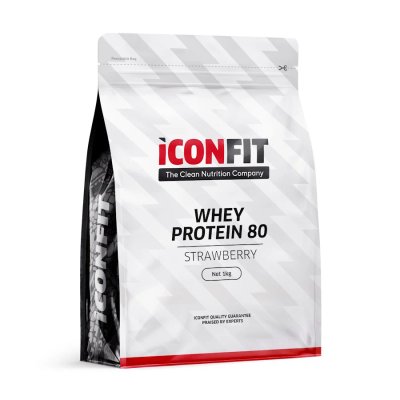 ICONFIT Whey Protein 80 Strawberry€29.90 In stock 1kg are both quality whey options available at maxfit.ee for Estonian customers.
Maintain a modest caloric deficit. No food combination overrides energy balance. Protein and fibre make it dramatically easier to stay in a deficit without feeling deprived, but the deficit itself is still the mechanism that drives fat loss.
Consider a thermogenic supplement as an optional extra. If you have the rest of your nutrition sorted and want a small additional edge — caffeine, green tea extract — a product like 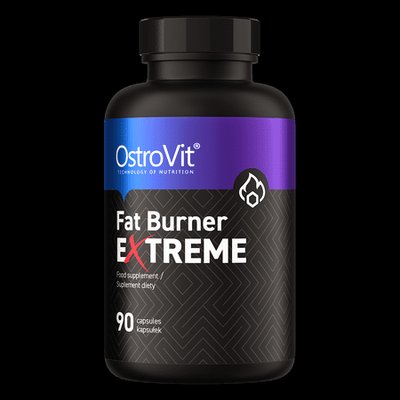 OstroVit Fat Burner eXtreme€16.90 In stock 90caps can add a marginal thermogenic boost. Browse the fat-loss support and fibre ranges at maxfit.ee. Just keep the expectations realistic: it's an add-on, not the foundation.
The Honest Summary
Fat-burning foods are not a myth in the technical sense — they do raise metabolic rate, slightly. But the effect sizes are too small to matter unless your calories, protein, and overall diet are already well managed. Marketing amplifies these small signals into a story of effortless fat loss that the research does not support.
The actual hierarchy of effect:
- Caloric deficit — non-negotiable. No food or supplement replaces this.
- High protein intake (~1.6 g/kg/day) — the biggest nutritional lever for body composition. TEF of 20–30%, satiety, muscle retention.
- Dietary fibre — slows digestion, extends fullness, supports gut health.
- Caffeine / green tea — modest thermogenic nudge, useful as an add-on.
- CLA, chili extracts, 'negative-calorie foods' — effects too small to drive meaningful change on their own.
Work from the top of the list down. If you have number one and two in place, the rest is fine-tuning. If you don't, no exotic food on the internet will save you.
References
- Halton, T. L., & Hu, F. B. (2004). The effects of high protein diets on thermogenesis, satiety and weight loss: a critical review. Journal of the American College of Nutrition, 23(5), 373–385. https://pubmed.ncbi.nlm.nih.gov/15466943/
- Dulloo, A. G., Duret, C., Rohrer, D., et al. (1999). Efficacy of a green tea extract rich in catechin polyphenols and caffeine in increasing 24-h energy expenditure and fat oxidation in humans. American Journal of Clinical Nutrition, 70(6), 1040–1045. https://pubmed.ncbi.nlm.nih.gov/10584049/
- Tabrizi, R., Saneei, P., Lankarani, K. B., et al. (2019). The effects of caffeine intake on weight loss: a systematic review and dose-response meta-analysis of randomized controlled trials. Critical Reviews in Food Science and Nutrition, 59(16), 2688–2696. https://pubmed.ncbi.nlm.nih.gov/30335479/
- Whigham, L. D., Watras, A. C., & Schoeller, D. A. (2007). Efficacy of conjugated linoleic acid for reducing fat mass: a meta-analysis in humans. American Journal of Clinical Nutrition, 85(5), 1203–1211. https://pubmed.ncbi.nlm.nih.gov/17490954/
- Longland, T. M., Oikawa, S. Y., Mitchell, C. J., Devries, M. C., & Phillips, S. M. (2016). Higher compared with lower dietary protein during an energy deficit combined with intense exercise promotes greater lean mass gain and fat mass loss: a randomized trial. American Journal of Clinical Nutrition, 103(3), 738–746. https://pubmed.ncbi.nlm.nih.gov/26817506/
FAQ
Does eating chili actually speed up fat loss?
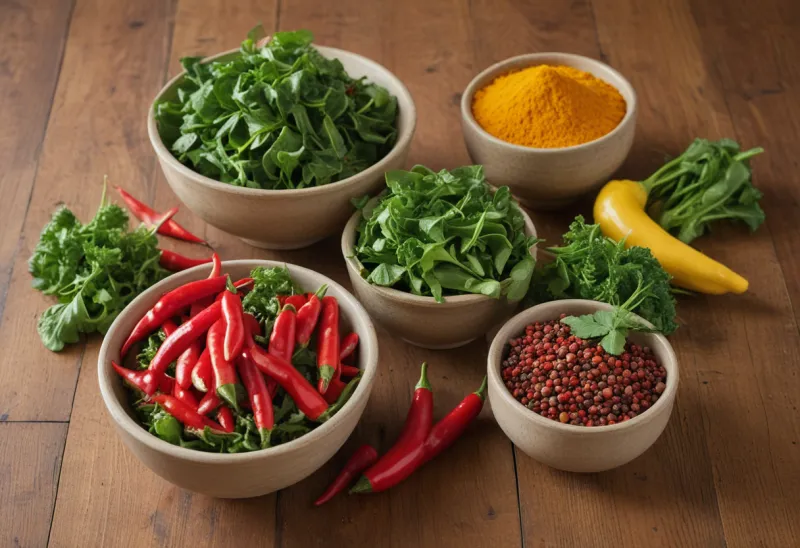
Chili contains capsaicin, which can slightly raise metabolic rate, but the effect is small and short-lived. Studies show increases of roughly 4–5% in energy expenditure for a short window after consumption. Eating chili on top of a high-calorie diet will not produce fat loss. The effect is only relevant as a minor complement to an already well-managed diet.
Is green tea a legitimate fat burner?
Green tea extract combined with caffeine raises 24-hour energy expenditure by around 4% (Dulloo et al., 1999) — a real but small effect. As a standalone strategy it is insufficient. As a complement to high protein intake and a caloric deficit, it adds a modest nudge. Drinking unsweetened green tea is a zero-calorie habit that may help marginally; relying on it as a primary fat-loss tool does not work.
How much protein do I actually need to support fat loss?
A commonly cited evidence-based target is around 1.6 g per kilogram of body weight per day for active individuals (Halton & Hu, 2004; Longland et al., 2016). At this intake level, the thermic effect of protein alone burns an extra 130–200 calories per day compared with the same calories from fat or carbohydrates. Higher intakes (up to 2.2 g/kg) are used by some athletes during hard cuts, but 1.6 g/kg is where the majority of the benefit is captured.