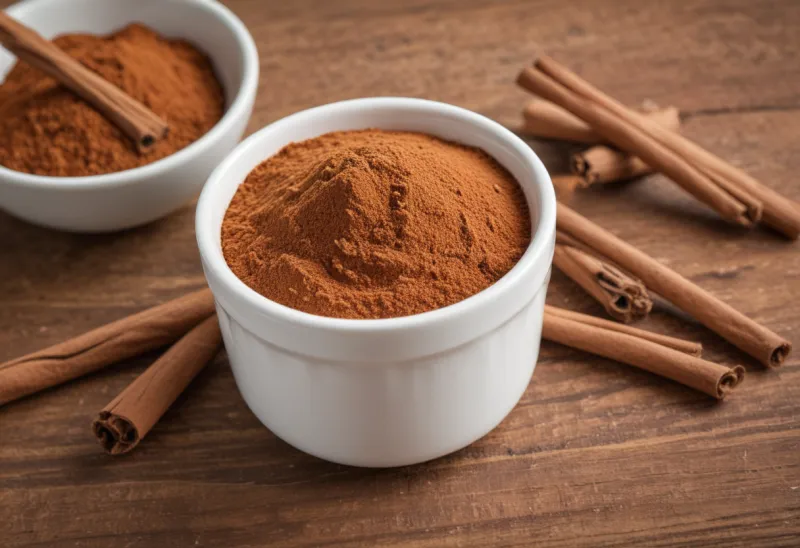
Does cinnamon actually help you lose weight?
The honest answer: cinnamon is a genuinely useful spice for blood-sugar control, but there is no solid evidence it burns fat or causes weight loss on its own. The viral "cinnamon hack" borrows cinnamon's real effect on glucose and stretches it into a fat-loss claim the data doesn't support. If you love cinnamon, keep using it — just don't expect the scale to move because of it.
What cinnamon can do is documented. A meta-analysis of 10 randomized trials found that cinnamon doses from 120 mg to 6 g per day, over 4–18 weeks, produced a statistically significant drop in fasting blood glucose of about 24.6 mg/dL in people with type 2 diabetes (Allen et al., 2013). That's a meaningful glycemic effect — but the same review noted it focused on blood sugar and lipids, not body weight. Lower fasting glucose is not the same as fat loss.
Cinnamon won't burn fat — which real helper are you reaching for?
Browse the rangeWhat the science actually says about cinnamon and fat
The theory behind the hack goes: cinnamon improves insulin sensitivity → steadier blood sugar → fewer cravings → easier deficit. Each step is plausible, but the chain is weak. Blood-sugar improvements in diabetic patients don't reliably translate into weight loss in the general population, and the trials that measured weight didn't find a meaningful, consistent effect. So the most honest framing is: cinnamon may help glycemic control and could indirectly support steadier energy and appetite for some people — but it is not a fat-burner.
This fits the wider pattern with "spice and food hacks": the effects are real but tiny, and none replace a calorie deficit. Even better-studied thermogenics are modest — caffeine doubling was linked to only about 22% greater weight loss across trials, a small dose-dependent help, not magic.
Cinnamon hack vs reality
| Claim | Reality |
|---|---|
| "Cinnamon burns belly fat" | No evidence for spot or general fat burning |
| "Cinnamon lowers blood sugar" | Supported — ~24 mg/dL lower fasting glucose |
| "Cinnamon curbs cravings" | Plausible but unproven; indirect at best |
| "Cinnamon replaces a diet" | No — the deficit still does the work |
One safety note: regular cassia cinnamon (the common supermarket type) contains coumarin, which in large daily doses can stress the liver. If you're taking gram-scale cinnamon daily, Ceylon cinnamon is the lower-coumarin choice — but for sprinkling on food, normal amounts are fine.
Ceylon vs cassia cinnamon: which should you use?
Most cinnamon sold in supermarkets is cassia — it's cheaper, darker and has the bold, punchy taste people associate with the spice. Ceylon (sometimes called "true" cinnamon) is lighter, more delicate and noticeably more expensive. For flavour alone either works, and the choice is mostly a matter of taste and budget.
The distinction that actually matters is coumarin. Cassia contains far more of it than Ceylon, and coumarin in large daily doses can stress the liver. The key word is dose. Sprinkling cinnamon on your oats, coffee or yogurt keeps you well inside food amounts where coumarin is a non-issue — you'd struggle to over-do it from a spice jar at the breakfast table. The picture changes only if you start taking cinnamon in gram-scale daily doses, the kind people copy from the viral "hack" hoping for fat loss. At that level, switching to Ceylon is the sensible, lower-coumarin choice.
It's worth being clear about why you'd reach for Ceylon: it's a safety decision, not a fat-loss one. Neither type has been shown to burn fat, and paying more for Ceylon won't make the scale move any faster. If you only use cinnamon as an occasional flavour, cassia is perfectly fine — and far easier on your wallet than chasing a benefit that isn't there.
Smart ways to actually use cinnamon
The most honest case for cinnamon is also the most practical: it's a zero-calorie way to make lower-sugar food taste good. Sugar is calorie-dense and easy to over-eat, so anything that lets you cut it back without feeling deprived genuinely helps a diet — quietly and indirectly, not through any metabolic magic.
A few simple swaps where cinnamon earns its keep:
- Oats and porridge: a generous shake of cinnamon adds warmth and sweetness so you can skip or halve the added sugar or honey.
- Yogurt and quark: plain, unsweetened yogurt is high in protein but bland; cinnamon (with a little fruit) makes it enjoyable without flavoured-yogurt sugar.
- Coffee and tea: stir cinnamon in instead of syrups or sugar for a sweeter-tasting cup at zero calories.
- Protein shakes: cinnamon pairs beautifully with vanilla or biscuit-flavoured whey, turning a basic shake into something you actually look forward to.
Notice the pattern: in every case the win is that cinnamon helps you eat less sugar, which supports a calorie deficit — it isn't doing anything to your fat cells directly. Used this way, the spice becomes a small, sustainable habit that makes a sensible diet easier to stick to. That's a real benefit, just not the one the viral videos promise.
What actually works (use the spice, keep the basics)
Cinnamon earns its place as a zero-calorie flavour upgrade that helps you enjoy lower-sugar foods — sprinkle it on oats, yogurt or coffee instead of sugar. That swap, not a metabolic trick, is where it quietly helps a diet.
For the levers that genuinely drive fat loss:
- Protein around 1.6 g/kg/day protects muscle and curbs appetite. A scoop of OstroVit 100% Whey Protein 700g Biscuit Dream or MyProtein Impact Whey Protein 1 kg Strawberry Cream makes it easy — and cinnamon tastes great in a shake.
- Fibre improves fullness and steadies blood sugar more reliably than any spice — try
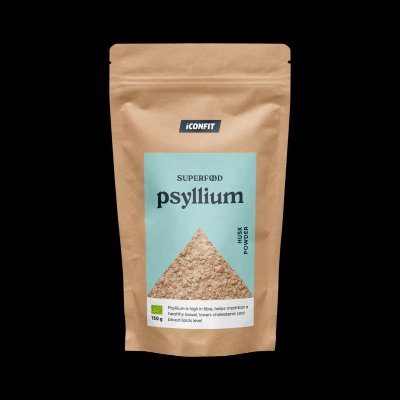 ICONFIT Superfoods Organic Psyllium Husk Powder€8.90 In stock 150g or
 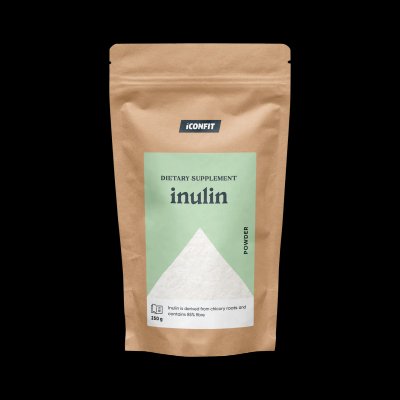 ICONFIT Superfoods Inulin Powder€7.40 In stock 250g.
 - A calorie deficit and sleep remain the foundation.
Practical takeaways
- Use cinnamon as a sugar-replacing flavour, not a fat-loss supplement.
- Its proven benefit is glucose control, mainly studied in diabetes — not weight loss.
- Prefer Ceylon cinnamon if you take large daily amounts (coumarin).
- Put your effort into the deficit, protein and fibre that actually move the scale.
Browse fat-loss support at maxfit.ee, protein at /en/category/valgud and fibre at /en/category/kiudained.
References
Allen RW, Schwartzman E, Baker WL, Coleman CI, Phung OJ. (2013). Cinnamon use in type 2 diabetes: an updated systematic review and meta-analysis. Annals of Family Medicine, 11(5), 452–459. https://pubmed.ncbi.nlm.nih.gov/24019277/
Leidy HJ, Clifton PM, Astrup A, et al. (2015). The role of protein in weight loss and maintenance. American Journal of Clinical Nutrition, 101(6), 1320S–1329S. https://pubmed.ncbi.nlm.nih.gov/25926512/
Tabrizi R, Saneei P, Lankarani KB, et al. (2019). The effects of caffeine intake on weight loss: a systematic review and dose-response meta-analysis of randomized controlled trials. Critical Reviews in Food Science and Nutrition, 59(16), 2688–2696. https://pubmed.ncbi.nlm.nih.gov/30335479/
FAQ
Does cinnamon burn fat?
No. There's no solid evidence cinnamon burns fat or causes weight loss by itself. Its documented effect is on fasting blood glucose (around 24 mg/dL lower in trials), not on body fat.
Can cinnamon help with weight loss indirectly?
Possibly, in a small way: by improving glycemic control and replacing sugar as a flavouring, it may support steadier energy and appetite for some people. But the calorie deficit, not cinnamon, drives fat loss.
Is it safe to take cinnamon every day?
In food amounts, yes. If you take gram-scale doses daily, choose Ceylon cinnamon, which is lower in coumarin — a compound that can stress the liver at high regular doses in standard cassia cinnamon.
Is Ceylon cinnamon better than cassia for weight loss?
No — for weight loss neither type has been shown to burn fat, so Ceylon won't move the scale any faster than cassia. The only reason to prefer Ceylon is its lower coumarin, which matters if you're taking gram-scale daily doses. For sprinkling on food, ordinary cassia is perfectly fine.