
What Are Dietary Shakes and How Are They Supposed to Work?
Dietary shakes (also called meal replacement shakes or diet shakes) are powdered or ready-to-drink products formulated to provide controlled calories alongside protein, carbohydrates, fat, vitamins, and minerals. They are used primarily as a tool for caloric control in weight management — either replacing one or two daily meals to create a caloric deficit, or supplementing the diet to increase protein intake without excess calories.
The proposed mechanism is straightforward: by replacing a high-calorie meal with a nutritionally complete, lower-calorie shake, people can consistently reduce total daily energy intake. High protein content also contributes to satiety (Weigle et al., 2005), reducing hunger between meals.
Products available at maxfit.ee include SELF Whey Shake 1kg Vanill, SELF Whey Shake 1kg Šokolaad, ICONFIT Diet Shake 495g Maasikas, and 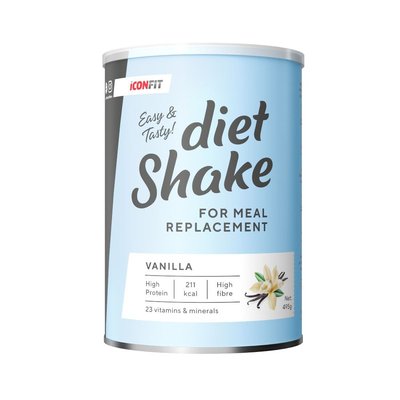 ICONFIT Diet Shake 495g Vanill€13.90 In stock — all formulated to support calorie-controlled eating.
What the Evidence Shows
Randomised Controlled Trials
Meal replacement shakes are one of the more evidence-supported tools in weight management. A systematic review and meta-analysis by Heymsfield et al. (2003) pooled data from randomised controlled trials comparing meal replacement programmes to standard reduced-calorie diets. After three months, people using partial meal replacements lost more weight on average than those following conventional calorie-restriction advice alone.
A Cochrane review of low-calorie meal replacement programmes found that structured meal replacement programmes produced greater short-term weight loss compared to food-based diets, though longer-term maintenance outcomes were more variable (Tsai & Wadden, 2006 — referenced in that review).
Protein and Satiety
High-protein diets are associated with greater satiety and preservation of lean muscle mass during weight loss. Weigle et al. (2005) found that increasing dietary protein from approximately 15% to 30% of energy intake reduced ad libitum caloric intake and led to sustained weight loss in a 12-week controlled trial. Most dietary shakes are formulated with higher protein content to leverage this effect.
Effect Sizes and Who Benefits
The weight loss benefit from meal replacements is real but modest and context-dependent. In the Heymsfield et al. (2003) meta-analysis, mean additional weight loss with meal replacement versus standard dietary advice was in the range of 1–2.5 kg over three months. This is a statistically meaningful difference but should not be overstated — the effectiveness depends substantially on overall adherence to the caloric programme.
People who may benefit most:
- Those who find calorie counting difficult and benefit from a structured, pre-portioned option
- Individuals with busy schedules who otherwise skip meals or reach for high-calorie convenience food
- People beginning a weight-loss programme who need structure
Dietary shakes are not a magic solution and will not produce meaningful results if used alongside an otherwise unrestricted diet.
EFSA-Approved Claims
Meal replacement products authorised under EU Regulation 609/2013 may carry the claim that they provide complete nutritional information for the replacement meal. The claim "contributes to weight loss in the context of an energy-restricted diet" is permitted for total diet replacements under specific conditions (minimum protein, vitamin, and mineral requirements met; used as part of a calorie-restricted programme).
Generic claims about "boosting metabolism" or "burning fat" are not EFSA-approved for dietary shakes and should be treated with scepticism.
Honest Verdict
Dietary shakes are a practical and evidence-supported tool for caloric control when used correctly — that is, replacing calorie-dense meals as part of a structured, reduced-calorie programme. They do not work through any special metabolic mechanism beyond calorie reduction and protein-driven satiety. Used thoughtfully as part of a broader healthy lifestyle, they can make weight management easier and more consistent.
References
Heymsfield, S. B., van Mierlo, C. A., van der Knaap, H. C., et al. (2003). Weight management using a meal replacement strategy: meta and pooling analysis from six studies. International Journal of Obesity, 27(5), 537–549. https://doi.org/10.1038/sj.ijo.0802258
Weigle, D. S., Breen, P. A., Matthys, C. C., et al. (2005). A high-protein diet induces sustained reductions in appetite, ad libitum caloric intake, and body weight despite compensatory changes in diurnal plasma leptin and ghrelin concentrations. American Journal of Clinical Nutrition, 82(1), 41–48. https://doi.org/10.1093/ajcn/82.1.41
FAQ
Can dietary shakes replace regular meals safely?
Shakes formulated to meet EU meal replacement standards (adequate protein, vitamins, and minerals) can safely replace one to two meals per day for healthy adults. They are not designed for total diet replacement without medical supervision.
Will a dietary shake work without changing my diet?
Unlikely. The evidence for dietary shakes comes from studies where they replaced higher-calorie meals as part of a calorie-restricted programme. Using a shake in addition to an unrestricted diet will not create the caloric deficit needed for weight loss.
Where can I find dietary shakes in Estonia?
You can explore options at maxfit.ee — the weight management section includes a range of shakes and complementary products.



