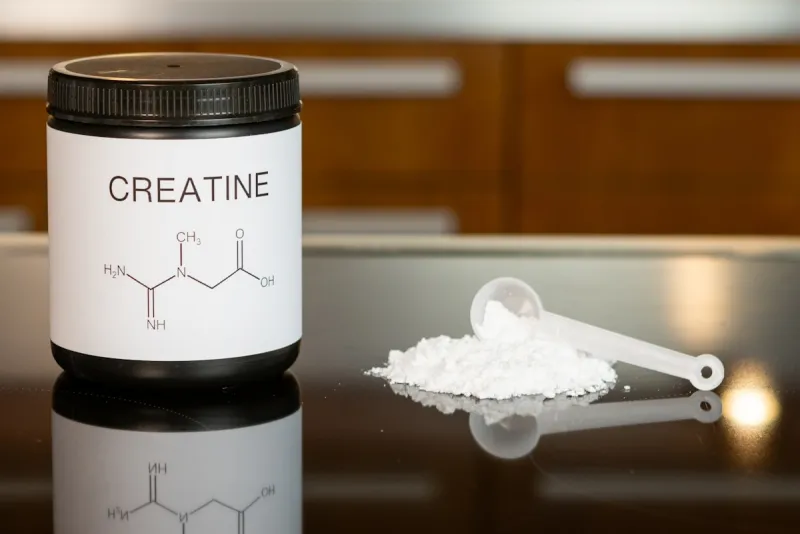
What is creatine monohydrate?
Creatine monohydrate is a naturally occurring compound that the body produces in small amounts from amino acids. It is also found in animal-based foods such as meat and fish. Creatine monohydrate is the most common and most extensively researched form of creatine available as a dietary supplement.
It appears as a white, odorless powder that dissolves in water. Creatine is widely used by athletes and fitness enthusiasts around the world.
How it works
The body stores creatine in muscle tissue as phosphocreatine. During intense physical exertion, the body uses phosphocreatine to regenerate ATP (adenosine triphosphate) — the primary energy currency of cells.
When creatine stores are elevated, the body can regenerate ATP more rapidly during intense activity. This is particularly relevant for short-duration, high-intensity efforts such as sprints, lifts, and explosive movements.
Proven benefits
Creatine monohydrate has one EU-approved health claim:
"Creatine increases physical performance in successive bursts of short-term, high intensity exercise."
Condition: daily intake of 3 g of creatine. Target population: adults performing high-intensity exercise.
Source: Commission Regulation (EU) No 432/2012
This is the only EU-approved health claim for creatine. Other commonly marketed claims such as "increases muscle mass" or "enhances recovery" are not approved by EFSA.
How to take
Creatine monohydrate is typically consumed as a powder mixed with water or another beverage. The condition for the EFSA-approved health claim is a daily intake of 3 g of creatine.
Timing of intake is not critical — consistent daily consumption is what matters. Many people prefer to take creatine after training with a meal, but this is a matter of personal preference.
Always follow the usage instructions provided on the product packaging.
Who should use it
Creatine monohydrate is suitable for adults who engage in high-intensity training. It is especially popular among:
- Strength training athletes
- Sprinters and explosive sport athletes
- Competitive athletes whose sport involves repeated short, intense efforts
It is always advisable to consult a healthcare professional before starting any new supplement, particularly if you have existing health concerns.
Frequently asked questions
Is creatine monohydrate safe? Creatine monohydrate is one of the most extensively studied dietary supplements. Always follow the recommended dosage on the product packaging and consult a healthcare professional if needed.
How long does it take for creatine to work? The effects of creatine become apparent with regular use over time. The body needs time to build up creatine stores in muscle tissue.
Do I need to cycle creatine? There is no scientific basis for cycling creatine. It can be consumed consistently on a daily basis.
Can creatine be mixed with other supplements? Creatine monohydrate can generally be mixed with other supplements such as protein powder. Follow the usage instructions for each product.
Is creatine monohydrate suitable for vegetarians? Yes, synthetic creatine monohydrate is entirely plant-based and suitable for both vegetarians and vegans.
How should I store creatine? Keep creatine monohydrate in a dry, cool place away from direct sunlight. Seal the packaging properly after each use.
See also:
- Pre-Workout Supplements: A Science-Based Guide
- Creatine Loading vs. Maintenance
- Creatine Guide 2026: Which to Buy?
- 30-Day Creatine Challenge
Disclaimer
A food supplement is not a substitute for a varied and balanced diet and a healthy lifestyle.