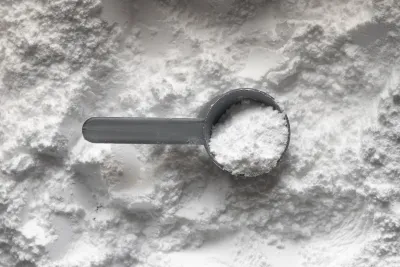
Why creatine is the one supplement we never have to argue about
With most supplements, half the conversation goes into explaining whether the product does anything at all. With creatine the questions are always practical: which tub to buy, what it costs per serving, and whether you need a loading phase. The reason is simple. Creatine monohydrate has more controlled human trials behind it than any other supplement used in a gym, and the International Society of Sports Nutrition position stand calls it outright the most effective legal supplement for building lean mass and high-intensity work capacity (Kreider et al., 2017).
This guide is written from an Estonian buyer's point of view. We are not comparing ten brands you cannot actually get here, and we are not quoting prices that apply in some other country. Every price below is what it costs on our own shelf at the time of writing, and every calculation is shown so you can check it yourself.
What's your creatine question?
All creatineWhat actually happens inside the muscle
For the shortest and heaviest efforts, a muscle cell runs on its phosphocreatine pool. When you pull a heavy rep or sprint, ATP breaks down to ADP very quickly, and phosphocreatine hands a phosphate back so that ATP is restored within a fraction of a second. That pool is small: enough for roughly 6 to 10 seconds of maximal work. Supplemental creatine does not make the muscle stronger directly. It enlarges that pool, so one more rep survives at the end of a set and you recover faster between sets.
Over months, those extra reps add up to a meaningful difference. A meta-analysis pooling creatine plus resistance training trials found on average an 8% greater gain in strength measures and about 14% better performance in weightlifting tasks compared with training alone (Rawson & Volek, 2003). The effect is not dramatic, it is dependable: a small but consistent edge that shows up in nearly every well-run study.
Who responds most strongly? The people whose muscle stores start out emptiest. Dietary creatine comes mainly from meat and fish: raw beef, pork and salmon carry roughly 3 to 5 grams per kilo, which adds up to about 1 to 2 grams a day on a mixed diet. Vegetarians and vegans have none of that input, which is why they start lower and usually see a bigger effect from supplementation than a mixed-diet eater does (Kreider et al., 2017). If you eat red meat most days, part of the pool is already full and the change is more modest. Neither is a reason not to try it, but it explains why two training partners describe the same tub so differently.
One nuance that often gets lost: creatine only works when the training and the food are already there. If your protein intake sits below roughly 1.6 grams per kilogram of body weight, creatine is not the thing limiting your result. In that case start with the protein selection and add creatine once the basics are in place.
Monohydrate, micronized, HCl and Kre-Alkalyn
Creatine monohydrate is the molecule that virtually every study has used. Every other form is a marketing-driven solution to a problem most people do not have.
Micronized monohydrate is the same substance, simply milled finer. Smaller particles mean better solubility and less grit at the bottom of the glass. For some people it also reduces mild bloating, because undissolved crystals are not sitting in the gut drawing water. The active compound is identical.
Creatine hydrochloride (HCl) dissolves far better in water and is sold in a smaller dose. Kre-Alkalyn is buffered monohydrate, sold on the argument that it does not degrade to creatinine in the stomach. The problem is that a thorough review of novel creatine forms found no convincing evidence that any of them beat monohydrate on muscle creatine content or strength outcomes (Jager et al., 2011). You are paying for solubility and convenience, not for results.
Practical conclusion: start with monohydrate. If your stomach is sensitive, move to a micronized powder. If that still does not work, try capsules or split the dose in two. HCl and buffered forms make sense only after those first two steps have failed.
Powder or capsules
Powder is almost always cheaper per gram and lets you adjust the dose precisely. Capsules win on exactly one metric, but it is an important one: consistency. Creatine works when the muscle is saturated, and saturation fades if the tub stays in the cupboard for a week. If you know that the morning shaker gets made about half the time, capsules are a better investment than a cheaper powder you do not take.
Buying capsules calls for reading the label more carefully than buying powder does. OstroVit Creatine Monohydrate 3300mg 120caps costs 11.90 EUR at the time of writing, but the 3300 mg on the label is the serving, not the content of one capsule. Check the pack for how many capsules make up a serving, because that determines how many weeks the tub lasts. The rule is simple: capsules almost always cost more per gram than powder, and the gap is wider than it looks on the shelf. You are paying for convenience, and if that convenience is what keeps the tub out of the cupboard, the trade is in your favour. On the unflavoured powder side the best value is OstroVit Creatine Monohydrate 500g Naturaalne at 17.90 euros, the Estonian-brand option is ICONFIT Creatine Monohydrate Maitsestamata 300g at 12.90 euros, and the familiar international benchmark is Optimum-nutrition Micronised Creatine 634g at 36.90 euros. The rest of the range is in the creatine category.
Price comparison: what one 5-gram dose costs
Supplement prices are only worth comparing per unit of active ingredient, not per tub. The table below works out what 5 grams of pure creatine costs in each product. Prices are as at the time of writing.
| Product | Format | Price | Total creatine | Price per 5 g |
|---|---|---|---|---|
| OstroVit Creatine Monohydrate 500g Naturaalne | 500 g powder | 17.90 EUR | 500 g | 0.18 EUR |
| MyProtein Impact Creatine 500g | 500 g powder | 19.90 EUR | 500 g | 0.20 EUR |
| ICONFIT Creatine Monohydrate Maitsestamata 300g | 300 g powder | 12.90 EUR | 300 g | 0.22 EUR |
| Optimum-nutrition Micronised Creatine 634g | 634 g powder | 36.90 EUR | 634 g | 0.29 EUR |
| MST Creatine Micronized 500g Maitsestamata | 500 g powder | 29.90 EUR | 500 g | 0.30 EUR |
| NOW Kre-Alkalyn (R) Creatine 750mg 240caps | 240 capsules | 55.90 EUR | 180 g | 1.55 EUR |
Two things jump out of that table. First, the spread between the cheapest and the most expensive unflavoured monohydrate powder is under twofold, not tenfold. This is not a category where paying a lot more buys you a lot more. Second, the buffered form costs more than eight times as much per gram of creatine as plain monohydrate. When the studies show no difference, that gap comes purely out of your wallet.
It is also worth knowing what you are paying for in a pharmacy. On pharmacy and supermarket sports shelves creatine usually comes in small 150 to 250 gram packs, which means the per-gram price is considerably higher even though the shelf price looks lower. The one situation where a small pack is genuinely the right buy is your first tub: if you do not yet know whether you tolerate the taste and whether your stomach copes, there is no point starting with a kilo bag.
Flavoured creatines typically cost a couple of euros more for the same mass, because part of the powder is flavouring and sweetener. That is not a bad deal if the flavour is the reason you actually use the product every day.
Loading or not: two roads to the same place
The classic loading protocol is 20 grams a day split into four doses for about five to six days. The alternative is 3 grams a day with no loading at all. Direct comparisons show both routes take muscle creatine to the same level: loading gets there in about a week, the small steady dose in about a month (Antonio et al., 2021).
Two practical points follow. If you have a competition or a testing week three weeks out, loading makes sense. If you are simply training, there is no reason to mix powder four times a day for a week and risk gut upset. Take 5 grams a day and a month later you are in exactly the same place. Most customers who complain that creatine wrecked their stomach are in fact complaining about the loading phase, not about creatine.
Smaller people often do fine on 3 grams; athletes with more muscle mass should default to 5 grams. Precision to the gram is not critical. Consistency is.
Timing, what to take it with, and what actually matters
Creatine is not a stimulant and it is not time-sensitive the way a pre-workout is. The muscle store fills over days, not minutes. Direct comparisons of pre- versus post-workout dosing have not produced a difference that matters in practice. In real life the best time is the one you will not forget.
One thing that measurably affects uptake is carbohydrate: the insulin response helps transport creatine into the muscle cell, and taken with a carbohydrate-rich meal more creatine accumulates in muscle than when taken alone (Kreider et al., 2017). In practice nobody needs to drink sugar water for this. Stirring the powder into morning porridge, juice or a post-workout shake is enough.
Water is the other practical detail. Creatine pulls water into the muscle cell, and during an Estonian winter, when fluid intake tends to drop, cramps and sluggishness usually come simply from drinking too little. If you train in heavy sweat or use the sauna often, it is worth looking at the electrolyte range too. That is not a creatine side effect, it is ordinary water balance.
Scale weight, water, and what you see in the mirror
Over the first two weeks body weight typically rises by 0.5 to 1.5 kilos, and that is almost entirely intracellular water. For a strength trainee this is good news, since a better-hydrated cell is a more anabolic environment. For anyone competing in a weight class or preparing for a photoshoot, it is a question of timing.
In older adults the effect is especially practical: a meta-analysis of resistance-training seniors found on average about 1.4 kilograms more lean tissue in the creatine groups than in placebo groups (Chilibeck et al., 2017). This is one of very few supplements where you can honestly say it helps preserve independence, not just gym numbers.
Is it working? The four-week check
Creatine is one of the few supplements whose effect you can measure yourself instead of trusting a feeling. Four weeks is the honest deadline, and there are three things to watch.
Scale weight. The 0.5 to 1.5 kilos described in the section above are a measurement here, not a worry: they are the first sign that the muscle is taking creatine up. Weigh yourself in the morning on an empty stomach and only once a week; day-to-day noise is larger than the effect you are looking for.
One rep at a fixed load. Pick two exercises and one fixed weight, and write down how many reps you get before you start. Repeat exactly the same test four weeks later. If one or two reps have appeared, the supplement is doing its job.
Time. Five grams a day takes muscle to saturation in about 28 days (Antonio et al., 2021), so four weeks is the earliest point at which a verdict means anything. Loading gets you there in about a week, but the rules for judging it are the same.
And the non-responder? They exist. If four weeks at 5 grams a day has produced neither a weight change nor a single extra rep, there are two likely reasons: your baseline was already high because meat is in your food every day, or the thing limiting you is sleep, protein or training volume. Neither is a reason to double the dose. Stop, and put the money where it does more for you.
Who should skip this product
Creatine is well tolerated, but it is not for everybody, and an honest guide says so.
If you have diagnosed kidney disease, or take medication that affects kidney function, this is not a decision a supplement shop should make for you. Talk to your doctor. In healthy people the safety of long-term use has been examined repeatedly and no harmful effect on markers of kidney function has been found (Kreider et al., 2017), but existing disease changes the rules. The same applies during pregnancy and breastfeeding: safety data exist, but the decision belongs to a clinician, not to an article (de Guingand et al., 2020).
Under 18, the money is better spent on proper food and a training plan. For endurance athletes whose result depends on the ratio of body mass to oxygen uptake, half a kilo of extra water can be a straight negative. And if your current training volume is once a week, creatine is not what will change your result. It fills a store you are not yet emptying.
A separate group is people expecting creatine to do something it does not do. It does not burn fat, replace sleep or improve a distance-running time. If the goal is weight loss, creatine is a neutral tool that helps preserve strength in a deficit, but the number on the scale moves the wrong way for the first couple of weeks and that makes many people quit too early.
Taste is also a real reason people stop. Unflavoured monohydrate is slightly chalky and some people simply hate it. In that case a flavoured powder or a capsule is a sensible fix, not a luxury.
The ranking: four tubs I would buy, and one I would not
The table has the numbers; this is the decision. The order is by fit rather than by quality, and every entry carries the same cost per 5-gram serving as the table above.
-
Best overall buy - OstroVit Creatine Monohydrate 500g Naturaalne, 17.90 euros, or 0.18 EUR per 5 grams. The first buyer just wants it to work and does not want to overpay. Unflavoured monohydrate in a large pack: a 500-gram tub lasts a hundred days at 5 grams a day and costs under twenty euros. At that level it makes no difference whether the brand is Polish, Estonian or American. You are buying the same molecule.
-
Best small starter pack - ICONFIT Creatine Monohydrate Maitsestamata 300g, 12.90 euros, or 0.22 EUR per 5 grams. If you do not yet know whether you tolerate the taste and how your stomach copes, there is no point starting with the biggest bag. At 5 grams a day 300 grams is about two months, the serving costs about four cents more than in the large pack, and it is an Estonian brand if that matters to you.
-
Best for a sensitive stomach - Optimum-nutrition Micronised Creatine 634g, 36.90 euros, or 0.29 EUR per 5 grams. The second buyer got stomach pain from monohydrate last time. A micronized powder dissolves better; split the dose into two 2.5-gram servings and always take it with food. If a 634-gram tub feels too big, MST Creatine Micronized 500g Maitsestamata does the same job at 29.90 euros, or 0.30 EUR per 5 grams. Only when that fails is there any reason to move to HCl or a buffered form.
-
Best if you forget the powder - OstroVit Creatine Monohydrate 3300mg 120caps, 11.90 euros. The third buyer trains fasted in the morning and keeps forgetting the powder; capsules live in the same box as the rest of the morning vitamins. I am not printing a cost per serving for this one, because the 3300 mg on the label is the serving, not one capsule. Check the pack for how many capsules make up a serving and do the sum yourself. The only certainty is that per gram a capsule costs more than powder. The worst creatine is still the one that stays in the cupboard.
-
And one I would not buy: NOW Kre-Alkalyn (R) Creatine 750mg 240caps, 55.90 euros, or 1.55 EUR per 5 grams. The buffered form is not a faulty product, but it costs more than eight times as much for the same amount of creatine as line one, and the studies show no difference (Jager et al., 2011). In this category that is almost the only way to genuinely overpay.
One more practical note specific to buying here. Because creatine is a dry powder with no delicate fatty acids or probiotics in it, a cold night in a parcel locker does not harm it, and shelf life is usually two years. That makes buying the larger pack safer than it would be with fish oil or sensitive vitamins, where a big tub loses quality before you finish it. The only real storage requirement is a dry place: if the powder has clumped from humidity, the compound is still fine but dosing becomes imprecise. Keep the tub in a kitchen cupboard, not in the bathroom or at the bottom of a gym bag.
If you want to look closely at one specific budget product before deciding, the OstroVit creatine review works through it at the cost-per-serving level. If creatine outside the gym interests you, the 2026 meta-analysis on cognitive benefits is a good next read. And if the whole basket has to fit a budget, see the budget supplement guide.
FAQ
Do you need to cycle off creatine?
No. Studies of long-term continuous use have not found that the body permanently stops producing its own creatine or that the effect fades (Kreider et al., 2017). Breaks are popular out of habit rather than out of data.
Does creatine damage the kidneys?
In healthy people this has not been found, including with use over several years (Kreider et al., 2017). Creatine does raise measured creatinine in a blood test without kidney function being worse, so if you are going for blood work, tell your doctor you take creatine or the result will be misread.
Does creatine work as well in women?
Yes. Gains in strength and lean mass are similar, and a systematic review in females found no increased risk of adverse effects (de Guingand et al., 2020). Water retention is usually smaller, simply because muscle mass is smaller.
Can creatine break down if mixed with hot water?
Creatine converts to creatinine slowly, mainly in acidic liquid left standing for hours. In a shaker you drink within five minutes this is not an issue. Just do not leave a mixed drink in the car all day.
Is flavoured creatine weaker?
Not in terms of the compound, but check the label for how much creatine is in one scoop. In flavoured products part of the mass is flavouring and sweetener, so read the dose from the declaration rather than assuming a scoop equals 5 grams.
Can creatine be taken with protein or a pre-workout?
Yes, there is no interaction to avoid. Many pre-workout products already contain creatine, so check the label to avoid unknowingly doubling up, although even 10 grams a day is not dangerous.
References
- Kreider, R.B., Kalman, D.S., Antonio, J., Ziegenfuss, T.N., Wildman, R., Collins, R., Candow, D.G., Kleiner, S.M., Almada, A.L. & Lopez, H.L. (2017). International Society of Sports Nutrition position stand: safety and efficacy of creatine supplementation in exercise, sport, and medicine. Journal of the International Society of Sports Nutrition, 14, 18. https://pubmed.ncbi.nlm.nih.gov/28615996/
- Antonio, J., Candow, D.G., Forbes, S.C., Gualano, B., Jagim, A.R., Kreider, R.B., Rawson, E.S., Smith-Ryan, A.E., VanDusseldorp, T.A., Willoughby, D.S. & Ziegenfuss, T.N. (2021). Common questions and misconceptions about creatine supplementation: what does the scientific evidence really show? Journal of the International Society of Sports Nutrition, 18(1), 13. https://pubmed.ncbi.nlm.nih.gov/33557850/
- Rawson, E.S. & Volek, J.S. (2003). Effects of creatine supplementation and resistance training on muscle strength and weightlifting performance. Journal of Strength and Conditioning Research, 17(4), 822-831. https://pubmed.ncbi.nlm.nih.gov/14636102/
- Jager, R., Purpura, M., Shao, A., Inoue, T. & Kreider, R.B. (2011). Analysis of the efficacy, safety, and regulatory status of novel forms of creatine. Amino Acids, 40(5), 1369-1383. https://pubmed.ncbi.nlm.nih.gov/21424716/
- Chilibeck, P.D., Kaviani, M., Candow, D.G. & Zello, G.A. (2017). Effect of creatine supplementation during resistance training on lean tissue mass and muscular strength in older adults: a meta-analysis. Open Access Journal of Sports Medicine, 8, 213-226. https://pubmed.ncbi.nlm.nih.gov/29138605/
- de Guingand, D.L., Palmer, K.R., Snow, R.J., Davies-Tuck, M.L. & Ellery, S.J. (2020). Risk of adverse outcomes in females taking oral creatine monohydrate: a systematic review and meta-analysis. Nutrients, 12(6), 1780.