
Why Blue Light Is a Modern Athlete's Problem
The average person today spends 7–10 hours per day in front of screens—work, relaxation, social media. That is far more than our evolutionarily shaped brains anticipate. The blue light wavelength (380–500 nm) is the strongest known suppressor of melatonin production.
For athletes this translates directly into a recovery problem: poor sleep = inferior muscle repair, elevated cortisol, and slower performance gains.
Blue Light and Melatonin: The Mechanisms
Melatonin is a hormone produced by the pineal gland in darkness. It signals to the body that sleep readiness should begin. The process starts naturally about two hours before sleep—the body's "biological dimming."
The blue light problem: photoreceptors in the eyes (ipRGC cells containing melanopsin) are most sensitive to blue wavelengths and send a message to the brain's suprachiasmatic nucleus: "it's still daytime, do not produce melatonin." Even 1–2 hours of screen use before bed delays melatonin onset by 90 minutes (Chang et al., 2015).
For athletes this means:
- Longer time to fall asleep
- Less deep sleep
- Less growth hormone released
- Inferior cognitive function the next day
Screen Use Pollution
Screen Time Arithmetic
| Activity | Screen Time | Blue Light |
|---|---|---|
| TV watching (2h before bed) | 120 min | High |
| Social media scrolling (30 min) | 30 min | Very high (close to eyes) |
| Computer work | Up to 8h | High (prolonged) |
| Gaming | 1–2h | High |
The accumulated daily exposure is substantial.
Practical Solutions
1. Screen-Free Window Rules
Simple rule: 90 minutes before sleep—screen-free time. This does not have to mean boredom. Replacements:
- Physical book
- Audio content (podcast, music)
- Yoga, stretching
- Social conversation (without phones)
2. Blue Light Filters
If screen-free time is not realistic, use filters:
- iOS: Settings → Display & Brightness → Night Shift
- Android: Display → Night Mode
- Computer: f.lux (free software) automatically adjusts screen colour based on time of day
- Glasses: blue light filtering glasses are highly effective—reduce melatonin suppression by up to 58%
3. Sleep Environment
Eliminate all light sources from the bedroom:
- Phone face down or in another room
- Switch off LED indicator lights
- Use blackout curtains for external sources
- Cover standby lights with tape
Supplements to Support Sleep Alongside Screen Use
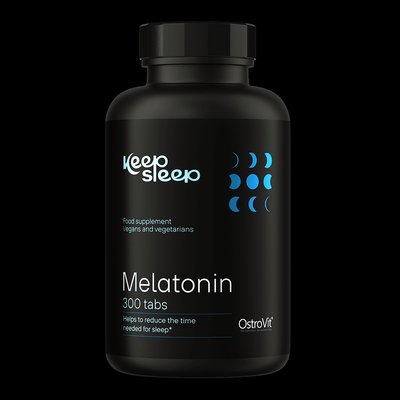 OstroVit Keep Sleep Melatonin€8.90 In stock 300 tabs – regular melatonin supplementation can compensate for blue-light-induced delayed melatonin onset, especially for those whose work requires late-evening screen use. A low dose (0.5–1 mg) 30–60 minutes before sleep.
BIOTECHUSA Magnesium + Chelate – magnesium supports GABA receptors and relaxation independently of light exposure. A first-line measure for poor sleep.
Find sleep supplements at MaxFit in the /en/category/uni-ja-loogastus category.
Digital Detox Habits for Active Athletes
A two-week test worth trying:
- Charge your phone outside the bedroom
- Set automatic screen dimming at 8 pm
- Use a dedicated alarm clock instead of your phone
- Keep the phone off the dining table
Many people report noticeable sleep improvement within two weeks with no other changes.
FAQ
Do blue light filtering glasses actually work?
Yes—randomised controlled trials show that blue light filtering glasses reduce melatonin suppression and improve sleep quality when worn 1–2 hours before bed (Shechter et al., 2020). The most effective lenses are yellow/amber, not just a mild pinkish tint.
Is watching TV from a distance safer than using a phone up close?
Yes—distance matters significantly. A phone 20–30 cm from the eyes is a far more intense experience than a television 2–3 metres away. Close-range smartphone use before bed is therefore more problematic than TV watching.
Is an e-reader (Kindle) a better alternative?
E-ink screens (like the Kindle Paperwhite without backlight) emit substantially less blue light. Using the Kindle Paperwhite's backlight is significantly better than a smartphone, but a physical book remains the best option.
References
- Chang, A. M., Aeschbach, D., Duffy, J. F., & Czeisler, C. A. (2015). Evening use of light-emitting eReaders negatively affects sleep. PNAS, 112(4), 1232–1237.
- Shechter, A., Kim, E. W., St-Onge, M. P., & Westwood, A. J. (2020). Blocking nocturnal blue light for insomnia: a randomized controlled trial. Journal of Psychiatric Research, 96, 196–202.
- Gooley, J. J., Chamberlain, K., Smith, K. A., et al. (2011). Exposure to room light before bedtime suppresses melatonin onset and shortens melatonin duration. Journal of Clinical Endocrinology & Metabolism, 96(3), E463–E472.
- Exelmans, L., & Van den Bulck, J. (2017). Bedtime, shuteye time and electronic media. Journal of Sleep Research, 26(3), 364–370.
- Cajochen, C., Frey, S., Anders, D., et al. (2011). Evening exposure to LED-backlit computer screen affects circadian physiology. Journal of Applied Physiology, 110(5), 1432–1438.