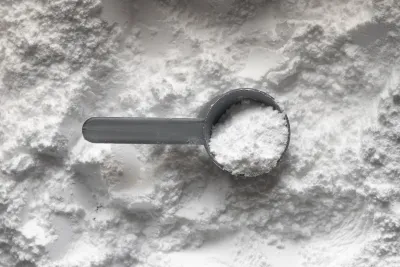
What is BCAA?
BCAA stands for Branched-Chain Amino Acids, referring to three essential amino acids: leucine, isoleucine, and valine. They are called essential because the body cannot produce them on its own — they must be obtained from food or supplements.
The designation 2:1:1 refers to the ratio of these three amino acids in the product: two parts leucine to one part isoleucine and one part valine. This is the most common and widely used BCAA ratio.
BCAAs are available as both powder and capsules.
How they work
BCAAs are part of the 20 amino acids that make up proteins. Unlike most amino acids, BCAAs are primarily metabolized in muscle tissue rather than in the liver.
Leucine, isoleucine, and valine make up approximately one-third of muscle protein. These three amino acids are popular as supplements among training individuals who wish to complement their amino acid intake.
Composition and properties
BCAA supplements do not have specific EFSA (European Food Safety Authority) approved health claims. Therefore, we describe only composition-related facts here:
- Amino acid profile: BCAA 2:1:1 contains leucine, isoleucine, and valine in a 2:1:1 ratio
- Essential amino acids: all three amino acids are essential, meaning the body must obtain them from an external source
- Ingredient source: BCAAs are typically produced through fermentation
Important note: health claims such as "increases muscle mass", "speeds up recovery", or "reduces muscle soreness" must not be made for BCAA supplements, as these are not approved by the EU.
How to take
BCAA powder is typically mixed with water or another beverage. Capsules are swallowed with water. Always follow the recommended serving size on the product packaging.
Timing of intake is a matter of personal preference. Common practices include taking BCAAs before, during, or after training.
BCAAs are often available in various flavors, making them a pleasant drink during workouts.
Who should use them
BCAA supplements are used by a variety of people:
- Active trainers who want to complement their amino acid intake
- Endurance athletes looking for an intra-workout drink
- Calorie-conscious individuals who want amino acids without additional protein and calories
BCAAs are also naturally found in protein sources such as meat, eggs, and dairy products. It is advisable to consult a healthcare professional before starting any new supplement.
Frequently asked questions
What is the difference between BCAAs and EAAs? BCAA consists of three branched-chain amino acids (leucine, isoleucine, valine), while EAA (essential amino acids) contains all nine essential amino acids, including the three BCAAs.
What does the 2:1:1 ratio mean? It means the product contains two parts leucine for every one part of isoleucine and valine. This is the most common BCAA ratio on the market.
Are BCAAs suitable for vegans? This depends on the product. Many BCAA products are produced through plant-based fermentation and are suitable for vegans. Always check the product label.
Can BCAA powder be mixed with other drinks? Yes, BCAA powder can typically be mixed with water, juice, or a sports drink. Follow the product usage instructions.
When is the best time to take BCAAs? No definitive optimal time has been established. Take BCAAs according to your preference and the product usage instructions.
Do BCAAs contain calories? Yes, amino acids do contain calories, though the amount is typically small. The exact caloric content depends on the specific product and serving size.
See also:
- EAA (Essential Amino Acids): Complete Guide
- BCAA vs EAA: Which One to Choose?
- Best BCAA Supplements 2026
Disclaimer
A food supplement is not a substitute for a varied and balanced diet and a healthy lifestyle.