"I Don't Have Time" – The Most Common Excuse for Not Exercising
A 2019 study found that 79% of people who do not exercise regularly cite lack of time as the main reason (Toftager et al., 2019). Yet the same study showed those same people spend an average of 2.8 hours per day watching television and 1.7 hours on social media.
The problem is rarely a true lack of time—it is how priorities are arranged.
Analysing Real Time Investment
Six classic "I don't have time" activities:
| Activity | Time per Day | Compared to Training |
|---|---|---|
| Social media scrolling | 1.7h | 3× 30-minute workouts |
| Television | 2.8h | 5× 30-minute workouts |
| Checking emails | 2.5h | Optimisable through planning |
| Commuting | 1–2h | Usable for active movement |
This is not an accusation—it is simply awareness-raising. When training is a genuine priority, time emerges.
Effective Short Workouts for Busy People
20-Minute HIIT Workout
High-Intensity Interval Training (HIIT) is the most time-efficient form of exercise. Research shows a 20-minute HIIT session can deliver comparable cardiovascular benefits to a 45-minute moderate-intensity workout (Gibala et al., 2012).
Sample HIIT: 40 seconds intense / 20 seconds rest, 8 exercises, 2 rounds = 18 minutes
Compound Exercises – Train Multiple Muscles at Once
Replace isolation exercises with compound movements that work multiple muscle groups simultaneously:
- Lunge + overhead press (legs, glutes, shoulders)
- Sumo squat + kettlebell swing (legs, back, shoulders)
- Pull-up + dead hang (back, core)
Micro-Workouts Throughout the Day
Research shows three 10-minute exercise sessions distributed across the day deliver similar health benefits to one 30-minute session (Jakicic et al., 1995).
Practical examples:
- 10 minutes of morning squats and push-ups after waking
- 10-minute stair climbing during a lunch break
- 10 minutes of stretching before bed
Time Management Strategies
Training Is an Appointment with Yourself
Calendarised training is twice as likely to be completed compared with the "if time allows" approach. Block your training time in your calendar just like a business meeting—non-negotiable.
Changing the Training Environment
The closer the training option, the more likely you are to use it. A home gym in even minimal form (a few dumbbells, resistance band) eliminates the "getting there" barrier entirely.
Family Training
Active time with children and family is not training in the classical sense, but moderate regular movement is better than complete absence. Walks, cycling, swimming—these all count.
Busy Lifestyle and Nutrition
A hectic life creates nutritional risks: fast food, skipped meals, irregular eating patterns. What works better for busy people:
Meal prep: one session per week = seven days of autopilot nutrition.
Supplements as compensation:
- Universal Animal Pak 44 packs – an all-in-one vitamin pack for professionals, covering all the key micronutrients that a busy lifestyle often leaves unattended
 BIOTECHUSA Amino Energy Zero with Electrolytes Lime€26.90 In stock – a quick amino acid + electrolyte drink that works as a pre-training energy loader with minimal preparation
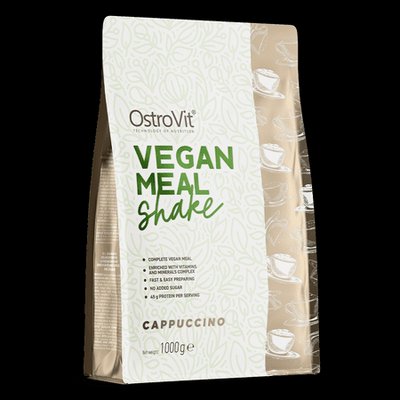 OstroVit Vegan Meal Shake 1000g Cappuccino€18.90 In stock – a complete meal replacement when there is no time to cook
Find vitamins at MaxFit in the /en/category/vitamiinikompleksid category.
Burnout: The Biggest Threat to the Busy Athlete
A busy person who adds an intense training programme without analysing stress and recovery risks burnout. Signs:
- Sleep is no longer restorative
- Previous training passion has been replaced by obligation
- Performance declines despite greater effort
Solution: prioritise consistency over intensity. 3×30 minutes per week beats one 2-hour workout per week.
FAQ
Is a 20-minute workout really enough?
Yes—if it is intense and well-planned. Health organisations (WHO) recommend 150 minutes of moderate physical activity per week. 3–4 sessions of 20 minutes at HIIT intensity comfortably meets that standard.
How to simplify nutrition when extremely busy?
Prioritise simplification over perfection. Five minutes in the kitchen = a complete protein-rich snack (boiled eggs, cottage cheese, tuna). Supplements compensate for missed nutrients but do not replace whole food.
Which workouts to drop when time is very limited?
Drop long cardio sessions first (45+ minutes) and isolation exercises. Keep compound movements (squats, rows, presses) and HIIT—these deliver the greatest benefit per minute of time invested.
References
- Toftager, M., Aadahl, M., & Lau, C. J. (2019). Prevalence and correlates of sedentary behaviour among adults. Scandinavian Journal of Public Health, 47(8), 876–884.
- Gibala, M. J., Little, J. P., Macdonald, M. J., & Hawley, J. A. (2012). Physiological adaptations to low-volume, high-intensity interval training. Journal of Physiology, 590(5), 1077–1084.
- Jakicic, J. M., Wing, R. R., Butler, B. A., & Robertson, R. J. (1995). Prescribing exercise in multiple short bouts versus one continuous bout. International Journal of Obesity, 19(12), 893–901.
- Haskell, W. L., Lee, I. M., Pate, R. R., et al. (2007). Physical activity and public health: updated recommendation from ACSM and AHA. Medicine & Science in Sports & Exercise, 39(8), 1423–1434.
- Penedo, F. J., & Dahn, J. R. (2005). Exercise and well-being: a review of mental and physical health benefits. Current Opinion in Psychiatry, 18(2), 189–193.