


Why these two: two different problems, two different fixes
Ashwagandha and magnesium are sold together so often that they start to look like one product. They are not. They solve two entirely different problems, and if you do not know which one is yours, you are likely to buy the wrong jar.
Magnesium is a mineral. If your intake is low, topping it up produces a result; if your intake is already adequate, an extra dose does very little. Ashwagandha is a plant extract whose effect does not depend on a deficiency at all - it acts on the stress response and builds over weeks rather than days.
In practice most people fall into one of three groups. First: you fall asleep normally but wake in the night with tense muscles - that is more of a magnesium story. Second: you lie there and your head keeps cycling through work - that is more of an ashwagandha story. Third: you have both. Only the third group genuinely needs both jars, and that is an honest place to start, because two supplements at once means twice the cost and zero clarity about which one did anything.
Magnesium: what the form actually changes
Online comparisons of magnesium forms almost always come down to one sentence: "glycinate absorbs best". That sentence is more popular than the evidence behind it.
Start with a calculation nobody puts on the label. Forms differ in how much of the tablet's mass is actually magnesium. Magnesium oxide is roughly 60 per cent elemental magnesium, citrate about 16 per cent, malate about 15 per cent and bisglycinate about 14 per cent. Which means 500 mg of bisglycinate delivers roughly 70 mg of magnesium, not 500. If the label states only the compound weight and not the elemental magnesium, you do not know what you are buying - and that is the most common way a magnesium product looks cheaper than it is.
Now the awkward part. In a 60-day randomised double-blind comparison, magnesium citrate produced the largest rise in both serum and salivary magnesium, ahead of both oxide and an amino-acid chelate (Walker et al., 2003). In other words, the absorption superiority of chelated forms is not as clear-cut as the marketing claims. Oxide is an exception in the other direction: it contains the most magnesium by weight but dissolves very poorly, so much of the dose reaches the colon, which is why it is used more for constipation than for topping up stores.
So why recommend glycinate at all? For two reasons, and neither is "better absorption". First, tolerability: citrate draws water into the gut and larger doses give some people loose stools, while glycinate does that far less often. Second, the glycine itself - which deserves its own section.
The hidden half of bisglycinate: how much glycine you actually get
Here is a calculation we have never seen on a package. In magnesium bisglycinate there are two glycine molecules per magnesium atom, and elemental magnesium makes up about 14 per cent of the mass. If you take 400 mg of elemental magnesium as pure bisglycinate, that means roughly 2.8 g of the compound - of which about 2.4 g is glycine.
Why does that matter? Because glycine has research of its own. In partially sleep-restricted volunteers, 3 g of glycine before bed reduced next-day fatigue and improved subjective performance (Bannai et al., 2012). 2.4 g is not 3 g, but it is the same order of magnitude - which means part of what people call "the calming effect of magnesium" may be coming from the glycine.
The practical conclusion is what separates a good product from a bad one. Many cheaper "magnesium glycinate" products are buffered: part of the magnesium is actually oxide, so the jar can be smaller and cheaper. Such a product contains a fraction of the glycine, and you can only see that in the ingredient list, never on the front. If you are buying glycinate specifically for the glycine, look for "fully chelated" on the label or check that magnesium oxide does not appear among the ingredients. We unpack the same topic in our magnesium glycinate guide.
Ashwagandha: KSM-66, Sensoril and what standardisation means
Ashwagandha (Withania somnifera) is a root extract used in Ayurveda. In supplements there are two names worth knowing: KSM-66 and Sensoril. These are not decorative brand names - they are standardised extracts with a fixed withanolide content, and they are what most of the decent research actually used.
The difference matters. KSM-66 is a root-only extract with a lower withanolide percentage and has mainly been studied at 300-600 mg per day. Sensoril uses root and leaf and is more concentrated in withanolides, so its doses are smaller. Non-standardised "ashwagandha root powder" with no percentage on the label can contain almost anything - and because it is cheaper, it looks like a bargain on the shelf.
In the Estonian range this translates into two price tiers. Standardised KSM-66 products such as 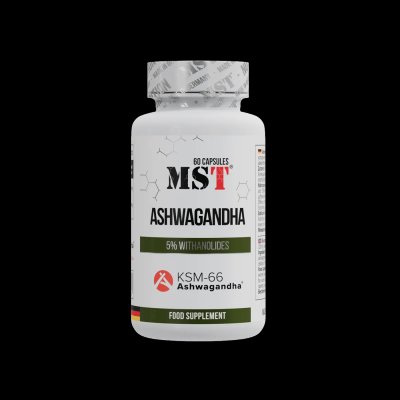 MST Ashwagandha KSM66€16.90 In stock 60caps (16.90 EUR at the time of writing) and OstroVit KSM-66 Ashwagandha VEGE 120caps (14.90 EUR) cost more than plain root powder, where a jar starts under eight euros. If you are buying ashwagandha for the first time and want to know whether it does anything for you, a standardised extract is the only version that gives an interpretable answer.
What the research on sleep and stress actually shows
There is real research on ashwagandha, but the studies are small and the effects moderate. An honest summary matters more than a promise on the box.
On cortisol: in a 60-day randomised double-blind study in chronically stressed adults, serum cortisol fell substantially more in the ashwagandha group than on placebo, alongside a drop in perceived stress scores (Chandrasekhar et al., 2012). On sleep: a 10-week study found that 300 mg twice daily shortened the time taken to fall asleep and improved sleep efficiency, with a clearer effect in participants who had a diagnosis of insomnia (Langade et al., 2019).
The most sobering number comes from the meta-analysis. A pooled analysis of five randomised trials found an improvement in sleep quality that was statistically significant but small in magnitude; the effect was clearer at doses of at least 600 mg per day and with at least eight weeks of use (Cheah et al., 2021). In other words: it works, but not like a sleeping pill, and not in the first week.
On the magnesium side the strongest single trial is in elderly participants with insomnia: 500 mg of magnesium a day for eight weeks improved sleep efficiency and shortened sleep onset compared with placebo (Abbasi et al., 2012). It is a small study and cannot be generalised to everyone, but it fits what you see in practice: magnesium helps most in people whose intake was low to begin with.
What is actually on the Estonian shelf and what it costs per month
| Product | Role in the protocol | Price at the time of writing |
|---|---|---|
| OstroVit Magnesium Glycinate 90caps | Evening magnesium, affordable entry point | 11.90 EUR |
| MST Magnesium Bisglycinate 90caps | Evening magnesium, larger dose per capsule | 16.90 EUR |
| VitalHarmony Magnesium bisglycinate 90caps | Alternative in the same form | 12.90 EUR |
| OstroVit Magnesium citrate 400mg + B6 90tabs | Cheapest way to raise daily intake | 9.90 EUR |
| MST Ashwagandha KSM66 60caps | Standardised KSM-66 | 16.90 EUR |
| OstroVit KSM-66 Ashwagandha VEGE 120caps | Standardised KSM-66, larger pack | 14.90 EUR |
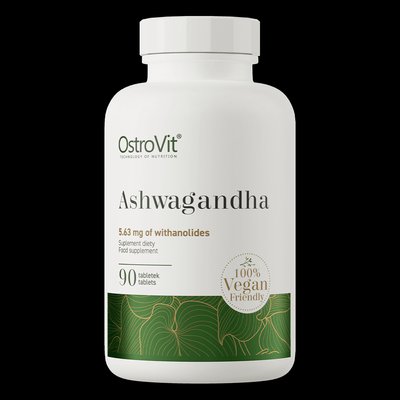 OstroVit Ashwagandha VEGE€7.90 In stock 90tabs OstroVit Ashwagandha VEGE€7.90 In stock 90tabs | Cheap entry point, check the standardisation | 7.90 EUR |
The money side: OstroVit Magnesium Glycinate 90caps at 11.90 EUR plus OstroVit KSM-66 Ashwagandha VEGE 120caps at 14.90 EUR comes to 26.80 EUR. At the serving size on the packaging that combination lasts roughly six to eight weeks - about 48 to 64 cents a day. If you choose MST Magnesium Bisglycinate 90caps (16.90 EUR) and MST Ashwagandha KSM66 60caps (16.90 EUR), the monthly cost is higher, but so is the dose per capsule. The full range sits in the magnesium category and the ashwagandha category.
For comparison, magnesium sold in an Estonian pharmacy is usually citrate or oxide and the price per gram of elemental magnesium is similar - the difference comes from the form and pack size rather than from where you buy it. Do not pay for glycinate if citrate is enough for you.
The evening protocol, step by step
Three to four hours before bed: last coffee or strong tea. Caffeine has a half-life of roughly five hours, which means a 4 p.m. coffee is still half in your bloodstream at 9 p.m., and about a third of it is still there at midnight.
Ninety minutes to two hours before bed: ashwagandha. With standardised KSM-66 the dose used in research is 300-600 mg a day, often split in two. Ashwagandha is not a sedative and does not work off a single dose - timing is more a habit question than a pharmacological one.
Thirty to sixty minutes before bed: magnesium. Aim for 200-400 mg of elemental magnesium, counting what you get from food. Take it with a small snack if an empty stomach feels uncomfortable.
Eight weeks, then judge. The meta-analysis found the clearer ashwagandha effect right around the eight-week mark (Cheah et al., 2021), and the magnesium trial also ran eight weeks (Abbasi et al., 2012). Change one thing at a time: if you start both on the same evening, you will never know which one worked.
Cycling: ashwagandha is usually taken for 8-12 weeks followed by a 2-4 week break. Magnesium is a nutrient and can be taken continuously provided kidney function is normal. More timing detail lives in our article on when to take magnesium.
Estonian light: why June and December need different tactics
This is the part international sleep articles skip, and in Estonia it matters more than any capsule.
In June it never really gets dark in Tallinn. The sun sets around 22:40 and rises around 04:00, and what sits in between is twilight, not night. Melatonin production depends on darkness, not on the clock - and if your bedroom still has reading light in it at 23:00, no amount of magnesium will do the job that blackout curtains would. If you buy one thing for the summer, buy curtains, not a second jar.
In December the problem is inverted. The sun rises in Tallinn around 09:20 and sets around 15:20 - six hours of daylight, most of which the average person spends indoors. Without a morning light signal the body clock drifts later and sleep does not come in the evening. The most effective free intervention is a half-hour walk outdoors between 11:00 and 14:00, even under cloud - outdoor light on a grey Estonian day is still many times brighter than an office.
And one Estonian detail that is genuinely useful: an evening sauna raises core temperature, and it is the subsequent drop that helps sleep onset. In practice that means a sauna 90 minutes to two hours before bed works better than a sauna immediately before getting into it. If you go straight from the hot room to the pillow, your body is still busy cooling down and is not ready to fall asleep.
What breaks this protocol
Alcohol. An evening glass of wine helps you fall asleep and wrecks the second half of the night - REM sleep is suppressed and awakenings increase. No supplement compensates for that, and two beers on a Saturday explain more "the protocol doesn't work" complaints than every dosing error combined.
Late training. Heavy lifting or intervals two hours before bed keep the central nervous system and core temperature elevated. If that is the only slot you have, at least put a cool-down and a warm shower at the end, and avoid a caffeinated pre-workout after 6 p.m.
An irregular wake time. The body clock responds to when you get up more than to when you go to bed. Sleeping two hours later at the weekend is the equivalent of flying two time zones west and back again by Monday.
And finally: screens in bed. The problem is not only blue light but the content, which keeps the head working. Ashwagandha shifts the stress response over weeks; Instagram undoes it in twenty minutes.
Who should skip this combination
Pregnancy and breastfeeding: ashwagandha is not recommended, there is too little data. For magnesium, ask your doctor or midwife.
Kidney failure or significantly reduced kidney function: magnesium is cleared by the kidneys and can accumulate. Do not start a supplement without talking to a doctor.
Thyroid medication: ashwagandha may affect thyroid hormone levels. If you take levothyroxine or have thyroid disease, speak to your doctor first.
Autoimmune conditions and immunosuppressants, and likewise sedatives and sleeping pills: ashwagandha may interact with or amplify their effects. The same applies to alcohol.
Liver: isolated cases of liver injury have been reported with ashwagandha. If you have liver disease, skip it; if you develop unusual fatigue, dark urine or yellowing of the skin, stop immediately and see a doctor.
And the most common case of all: if your real problem is your schedule - shift work, three hours of screens before bed, an irregular wake time - a supplement will not fix it. In that case it is more honest to spend the money on blackout curtains and an alarm clock than on jars. If you still want to try, the rest of the range sits in the sleep and relaxation category, and a form-by-form magnesium comparison in an Estonian context is in our article on the best magnesium for sleep. A food supplement does not replace a varied diet and does not treat disease.
FAQ
Can ashwagandha and magnesium be taken at the same time?
Yes, there is no known interaction between the two and they can be taken together or separately. It is more practical to take ashwagandha slightly earlier in the evening and magnesium right before bed, because that makes it easier to tell which one is doing something. If you are starting for the first time, start with one.
How quickly do results appear?
With magnesium you may notice muscle relaxation within the first few evenings, especially if your intake was low. Ashwagandha does not work that way: in the research the clearer effect arrived around the eight-week mark (Cheah et al., 2021). If you stop after three weeks, you have not tested ashwagandha.
Is magnesium citrate as good for sleep as glycinate?
For topping up intake, yes - and in a head-to-head comparison citrate was actually the stronger performer for raising serum magnesium (Walker et al., 2003). Glycinate's advantage is tolerability at larger doses and the glycine content itself. If citrate does not upset your stomach, there is no reason to pay more.
Can melatonin be added on top?
Melatonin is a timing tool rather than a sedative - it helps most when the body clock is shifted, for example across time zones or on shift work. A small dose short-term is reasonable; for long-term nightly use the ashwagandha and magnesium combination is preferable. If you already take sedatives or sleeping pills, talk to your doctor first.
Does ashwagandha cause daytime drowsiness?
Usually not - it is not a sedative and research has also used it in the morning. A small proportion of people do feel sluggish, particularly at higher doses. If that happens, move the whole dose to the evening or halve it.
How much magnesium do I already get from food?
More than you think, if you eat wholegrain bread, oats, seeds, nuts and green vegetables - all ordinary items on an Estonian table. A supplement should cover the gap, not the whole requirement, which is why 200-400 mg is usually a sensible target rather than chasing the maximum dose.
References
- Chandrasekhar, K., Kapoor, J., & Anishetty, S. (2012). A prospective, randomized double-blind, placebo-controlled study of safety and efficacy of a high-concentration full-spectrum extract of ashwagandha root in reducing stress and anxiety in adults. Indian Journal of Psychological Medicine, 34(3), 255-262. https://pubmed.ncbi.nlm.nih.gov/23439798/
- Langade, D., Kanchi, S., Salve, J., Debnath, K., & Ambegaokar, D. (2019). Efficacy and safety of ashwagandha (Withania somnifera) root extract in insomnia and anxiety: a double-blind, randomized, placebo-controlled study. Cureus, 11(9), e5797. https://pubmed.ncbi.nlm.nih.gov/31728244/
- Cheah, K. L., Norhayati, M. N., Husniati Yaacob, L., & Abdul Rahman, R. (2021). Effect of ashwagandha (Withania somnifera) extract on sleep: a systematic review and meta-analysis. PLoS One, 16(9), e0257843. https://pubmed.ncbi.nlm.nih.gov/34559859/
- Abbasi, B., Kimiagar, M., Sadeghniiat, K., Shirazi, M. M., Hedayati, M., & Rashidkhani, B. (2012). The effect of magnesium supplementation on primary insomnia in elderly: a double-blind placebo-controlled clinical trial. Journal of Research in Medical Sciences, 17(12), 1161-1169. https://pubmed.ncbi.nlm.nih.gov/23853635/
- Bannai, M., Kawai, N., Ono, K., Nakahara, K., & Murakami, N. (2012). The effects of glycine on subjective daytime performance in partially sleep-restricted healthy volunteers. Frontiers in Neurology, 3, 61. https://pubmed.ncbi.nlm.nih.gov/22529837/
- Walker, A. F., Marakis, G., Christie, S., & Byng, M. (2003). Mg citrate found more bioavailable than other Mg preparations in a randomised, double-blind study. Magnesium Research, 16(3), 183-191. https://pubmed.ncbi.nlm.nih.gov/14596323/