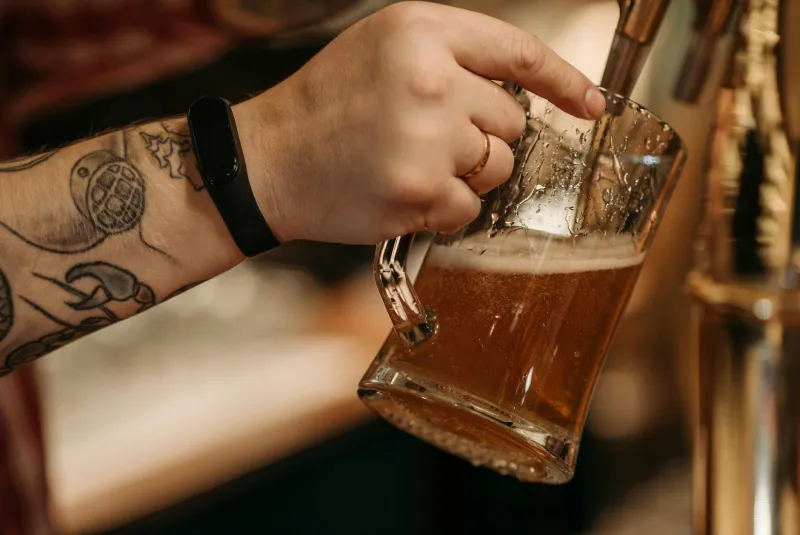
Physiological Effects of Alcohol
Alcohol (ethanol) is a toxic substance that the body prioritizes eliminating first. This priority affects all other metabolic processes.
How the Body Processes Alcohol:
- Absorption: 20% absorbed in stomach, 80% in small intestine
- Metabolism: Liver processes ~10-15g alcohol per hour (~1 drink)
- Priority: Breaking down alcohol comes before everything else
- Calories: 7 kcal/g (almost as much as fat)
Effects on Muscle Building
1. Testosterone Reduction
Research shows:
- Moderate drinking (2-3 drinks): 6-10% testosterone drop
- Heavy drinking (5+ drinks): Up to 45% drop over next 24h (Sierksma et al., 2004)
- Chronic drinking: Long-term hormonal disruption
Practical impact:
- Slower muscle protein synthesis
- Harder to maintain muscle mass when cutting
- Longer recovery time
2. Inhibition of Muscle Protein Synthesis
Alcohol inhibits the mTOR pathway, critical for muscle protein synthesis:
- Drinking after training: Up to 37% less muscle protein synthesis (Parr et al., 2014)
- Even with protein intake: 24% less than without alcohol (Parr et al., 2014)
3. Growth Hormone Suppression
Growth hormone is released primarily during deep sleep:
- Alcohol disrupts REM sleep
- Growth hormone production drops up to 70% (Vella & Cameron-Smith, 2010)
- Recovery and muscle growth suffer
Effects on Fat Burning
Alcohol Stops Fat Burning
Since the body must eliminate alcohol first:
- Fat oxidation stops until alcohol is metabolized
- Duration: ~8 hours after moderate drinking
- Consequence: Food eaten is more likely stored as fat
"Empty Calories"
Alcohol calories are truly empty:
- Contain no protein, vitamins, or minerals
- Add to calories from food eaten
- Often accompanied by unhealthy food choices
Examples of alcohol calorie content:
| Drink | Amount | Calories |
|---|---|---|
| Beer (5%) | 500ml | ~200 kcal |
| Wine (12%) | 150ml | ~120 kcal |
| Whiskey/Vodka | 40ml | ~100 kcal |
| Cocktails | 250ml | ~200-400 kcal |
| Long Island Ice Tea | 350ml | ~300+ kcal |
Night out: 6-8 drinks = 1200-2000+ extra calories
Effects on Recovery
1. Dehydration
Alcohol is a diuretic (increases urination):
- Each alcoholic drink causes ~100ml extra fluid loss
- Affects electrolyte balance
- Slows muscle recovery
2. Worse Sleep Quality
Although alcohol helps you fall asleep faster:
- REM sleep quality drops dramatically (Roehrs & Roth, 2001)
- Deep sleep is disturbed
- You wake up more tired than when you went to bed
3. Increased Inflammation
Alcohol increases systemic inflammation:
- Slower injury healing
- Greater muscle soreness (DOMS)
- Weakened immune system
4. Impaired Glycogen Recovery
Muscle glycogen store replenishment is impaired:
- Slower energy store recovery
- Worse performance in next workout
Practical Guide
If You Drink...
Before the Night Starts:
- Don't train the same day - Recovery is compromised anyway
- Eat a proper meal - Fat and protein slow absorption
- Hydrate well - Drink water before alcohol
During the Night:
- Set a limit beforehand - Decide number of drinks before starting
- Alternate with water - Glass of water between each drink
- Avoid cocktails - Biggest source of calories and sugar
- Choose wisely:
- Better: Dry wine, whiskey neat, vodka soda
- Worse: Sweet cocktails, beer in large amounts
After the Night Ends:
- Drink water before bed - At least 500ml
- Eat protein-rich breakfast - Eggs, meat
- Replenish electrolytes - Magnesium, potassium
- Give training at least 24-48h break
Minimal Impact Strategy
If you want to drink but minimize damage:
Timing:
- Don't drink within 48h after intense training
- Don't drink 24h before training
- Best time: Rest day evening
Amount:
- 1-2 drinks: Minimal impact
- 3-4 drinks: Moderate impact
- 5+ drinks: Significant impact on next 24-48h
Choice:
- Dry red wine: Contains antioxidants
- Vodka/whiskey neat: Low added sugar
- Light beer: Less alcohol, fewer calories
Alcohol-Free Life for Fitness?
Benefits of Complete Abstinence:
- Better recovery - Every workout pays off fully
- Better sleep - Deeper, higher quality rest
- More stable weight loss - No empty calories
- Better hormonal balance - Testosterone, growth hormone
- More energy - No hangovers
Realistic Approach:
Most people won't give up alcohol completely. A sensible strategy:
- Limit drinking to 1-2 times per month
- Keep amounts moderate (max 3-4 drinks)
- Plan drinking around rest days
- Focus on recovery after drinking
Conclusion
Alcohol affects training results in multiple ways:
Muscle building:
- Reduces testosterone and growth hormone
- Inhibits muscle protein synthesis
Fat burning:
- Stops fat oxidation
- Adds empty calories
Recovery:
- Disrupts sleep and hydration
- Slows muscle healing
Practical recommendation: If you want optimal results, minimize alcohol consumption. If you drink, plan timing and recovery carefully.
References
- Parr, E.B., Camera, D.M., Areta, J.L., Burke, L.M., Phillips, S.M., Hawley, J.A. & Coffey, V.G. (2014). Alcohol ingestion impairs maximal post-exercise rates of myofibrillar protein synthesis following a single bout of concurrent training. PLoS ONE, 9(2), e88384.
- Lakicevic, N. (2019). The effects of alcohol consumption on recovery following resistance exercise: a systematic review. Journal of Functional Morphology and Kinesiology, 4(3), 41.
- Vella, L.D. & Cameron-Smith, D. (2010). Alcohol, athletic performance and recovery. Nutrients, 2(8), 781–789.
- Sierksma, A., Patel, H., Ober, N., Aarts, F., Hendriks, H.F. & de Boer, H.A. (2004). Effect of moderate alcohol consumption on plasma dehydroepiandrosterone sulfate, testosterone, and estradiol levels in middle-aged men and postmenopausal women. Alcoholism: Clinical and Experimental Research, 28(5), 780–785.
- Roehrs, T. & Roth, T. (2001). Sleep, sleepiness, and alcohol use. Alcohol Research & Health, 25(2), 101–109.
See also:
- Milk Thistle: Complete Guide to Liver Support and Detox
- Sleep Optimization for Athletes: Complete Guide
- Overtraining: Symptoms, Causes, and Recovery
Browse our protein selection at MaxFit.ee →