Best Vitamin D in Estonia 2026

Best Vitamin D in Estonia 2026
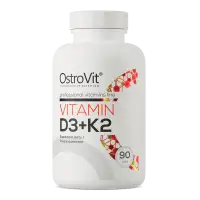
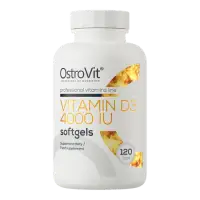
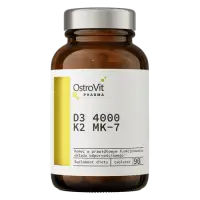

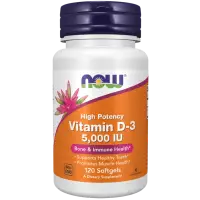


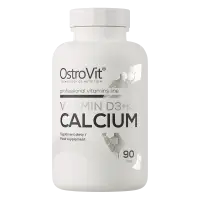
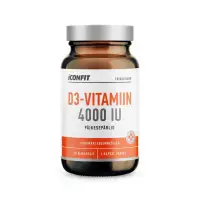
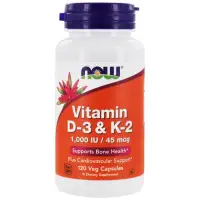
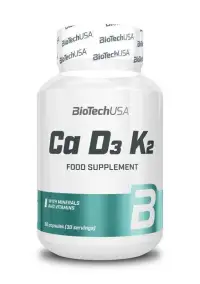
How we chose the best vitamin D in 2026
When selecting the best vitamin D, we evaluated form (D3 vs D2), dosage (IU per serving), bioavailability (this fat-soluble vitamin needs the right carrier), formula purity, and price-per-dose ratio. Vitamin D3 (cholecalciferol) is the most effective and best-absorbed form — it is also what the body produces from sunlight. Vitamin D2 (ergocalciferol) is a plant-based alternative but less effective. In Estonia's climate, vitamin D supplementation is especially important from October to March when sunlight is insufficient for the body's own production. We also assessed delivery forms — drops, capsules, and tablets.
Criteria for choosing the best vitamin D
| Criterion | Why it matters | What to look for | Red flag |
|---|---|---|---|
| Form: D3 vs D2 | D3 is more effective and better absorbed | D3 (cholecalciferol) — preferred choice | Only D2 — less effective, especially for deficiency |
| Dosage (IU) | Too low a dose will not correct deficiency | 1000-4000 IU for adults, up to 4000 IU daily is safe | Below 400 IU — usually insufficient in Estonia |
| Oil base | Vitamin D is fat-soluble | Oil-based drops (MCT oil, olive oil) — best absorption | Dry tablets without fat source |
| K2 combination | K2 directs calcium to bones, not arteries | D3 + K2 (MK-7) combination | High D3 dose without K2 for long-term use |
| Price per IU | Vitamin D should be affordable | Calculate price per 1000 IU, not per package | Very high price for low dosage |
FAQ about the best vitamin D
For beginners, we recommend oil-based D3 drops — they absorb best and the dose is easily adjustable. Start with 1000-2000 IU daily and get a blood test after 2-3 months. Achieving optimal levels (75-125 nmol/L) may require up to 4000 IU daily.
Quality vitamin D in Estonia typically costs €0.03-0.10 per daily dose. Drops are usually most affordable (lasting several months). Capsules and tablets are more convenient but slightly pricier. D3 + K2 combination costs €0.08-0.15 per dose — still very affordable.
Oil-based D3 drops offer the best absorption since vitamin D is fat-soluble. Drop dosing is also the most flexible — you can adjust precisely. Softgel capsules are more convenient with equally good absorption. Dry tablets are cheapest but should be taken with fatty food.
Vitamin K2 (especially MK-7 form) helps direct calcium to bones and teeth, preventing deposit in blood vessels. With long-term high vitamin D intake (over 2000 IU), a D3 + K2 combination is recommended. For short-term use and moderate doses, K2 is not strictly necessary.
In Estonia's climate, the recommended dose from October to March is 2000-4000 IU daily for adults. In summer, sunlight exposure plus a lower dose (1000 IU) is sufficient. Ideally, check your vitamin D level twice a year (25-OH-D blood test). An estimated 70-80% of Estonia's population is vitamin D deficient.