
Zinc for Sleep & Stress: What the Evidence Shows
Zinc is an essential trace mineral involved in more than 300 enzymatic reactions, yet its relationship to sleep quality and stress resilience is less familiar than its immune or wound-healing roles. This guide examines the zinc sleep and stress connection — separating plausible mechanisms from the current limits of the evidence.
Mechanism: How Zinc May Influence Sleep and Stress
Zinc plays several roles relevant to neurological function:
Sleep regulation: Zinc is found at high concentrations in the hippocampus and cerebral cortex. It modulates GABA receptors — the primary inhibitory neurotransmitter system — and influences the conversion of tryptophan to serotonin and subsequently melatonin. Low zinc status has been associated with disrupted sleep architecture in animal models, though causality in humans is harder to establish.
Stress response: Zinc helps regulate the hypothalamic-pituitary-adrenal (HPA) axis, which governs cortisol secretion. Zinc deficiency can upregulate cortisol responses to stressors, and animal studies suggest that zinc repletion normalises HPA reactivity. Additionally, zinc is required for the synthesis of brain-derived neurotrophic factor (BDNF), which is implicated in mood resilience.
Anti-inflammatory pathway: Chronic stress elevates inflammatory cytokines; zinc acts as an anti-inflammatory signal and may blunt excessive cytokine responses that disrupt sleep.
RCT Evidence: What Clinical Trials Show
Randmoised controlled trial data on zinc specifically for sleep or stress in healthy adults is limited. The most-cited human study used a combination supplement (zinc, magnesium, and melatonin) rather than zinc alone (Rondanelli et al., 2011), making it impossible to attribute effects to zinc specifically.
One observational study in a large cohort found that higher dietary zinc intake was associated with shorter sleep onset latency and longer total sleep time, though correlation does not establish causation (Grandner et al., 2013).
For stress, the picture is similarly indirect. Studies in zinc-deficient populations have demonstrated mood improvements following repletion, but these findings are not directly generalisable to people with normal baseline zinc status.
The honest summary: zinc supplementation is unlikely to dramatically improve sleep or stress in someone who is already zinc-replete. The benefit is most plausible in those with mild-to-moderate zinc deficiency — a condition that is more common than often appreciated, particularly in older adults, vegetarians, and people with high sweat output.
Effective Dose and Timing
The recommended dietary allowance for zinc is around 8–11 mg/day for adults. Supplemental doses used in research have typically ranged from 8 to 30 mg/day of elemental zinc. Forms matter: zinc picolinate and zinc bisglycinate are generally better absorbed than zinc oxide.
For sleep-relevant purposes, evening dosing makes practical sense given the tryptophan-melatonin conversion pathway, though robust timing data is scarce.
Products available at maxfit.ee for zinc supplementation include ICONFIT Capsules Zinc N90, MST Zinc Picolinate 100tabs, OstroVit Triple Zinc 90caps, and 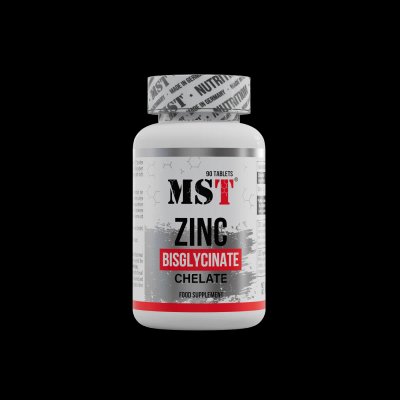 MST Zinc Chelate Bisglycinate€12.90 In stock 90tabs. Browse the full zinc category for all options.
Long-term high-dose zinc (consistently above 40 mg/day of elemental zinc) can impair copper absorption — a known risk that does not apply at the moderate doses discussed here, but is worth noting if you are stacking multiple supplements.
Who Benefits Most?
Zinc is most likely to improve sleep quality or stress resilience in:
- People with suboptimal zinc status (common in vegetarians, older adults, and athletes with high sweat losses)
- Individuals with habitually low dietary zinc intake (low meat consumption without strategic plant-food pairing)
- Those under sustained physical or psychological stress, which increases urinary zinc excretion
For people with confirmed adequate zinc status and good dietary intake, adding supplemental zinc for sleep or stress is unlikely to yield meaningful benefit.
Honest Verdict
Zinc's role in neurological function is biologically credible and supported by mechanistic data. However, the clinical trial evidence base for zinc specifically improving sleep or reducing stress in replete adults is currently thin. The supplement is worth considering if your intake may be suboptimal; it is not a primary sleep or stress intervention in otherwise nutritionally adequate individuals. Prioritise diet, sleep hygiene, and exercise before turning to supplements — but if deficiency is plausible, correcting it through zinc supplementation is a low-risk, reasonable step.
FAQ
Can zinc help with falling asleep faster?
There is some mechanistic support via the tryptophan-melatonin pathway, but the clinical evidence is limited and largely from combination supplements. If you have low zinc status, correcting it may help; do not expect dramatic effects if you are already zinc-sufficient.
Does zinc lower cortisol?
Zinc does appear to help regulate the HPA axis in deficient individuals. There is no strong evidence that supplemental zinc meaningfully reduces cortisol in people whose zinc status is normal.
What is the best zinc form for sleep and stress?
High-bioavailability forms such as zinc picolinate and zinc bisglycinate are preferable to zinc oxide. The difference in outcome between well-absorbed forms is likely small at similar elemental doses.
References
Rondanelli, M., Opizzi, A., Monteferrario, F., Antoniello, N., Manni, R., & Klersy, C. (2011). The effect of melatonin, magnesium, and zinc on primary insomnia in long-term care facility residents in Italy. Journal of the American Geriatrics Society, 59(1), 82-90. https://pubmed.ncbi.nlm.nih.gov/21226679/
Grandner, M. A., Jackson, N., Gerstner, J. R., & Knutson, K. L. (2013). Dietary nutrients associated with short and long sleep duration. Data from a nationally representative sample. Appetite, 64, 71-80. https://pubmed.ncbi.nlm.nih.gov/23339991/
Prakash, A., Bharti, K., & Majeed, A. B. A. (2015). Zinc: indications in brain disorders. Fundamental & Clinical Pharmacology, 29(2), 131-149. https://pubmed.ncbi.nlm.nih.gov/25659970/



