When is the best time to take collagen?
Let's answer the question you actually typed first: there is no magic clock for collagen. No quality human trial has shown that taking collagen in the morning beats taking it at night, or that "before bed" unlocks extra skin or joint benefits. What the research consistently shows is that the dose and how many weeks you stay consistent are what drive results — not the hour on the kitchen clock.
The studies that found real benefits gave people 5–15 g of collagen peptides per day for 8–24 weeks, taken at whatever time suited the participant (Khatri et al., 2021). In other words, the best time to take collagen is simply the time you will reliably remember to take it every single day.
What should you add to your 28-day challenge?
Browse the rangeWhat the science actually says
Collagen peptides are hydrolysed into small di- and tri-peptides that your gut absorbs and your body distributes — and that absorption is not strongly tied to a specific meal or time of day. Here is what the better-quality evidence supports:
- Joints and recovery: A systematic review of 15 randomised trials (656 participants) found the strongest evidence for 5–15 g/day improving joint comfort and function (Khatri et al., 2021).
- Body composition with training: In older men doing resistance training, 15 g of collagen peptides per day for 12 weeks produced greater gains in fat-free mass (+4.2 vs +2.9 kg) and leg strength than placebo (Zdzieblik et al., 2015).
Notice what those studies have in common: a daily dose held for months. None of them depended on a clever timing trick.
Does timing matter at all?
There is a sensible, low-stakes argument for two windows, but treat them as preferences, not rules:
| Timing | Rationale | Strength of evidence |
|---|---|---|
| Morning, on an empty stomach | Easy to make a habit with coffee or water | No proven advantage |
| With a meal | Some people digest it more comfortably | No proven advantage |
| Before/after training | Convenient if you already shake supplements then | Limited, indirect |
| Before bed | Pairs nicely with a wind-down routine | No proven advantage |
If you train, stacking your collagen with your post-workout shake is purely a convenience play — it keeps the habit attached to something you already do. Pairing collagen with vitamin C is often suggested because vitamin C is a cofactor for your body's own collagen synthesis; many products such as OstroVit Collagen + Vitamin C 400g Peach already bundle the two.
How much collagen, and which type?
Dose beats timing every time. Aim for the studied range of 5–15 g per day. Beauty-focused blends like ICONFIT Beauty Collagen Lemon-Lime 300g or MST Collagen Beauty Verisol 225g Pineapple sit at the skin end; joint-focused formulas like 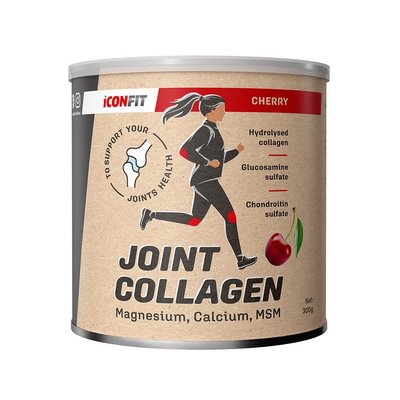 ICONFIT Joint Collagen Cherry€12.90 In stock 300g are marketed for connective-tissue support. The peptide content matters more than the flavour or the time you drink it. You can browse the full range under collagen supplements.
Collagen is not the only joint and recovery option worth knowing. Creatine monohydrate is the most evidence-backed strength supplement (see creatine), and omega-3 fish oil supports normal heart function at 250 mg/day EPA+DHA according to EFSA (browse omega-3).
Does coffee or heat destroy collagen?
A common worry is that stirring collagen into hot coffee "denatures" it and wastes the dose. This mostly misunderstands the chemistry. Collagen peptides are already hydrolysed — broken into small fragments — so there's no intact triple-helix left to "denature" in the way raw collagen would. Normal coffee temperatures don't meaningfully reduce the amino acids your body absorbs. If anything, the bigger practical risk is clumping in very hot liquid, which is a texture issue, not a potency one. Blends like OstroVit Coffee with Marine Collagen 150g Natural are built specifically for this use.
The same logic applies to the "empty stomach vs with food" debate. Because the peptides are small and water-soluble, they're absorbed well either way. Pick the option that sits comfortably for you and that you'll actually repeat — that repeatability is worth far more than any micro-optimisation of the hour or the temperature.
What collagen won't do
Honest expectations matter. Collagen is not a complete protein for muscle building — it's low in the amino acid leucine, so it's a poor choice if your only goal is maximising muscle protein synthesis (whey or a balanced protein does that job better). It also isn't a proven weight-loss aid, and no quality trial shows it "detoxes" skin or reverses ageing on its own. Where the evidence is most encouraging is joint comfort and connective-tissue support across 5–15 g/day for several months (Khatri et al., 2021), with some body-composition benefit when paired with training (Zdzieblik et al., 2015). Frame it as steady, long-game support — not an overnight fix.
Practical takeaways
- Pick a time you'll never skip. Consistency is the active ingredient. Coffee, training shake or bedtime — your choice.
- Hit 5–15 g/day and give it 8–12 weeks before judging skin or joint changes.
- Pair with vitamin C if convenient; it's a cofactor for your own collagen production.
- Don't chase timing hacks. No study supports a special hour for better results.
Collagen peptides and other supplements are available at maxfit.ee, with free advice from our Estonian team if you're unsure which type fits your goal.
References
Khatri M, Naughton RJ, Clifford T, Harper LD, Corr L. (2021). The effects of collagen peptide supplementation on body composition, collagen synthesis, and recovery from joint injury and exercise: a systematic review. Amino Acids, 53(10), 1493–1506. https://pubmed.ncbi.nlm.nih.gov/34491424/
Zdzieblik D, Oesser S, Baumstark MW, Gollhofer A, König D. (2015). Collagen peptide supplementation in combination with resistance training improves body composition and increases muscle strength in elderly sarcopenic men: a randomised controlled trial. British Journal of Nutrition, 114(8), 1237–1245. https://pubmed.ncbi.nlm.nih.gov/26353786/
EFSA Panel on Dietetic Products, Nutrition and Allergies (NDA). (2010). Scientific Opinion on the substantiation of health claims related to EPA, DHA, DPA and maintenance of normal cardiac function. EFSA Journal, 8(10), 1796. https://doi.org/10.2903/j.efsa.2010.1749
FAQ
Is it better to take collagen in the morning or at night?
Neither has been shown to be superior in human trials. Take it whenever you can be consistent — the daily dose and the number of weeks matter far more than the hour.
How long until collagen works?
Studies that found skin or joint benefits ran for 8–24 weeks at 5–15 g/day, so give it at least 8–12 weeks of daily use before judging.
Should I take collagen with vitamin C?
It's a reasonable habit, since vitamin C is a cofactor for your body's own collagen synthesis. Many blends already include it, but it isn't strictly required for the peptides to be absorbed.