
Vitamin C for Sleep & Stress: What the Evidence Shows
Vitamin C is most commonly associated with immune defence and antioxidant protection. Less discussed — but genuinely interesting — is its role in the stress response and sleep quality. This guide reviews the mechanisms, the clinical evidence, and how to think about dosing for these specific applications.
Mechanism: How Vitamin C Relates to Stress and Sleep
Vitamin C plays a structural role in the adrenal glands, which produce cortisol and adrenaline during the stress response. The adrenal cortex has one of the highest concentrations of vitamin C in the body, and vitamin C is actively consumed during stress. This has led researchers to investigate whether supplementing vitamin C can buffer the stress response and speed recovery from it.
Regarding sleep, vitamin C is involved in the synthesis of neurotransmitters including dopamine and norepinephrine, which influence alertness and arousal cycles. Lower plasma vitamin C concentrations have been associated with more disturbed sleep patterns in population studies (Grandner et al., 2014), though this is observational evidence and does not establish causation.
RCT Evidence
The strongest direct evidence comes from studies examining vitamin C and the cortisol response to physiological stress.
A randomised, double-blind, placebo-controlled trial in healthy adults undergoing a standardised psychological stress test found that participants who had supplemented with vitamin C showed attenuated cortisol responses and reported lower subjective levels of anxiety compared with the placebo group (Brody et al., 2002). This is one of the more frequently cited findings in this area and merits attention.
A separate trial in marathon runners — a group under significant physiological stress — found that vitamin C supplementation was associated with lower post-race cortisol levels compared with placebo (Peters et al., 2001). Endurance exercise induces substantial oxidative and hormonal stress, and vitamin C's antioxidant role appears to contribute to the attenuation of this response.
For sleep specifically, direct RCT evidence is more limited. The connection remains plausible through indirect pathways (cortisol suppression, antioxidant protection of neuronal tissue) rather than through confirmed mechanisms in sleep-specific trials.
Effective Dose and Timing
For general antioxidant and immune support, most adult requirements can be met from a varied diet rich in fruits and vegetables. When vitamin C is used with stress or recovery specifically in mind:
- Supplemental doses studied in stress-related RCTs have typically ranged from 500 mg to 1000 mg per day, often taken as a single daily dose.
- Vitamin C is water-soluble and not stored in the body for extended periods — daily intake is important.
- Some individuals take a split dose (morning and evening) to maintain more stable plasma concentrations throughout the day.
- Very high single doses are largely excreted rather than absorbed, so spreading the dose is more efficient than taking a large amount at once.
These are general orientation figures — individual needs vary.
Who Benefits Most
The populations where vitamin C supplementation for stress and sleep shows the most plausible benefit are:
- Athletes in heavy training: Particularly endurance athletes, where oxidative and cortisol stress is high and vitamin C turnover is accelerated.
- People under sustained psychological stress: Chronic stress depletes vitamin C from adrenal stores, and the Brody et al. (2002) trial specifically used a psychological stress model.
- Those with low dietary vitamin C intake: Individuals who eat few fruits and vegetables may have sub-optimal baseline status, meaning supplementation delivers a genuine replenishment benefit.
For people with high dietary vitamin C intake (multiple servings of fruits and vegetables daily), additional benefit from supplementation is likely to be marginal.
Honest Verdict
Vitamin C has a plausible and partially supported role in moderating the cortisol response to stress and in protecting neurological tissues relevant to sleep quality. The evidence is stronger for stress attenuation than for direct sleep improvement. It is a very safe, low-cost supplement with broad health benefits beyond these specific applications. Adding it to a supplement routine is low-risk and may offer meaningful benefit for those under consistent physical or psychological stress.
At maxfit.ee in the vitamin C category you can find 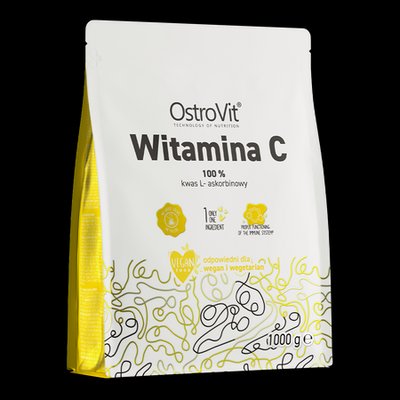 OstroVit Vitamin C€14.90 In stock 1000mg 90tabs,
 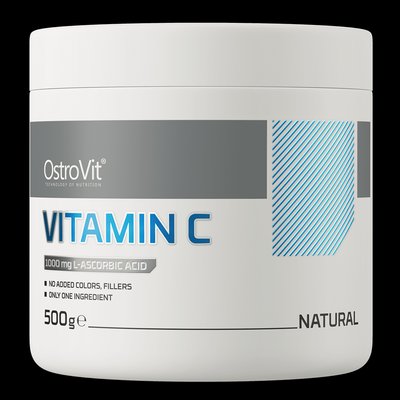 OstroVit Vitamin C€7.90 In stock 1000mg 120caps, and OstroVit Pharma natural Vitamin C from rose hips 30caps — a natural-source option for those preferring whole-food-derived vitamin C.
FAQ
Does vitamin C help with sleep directly?
The direct RCT evidence for vitamin C improving sleep is limited. The connection is more plausible through indirect pathways — reduced cortisol, antioxidant protection of brain tissue — rather than vitamin C acting as a sleep agent in the way melatonin does. It is best thought of as a stress-buffer that supports the conditions for better sleep rather than a sleep supplement per se.
Can I get enough vitamin C for stress support from food alone?
Possibly, if you eat a diet rich in fruits and vegetables consistently. However, during periods of high physical or psychological stress, requirements increase, and maintaining adequate status through diet alone becomes harder. Supplementation is a practical safety net during these periods.
Is there a risk of taking too much vitamin C?
Vitamin C is water-soluble and excess is excreted in urine. At very high doses (generally several grams per day) it can cause digestive discomfort, loose stools, or kidney stone risk in susceptible individuals. At doses of 500–1000 mg per day, adverse effects are uncommon in healthy adults.
References
Grandner, M. A., Jackson, N., Gerstner, J. R., & Knutson, K. L. (2014). Dietary nutrients associated with short and long sleep duration. Data from a nationally representative sample. Appetite, 64, 71-80.
Brody, S., Preut, R., Schommer, K., & Schurmeyer, T. H. (2002). A randomized controlled trial of high dose ascorbic acid for reduction of blood pressure, cortisol, and subjective responses to psychological stress. Psychopharmacology, 159(3), 319-324. https://pubmed.ncbi.nlm.nih.gov/11862365/
Peters, E. M., Anderson, R., Nieman, D. C., Fickl, H., & Jogessar, V. (2001). Vitamin C supplementation attenuates the increases in circulating cortisol, adrenaline and anti-inflammatory polypeptides following ultramarathon running. International Journal of Sports Medicine, 22(7), 537-543. https://pubmed.ncbi.nlm.nih.gov/11590482/



