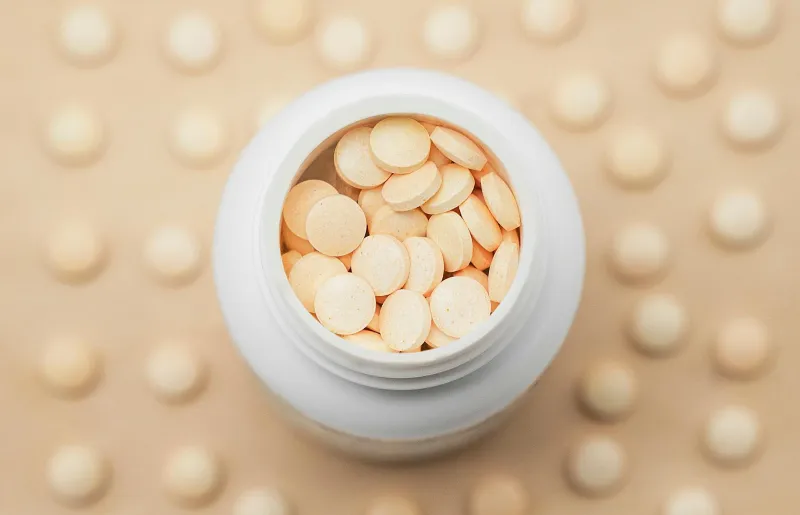
Age-Related Need for Vitamin C
Vitamin C for seniors deserves careful attention because the body's relationship with this essential nutrient changes as we age. Vitamin C is a water-soluble antioxidant that supports immune cell function, collagen biosynthesis, and protection against oxidative stress — all of which become more pressing concerns after the age of 50.
Several mechanisms make older adults more vulnerable to suboptimal vitamin C status. Reduced dietary variety, lower energy intake, medication-induced interactions, and changes in gastrointestinal function can all limit the amount of vitamin C available to tissues. A cross-sectional analysis of the National Health and Nutrition Examination Survey found that older age groups showed a higher prevalence of inadequate vitamin C intake compared with younger adults (Schleicher et al., 2009).
Collagen synthesis depends directly on vitamin C. As we age, the skin, joints, and connective tissue naturally lose collagen, and marginal vitamin C status accelerates this decline. Similarly, the immune system undergoes changes with age — a phenomenon sometimes described as immunosenescence — and adequate vitamin C appears to support aspects of both innate and adaptive immunity (Carr & Maggini, 2017).
Absorption Changes After 50
Intestinal absorption of vitamin C is broadly efficient at low to moderate intake levels and becomes less efficient at higher doses. This saturation kinetics means that dividing a larger daily dose into two or three portions throughout the day maintains plasma levels more consistently than a single large dose — a strategy that is relevant for older adults who may benefit from optimising tissue saturation.
Gastric acid secretion tends to decrease with age (a condition called hypochlorhydria). Since the acidic stomach environment plays a role in converting some vitamin forms, older adults who use proton pump inhibitors or histamine H2 blockers may absorb certain nutrient forms less efficiently. However, for ascorbic acid itself, this is less of a concern than for minerals such as iron or calcium.
Dose and Safety
The tolerable upper intake level for vitamin C for adults has been established at 2000 mg per day by relevant regulatory bodies. Most observational and intervention evidence suggests that doses between 200 mg and 1000 mg per day are safe and adequate for most healthy older adults. High-dose supplementation above the tolerable upper intake level is not recommended without medical guidance as it can cause gastrointestinal upset and — very rarely — increase risk of kidney stone formation in susceptible individuals.
At maxfit.ee you can find well-formulated options including 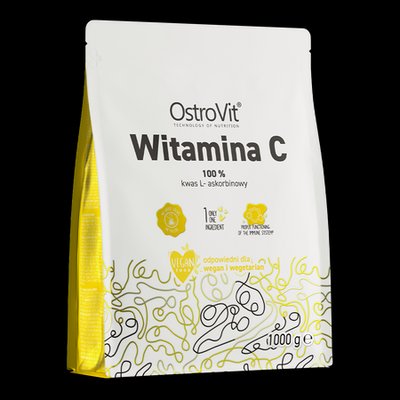 OstroVit Vitamin C€14.90 In stock 1000mg 90tabs and
 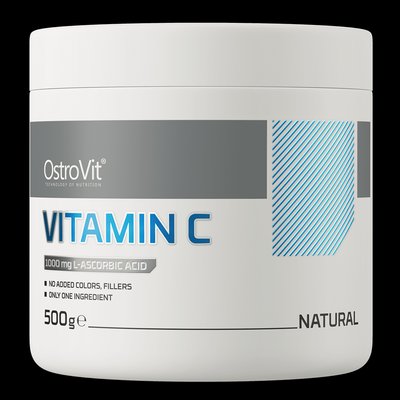 OstroVit Vitamin C€7.90 In stock 1000g powder, which allow flexible dosing. BIOTECHUSA Vitamin C1000 100tab is another convenient choice for daily supplementation.
Interactions with Medication
Older adults are more likely to take multiple medications, and some interactions are clinically relevant. High-dose vitamin C may affect the absorption of certain drugs, and importantly it can interact with anticoagulants such as warfarin. A case series has documented patients on warfarin whose INR values were altered following high-dose vitamin C supplementation. Anyone taking blood-thinning medications should consult their physician before starting vitamin C supplementation above typical dietary levels.
Vitamin C also enhances non-haem iron absorption, which is useful for older adults with low iron stores but should be considered by those with haemochromatosis or high iron status.
When to Supplement
Dietary intake from fruit and vegetables remains the best starting point. A diet poor in fresh produce — common in winter in Estonia, where seasonal variety is limited — is the most frequent reason why older adults fall short. Smokers have substantially higher vitamin C requirements because tobacco smoke depletes plasma ascorbate. Chronic illness, frequent infections, and recent surgery all increase metabolic demand for vitamin C.
Supplementation is a practical solution during winter months and whenever dietary variety is compromised. Starting with a dose of 200–500 mg per day split over meals is a reasonable approach for most healthy adults over 50. The complete range of vitamin C supplements at maxfit.ee covers both powder and tablet formats.
FAQ
Is vitamin C safe to take daily after 50?
Yes. Vitamin C is water-soluble and excess amounts are excreted in urine, making toxicity unlikely at moderate daily doses. The tolerable upper intake level is 2000 mg per day. Most seniors benefit from 200–1000 mg per day from supplements and dietary sources combined.
Can vitamin C interfere with blood pressure or cholesterol medications?
At moderate doses, vitamin C is unlikely to cause clinically meaningful interactions with common cardiovascular medications. However, very high doses may affect anticoagulant therapy. If you take prescription medications, check with your doctor or pharmacist before adding any new supplement.
Does vitamin C help with colds and flu for older adults?
Evidence from meta-analyses suggests that regular vitamin C supplementation may modestly reduce the duration of the common cold (Hemila, 2017). It does not reliably prevent colds in the general population, but maintaining adequate status may reduce severity. Older adults with immune function changes may gain more benefit from consistent supplementation than younger healthy individuals.
References
Schleicher, R. L., Carroll, M. D., Ford, E. S., & Lacher, D. A. (2009). Serum vitamin C and the prevalence of vitamin C deficiency in the United States: 2003-2004 National Health and Nutrition Examination Survey (NHANES). American Journal of Clinical Nutrition, 90(5), 1252-1263. https://pubmed.ncbi.nlm.nih.gov/19675106/
Carr, A. C., & Maggini, S. (2017). Vitamin C and immune function. Nutrients, 9(11), 1211. https://pubmed.ncbi.nlm.nih.gov/29099763/
Hemila, H. (2017). Vitamin C and infections. Nutrients, 9(4), 339.



