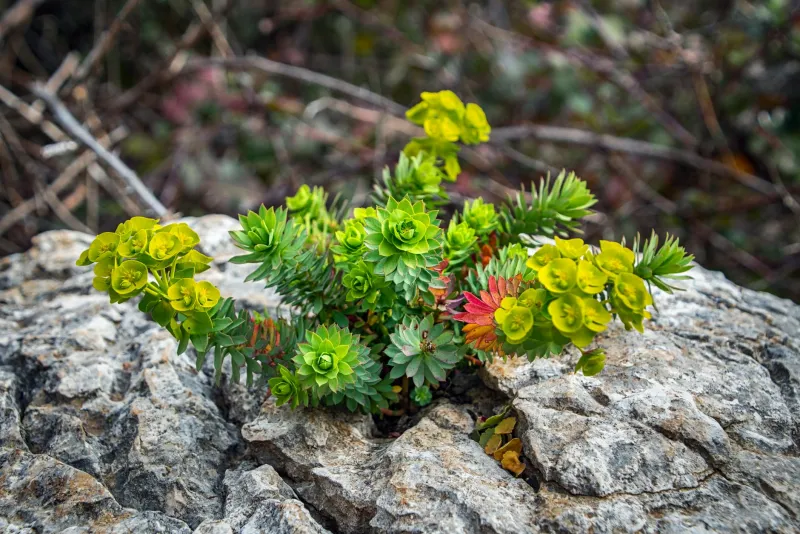
What is Tribulus terrestris?
Tribulus terrestris (commonly known as puncture vine or caltrop) is a small spiny plant that grows in tropical and temperate regions worldwide. This plant has been used in traditional medicine for centuries — in Ayurveda (traditional Indian medicine) it was known as "Gokshura" and in traditional Chinese medicine as "Bai Ji Li".
Tribulus supplements are typically made from fruit or leaf extracts. The main bioactive compounds are:
- Saponins (especially protodioscin and protogracillin) — steroidal glycosides
- Flavonoids — kaempferol, quercetin
- Alkaloids — harmane and others
- Lignanamides — terrestriins
Extracts with varying saponin content are available — typically 40–90% saponins.
How does Tribulus terrestris work?
The proposed mechanism of action for Tribulus relates primarily to saponins, especially protodioscin. Traditional theories have suggested that these compounds may influence luteinising hormone (LH) release from the pituitary gland, which in turn stimulates testosterone production in the testes.
However, scientific studies have not consistently confirmed this mechanism in healthy men. Some effects have been observed in animal studies, but results from human trials have been contradictory.
Evidence and research
Important note: The European Food Safety Authority (EFSA) has not approved any health claims for Tribulus terrestris supplements. Claims about testosterone, libido, athletic performance and general health have not received approval.
What the scientific literature shows:
Testosterone:
- Systematic reviews have concluded that Tribulus terrestris does not raise testosterone levels in healthy men to a statistically significant degree (Qureshi et al., 2014)
- Some studies have shown minor changes that were not clinically meaningful and did not exceed the placebo effect
- Animal studies have yielded more positive results, but these may not translate to humans
Libido:
- Some small-scale studies have shown subjective improvements in sexual function (Santos et al., 2014)
- However, these studies have had methodological limitations (small samples, short duration)
- The placebo effect may play a significant role in subjective assessments of sexual function
Athletic performance:
- Summaries of multiple studies indicate that Tribulus does not improve body composition or athletic performance in trained athletes (Rogerson et al., 2007)
Since there are no approved EFSA claims, we cannot state that Tribulus terrestris increases testosterone, improves libido or enhances athletic performance.
How to take Tribulus terrestris
If you decide to try Tribulus, here are some practical guidelines:
- Extract vs powder — extract is more concentrated; choose a product standardised for saponin content
- Typical dosages in the literature — 250–1500 mg of extract per day
- Saponin content — often standardised to 40–60%
- Cycling — some users cycle their use (e.g., 8 weeks on, 4 weeks off), although the need for this has not been scientifically proven
Tribulus has been used in studies for several weeks to months. Long-term safety data are limited.
Who might be interested in Tribulus terrestris?
- Traditional medicine enthusiasts — Ayurvedic and TCM practitioners have used this plant for centuries
- Men seeking natural supplements — although evidence for testosterone boosting is weak, Tribulus remains a popular choice
- Athletes — should understand that evidence for performance enhancement is lacking
Warning: Tribulus terrestris is not a banned substance, but some supplements may be contaminated with prohibited substances. Competitive athletes should only use certified products. Diabetics and those taking blood pressure medications should consult their doctor first.
Frequently asked questions
Does Tribulus really increase testosterone? Based on current scientific evidence, Tribulus terrestris has not raised testosterone levels in healthy men to a clinically meaningful degree. EFSA has not approved this claim.
Is Tribulus safe? In short-term studies, Tribulus has generally been well tolerated. The most common side effects are digestive discomfort. Long-term safety data are limited.
When does Tribulus start working? Studies have typically lasted 4–12 weeks. Since the evidence for effectiveness is weak, there may be no noticeable effect.
Can women take Tribulus? Tribulus has been used in traditional medicine for women's health as well. Pregnant and breastfeeding women should avoid it.
Is Tribulus banned in sports? Tribulus terrestris itself is not on the WADA prohibited list, but contaminated supplements may contain banned substances. Use only certified products.
See also:
Browse supplements at MaxFit →
References
- Qureshi, A., Naughton, D. P., & Petroczi, A. (2014). A systematic review on the herbal extract Tribulus terrestris and the roots of its putative aphrodisiac and performance enhancing effect. Journal of Dietary Supplements, 11(1), 64–79.
- Neychev, V. K., & Mitev, V. I. (2005). The aphrodisiac herb Tribulus terrestris does not influence the androgen production in young men. Journal of Ethnopharmacology, 101(1-3), 319–323.
- Rogerson, S., Riches, C. J., Jennings, C., Weatherby, R. P., Meir, R. A., & Marshall-Gradisnik, S. M. (2007). The effect of five weeks of Tribulus terrestris supplementation on muscle strength and body composition during preseason training in elite rugby league players. The Journal of Strength & Conditioning Research, 21(2), 348–353.
- Santos, C. A., Reis, L. O., Stamatiou, K., Monti Scomparin, R. C., & Goñi Sanz, M. A. (2014). Tribulus terrestris versus placebo in the treatment of erectile dysfunction: a prospective, randomized, double blind study. Actas Urológicas Españolas, 38(4), 244–248.
Disclaimer
A food supplement is not a substitute for a varied and balanced diet and a healthy lifestyle.



