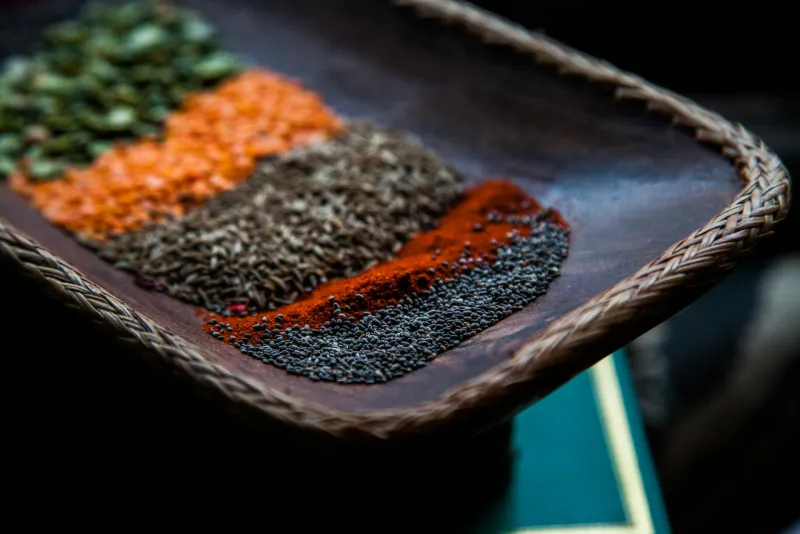
What is Fenugreek?
Fenugreek (Trigonella foenum-graecum) is a leguminous plant native to South Asia and the Mediterranean region. Its seeds have been an important spice in Indian, Middle Eastern, and North African cuisines for centuries — from curry blends to Ethiopian berbere.
Traditional medicine has used fenugreek seeds extensively — in Ayurveda to support digestion, and in Arabic medicine for general health. Today it has become a popular supplement.
The seeds contain several bioactive compounds, including saponins (particularly furostanol saponins), soluble fiber (galactomannans), and 4-hydroxyisoleucine. These compounds are the primary focus of scientific research.
How it works
Fenugreek's multifaceted effects stem from its diverse composition. Saponins may influence hormonal activity, while the high fiber content may slow carbohydrate absorption in the gut, which in turn affects post-meal blood sugar levels.
4-hydroxyisoleucine is an amino acid associated with influencing insulin activity. These different components may explain why fenugreek is studied in both hormonal health and metabolic contexts.
Evidence and benefits
Currently there are no EU-approved specific health claims for fenugreek supplements. However, research suggests several interesting areas of potential benefit:
- Testosterone research: Some studies suggest that fenugreek extract may support free testosterone levels (Wankhede et al., 2016). The exact mechanism is still debated — it may be related to influencing the aromatase enzyme (Wilborn et al., 2010).
- Blood sugar research: Multiple studies suggest fenugreek may support normal blood sugar levels, likely through fiber and 4-hydroxyisoleucine (Gupta et al., 2001).
- Training support: Some small-scale studies suggest improvements in strength and body composition when combined with resistance training (Poole et al., 2010).
- Appetite regulation: Fenugreek's high fiber content may support feelings of fullness.
Results are promising but not all studies agree, and confirmation from larger-scale trials is needed.
How to take
Common forms:
- Standardized extract capsules (most common as a supplement)
- Seeds (for use in food and as tea)
- Powder
Typical dosages:
- Standardized extract (e.g., Testofen): 500–600 mg per day
- Seed powder: 5–30 g per day (added to food)
- Take with meals, divided into 1–2 doses per day
Start with a lower dose, as fenugreek may affect digestion. In some people it also changes body and urine odor (a maple syrup-like scent).
Who should consider it
- Men looking to support testosterone levels naturally
- Individuals interested in blood sugar level support
- Athletes seeking training performance support
- Those wanting to increase feelings of satiety
- People who prefer a traditional approach to wellness
Consult a healthcare professional before starting any new supplement. This is especially important for people taking diabetes medications or anticoagulants, as fenugreek may interact with these.
Frequently asked questions
Does fenugreek boost testosterone? Some studies suggest a moderate support of free testosterone levels, but results vary. It is not a medication and outcomes depend on individual factors.
Is fenugreek safe? Generally well tolerated. The most common side effects are digestive discomfort and changes in body odor. Large doses should be avoided during pregnancy.
How long does it take to notice effects? Most studies lasted 8–12 weeks. Short-term effects (such as appetite) may be noticed sooner.
Does fenugreek affect blood sugar? Some research suggests it may. People taking diabetes medications should definitely consult their doctor.
Which extract is best? Testofen (standardized to 50% Fenuside) is one of the most clinically studied forms. Other standardized extracts have also been researched.
Can women use fenugreek? Yes, fenugreek has been used in women's health contexts as well. However, pregnant women should be cautious and consult their doctor.
References
- Wankhede S, Mohan V, Thakurdesai P. (2016). Beneficial effects of fenugreek glycoside supplementation in male subjects during resistance training: a randomized controlled pilot study. Journal of Sport and Health Science, 5(2), 176-182.
- Wilborn C, Taylor L, Poole C, Foster C, Willoughby D, Kreider R. (2010). Effects of a purported aromatase and 5alpha-reductase inhibitor on hormone profiles in college-age men. International Journal of Sport Nutrition and Exercise Metabolism, 20(6), 457-465.
- Gupta A, Gupta R, Lal B. (2001). Effect of Trigonella foenum-graecum (fenugreek) seeds on glycaemic control and insulin resistance in type 2 diabetes mellitus. Journal of the Association of Physicians of India, 49, 1057-1061.
- Poole C, Wilborn C, Taylor L, Kerksick C. (2010). The role of post-exercise nutrient administration on muscle protein synthesis and glycogen synthesis. Journal of Sports Science and Medicine, 9(3), 354-363.
See also:
Browse plant-based supplements at MaxFit →
Disclaimer
A food supplement is not a substitute for a varied and balanced diet and a healthy lifestyle.



