Testosterone Boosters: Latest Research & Evidence Update
Testosterone boosters represent one of the best-selling categories in the sports nutrition market — and one of the most contested. The category spans a wide range of products: from D-aspartic acid and tribulus terrestris to ashwagandha, zinc, and fenugreek. A research update is warranted because several key ingredients have been studied more rigorously in recent years, and the picture is more nuanced than either the marketing claims or the sceptic dismissals suggest.
What Recent Trials Show
D-Aspartic Acid (D-AA): Early research suggested D-AA could raise LH and testosterone in men with lower baseline levels. More recent, better-controlled trials have tempered this picture. A double-blind trial in resistance-trained men found no significant difference in testosterone levels between D-AA and placebo groups after 28 days (Willoughby & Leutholtz, 2013). The population matters enormously: short-term spikes in untrained or hormonally sub-optimal individuals may not translate to trained athletes or men with normal testosterone.
Tribulus Terrestris: A systematic review and meta-analysis examining tribulus supplementation found no significant effect on free or total testosterone levels in healthy men across multiple RCTs (Qureshi et al., 2014). The herb may have libido-related effects mediated through non-androgenic pathways, but the direct testosterone-raising claim lacks current RCT support.
Ashwagandha (KSM-66 extract): This is where the evidence is most consistent. A double-blind RCT in healthy adult males found that KSM-66 ashwagandha supplementation was associated with a statistically significant increase in total testosterone (Wankhede et al., 2015), and the effect has been partially replicated in other studies. The mechanism is thought to involve HPA axis modulation (cortisol reduction), since elevated cortisol suppresses testosterone. Effect sizes are modest, and the benefit is most plausible in stressed individuals with cortisol-mediated testosterone suppression rather than in unstressed men with healthy testosterone baseline.
Zinc: Zinc deficiency is associated with lower testosterone levels, and supplementation in deficient men can restore testosterone toward normal. However, supplementing zinc in replete individuals does not appear to meaningfully increase testosterone above baseline. The ZMA (zinc + magnesium + B6) formulation has a mixed evidence base in well-controlled studies.
Shifts in Consensus
The field has moved away from the earlier enthusiasm for D-AA and tribulus as universal testosterone boosters. The emerging view is more nuanced:
- Nutritional deficiency correction (zinc, vitamin D) can normalise testosterone in deficient men — this is consistent and supported.
- Adaptogen-mediated HPA modulation (ashwagandha) can modestly support testosterone in cortisol-suppressed individuals.
- Direct androgenic stimulation through plant compounds has not been convincingly demonstrated in well-controlled RCTs for the widely marketed ingredients.
There is also a growing recognition that lifestyle factors — sleep quality, resistance training volume, body fat percentage, and chronic stress — have larger effects on testosterone than any available supplement.
Still-Open Questions
- Whether ashwagandha benefits persist beyond 12 weeks, and whether they apply to older men (50+) specifically
- Whether combination products (multi-ingredient testosterone boosters) have synergistic effects that outperform individual ingredients
- The clinical significance of small percentage increases in total testosterone — the degree to which these changes affect body composition, libido, or performance has rarely been robustly measured as a downstream endpoint
- Long-term safety data on high-dose D-AA in men with pre-existing hormonal conditions
What It Means Practically
For someone considering testosterone booster supplements available at maxfit.ee, the evidence suggests:
- OstroVit D.A.A 3000mg 90caps contains D-aspartic acid, which has the most plausible mechanism for short-term benefit in untrained or hypogonadal men but has shown inconsistent results in trained athletes.
- MST Testo Boost Professional 90caps and
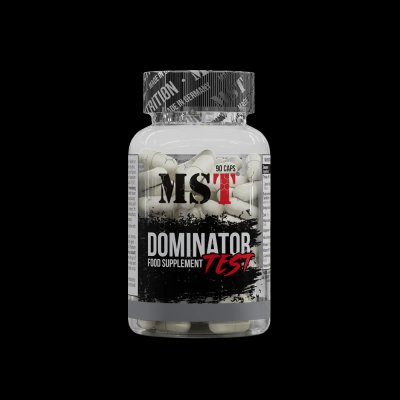 MST Dominator Test€28.90 In stock 90caps are multi-ingredient formulations; individual ingredient quality and dose should be checked.
 - Mutant TEST 90 caps is another multi-ingredient option combining several studied ingredients.
Browse the full testosterone booster category at maxfit.ee for current product options.
For men whose primary goal is optimising natural testosterone, the highest-yield interventions remain non-supplement: adequate sleep (7–9 hours), resistance training, body fat management, and stress reduction. Supplements may provide marginal additional support, particularly through deficiency correction and cortisol management.
Bottom Line
Testosterone booster supplements are not without effect, but the honest summary is that:
- Effects are most meaningful in men with suboptimal testosterone due to deficiency (zinc, vitamin D) or cortisol excess (ashwagandha).
- The magnitude of change is typically small and may not translate to noticeable real-world outcomes.
- The lifestyle fundamentals — sleep, training, diet quality, stress management — are far larger levers than any supplement in this category.
- Marketed products vary enormously in ingredient quality, dosing, and evidence alignment; always check individual ingredient doses against researched amounts.
FAQ
Do testosterone boosters actually work?
Some ingredients have plausible, if modest, evidence of effect in specific populations (particularly men with deficiencies or elevated cortisol). In healthy men with normal testosterone and good lifestyle habits, the effect is likely minimal.
Is ashwagandha the best testosterone booster ingredient?
Current evidence suggests ashwagandha (especially KSM-66 extract) has the most consistent RCT data among common testosterone booster ingredients. Its mechanism — via cortisol reduction — is better supported than the direct androgenic mechanisms proposed for D-AA or tribulus.
At what age do testosterone levels start declining significantly?
Total testosterone levels begin to decline gradually from around 30 years of age. The rate varies considerably between individuals and is influenced by lifestyle, health status, and body composition.
References
Wankhede, S., Langade, D., Joshi, K., Sinha, S. R., & Bhattacharyya, S. (2015). Examining the effect of Withania somnifera supplementation on muscle strength and recovery: a randomized controlled trial. Journal of the International Society of Sports Nutrition, 12, 43. https://pubmed.ncbi.nlm.nih.gov/26609282/
Willoughby, D. S., & Leutholtz, B. (2013). D-aspartic acid supplementation combined with 28 days of heavy resistance training has no effect on body composition, muscle strength, and serum hormones associated with the hypothalamo-pituitary-gonadal axis in resistance-trained men. Nutrition Research, 33(10), 803-810. https://pubmed.ncbi.nlm.nih.gov/24074738/
Qureshi, A., Naughton, D. P., & Petroczi, A. (2014). A systematic review on the herbal extract Tribulus terrestris and the roots of its putative aphrodisiac and performance enhancing effect. Journal of Dietary Supplements, 11(1), 64-79. https://pubmed.ncbi.nlm.nih.gov/24559105/



