
Testosterone Boosters Interactions: What You Need to Know
Testosterone boosters are among the most popular sports nutrition supplements, but their interactions with medications, other nutrients, and food are often overlooked. This guide covers the most clinically relevant testosterone boosters interactions so you can make an informed decision before adding them to your stack.
Drug Interactions
Several common ingredients in testosterone boosters can affect how prescription drugs work:
Anticoagulants (blood thinners): Tribulus terrestris and fenugreek have shown mild antiplatelet effects in preliminary research. If you take warfarin or another anticoagulant, adding these herbs may alter bleeding time and should be discussed with your doctor first.
Diabetes medications: Fenugreek is the most studied testosterone-booster ingredient for blood glucose effects. Because it may lower fasting blood sugar, combining it with metformin or insulin could increase hypoglycemia risk (Neelakantan et al., 2014). Monitor glucose more frequently if combining these.
Hormonal therapies: If you are using prescribed testosterone replacement therapy (TRT), adding OTC testosterone boosters creates an unpredictable hormonal environment. Most OTC boosters work through indirect pathways (e.g., LH stimulation), so the net effect may be variable.
Statins: Statins suppress the cholesterol synthesis pathway, and since testosterone is a cholesterol-derived hormone, men on statins sometimes have lower testosterone. Some boosters may partially counteract this. This is not dangerous per se, but your prescribing physician should be aware.
Nutrient Competition and Synergy
Not all interactions are negative. Some nutrients enhance testosterone-booster effects:
Zinc and D-aspartic acid (DAA): Zinc is essential for testosterone synthesis. If you are deficient, zinc supplementation alone can raise testosterone toward normal range. DAA (D-aspartic acid) works via LH stimulation. Both support the hypothalamic-pituitary-gonadal axis, so combining them is rational in deficient individuals (Topo et al., 2009).
Vitamin D: Low vitamin D status is associated with lower testosterone in population studies. Correcting deficiency may benefit testosterone levels independently, and this effect is additive with herbal boosters.
High-dose zinc competition: Zinc and copper compete for intestinal absorption. Long-term high-dose zinc supplementation — particularly above the tolerable upper intake level — can cause copper deficiency. If your testosterone booster contains zinc, avoid separately adding large zinc doses.
Food Effects
What you eat influences how testosterone-booster ingredients perform:
- High-fat meals: Fat-soluble compounds in testosterone boosters (e.g., fenugreek seed extracts) show better bioavailability when taken with a fat-containing meal.
- Cruciferous vegetables: Broccoli, cauliflower, and Brussels sprouts contain compounds that support estrogen clearance, which can complement testosterone-booster use.
- Alcohol: Regular alcohol intake suppresses testosterone production via direct testicular effect. Taking a testosterone booster while consuming significant alcohol undermines its purpose.
- Soy: High isoflavone intake from soy foods is a point of ongoing research regarding estrogenic effects. The data for typical dietary amounts are largely reassuring, but extremely high soy intake and testosterone boosters have not been systematically studied together.
Who Must Be Cautious
Certain groups should approach testosterone boosters with additional care:
- Men with hormone-sensitive conditions (e.g., prostate cancer, benign prostatic hyperplasia): Increasing androgen levels, even modestly, may be contraindicated.
- Those on anticoagulant therapy: Multiple herbal ingredients carry antiplatelet activity.
- Men with type 2 diabetes or prediabetes on glucose-lowering medications: Fenugreek and some adaptogens affect insulin sensitivity.
- Adolescents: The hypothalamic-pituitary-gonadal axis is still maturing, and supplemental stimulation of this axis is not supported by research in younger populations.
- Anyone with liver disease: Several herbal concentrates are metabolized hepatically; elevated liver enzymes have been reported with certain proprietary blends.
Practical Rules
- Disclose to your doctor or pharmacist if you take any prescription medication, especially anticoagulants, statins, or diabetes drugs.
- Take with fat for herbal extracts — most active ingredients are better absorbed alongside dietary fat.
- Avoid high-dose zinc duplication: Check how much zinc is already in your testosterone booster before adding a separate zinc supplement.
- Cycle rather than use continuously: Many practitioners recommend eight-to-twelve week cycles with breaks to allow the natural hormonal axis to function without constant external stimulation.
- Prioritize sleep and resistance training: No OTC testosterone booster produces results comparable to adequate sleep and progressive resistance training.
Products available at maxfit.ee in this category include OstroVit D.A.A 3000mg 90caps, MST Testo Boost Professional 90caps, 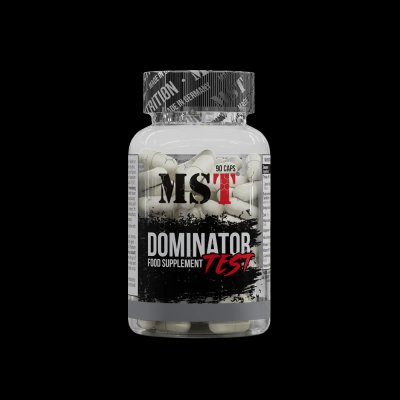 MST Dominator Test€28.90 In stock 90caps, and Mutant TEST 90 caps. Always read the label for the full ingredient list before combining with other supplements or medications.
FAQ
Can testosterone boosters interact with antidepressants?
Some adaptogenic herbs (ashwagandha, rhodiola) in testosterone-booster blends may have mild serotonergic or dopaminergic activity. The evidence is limited, but if you take SSRIs or SNRIs, check with your prescribing physician before adding adaptogen-containing products.
Do testosterone boosters affect fertility?
OTC herbal testosterone boosters work through LH stimulation and generally should not suppress sperm production. However, if you take pharmaceutical androgens or pro-hormones, these can suppress the hypothalamic-pituitary axis and impair fertility. OTC herbal products are a separate category.
Is it safe to stack a testosterone booster with creatine?
Yes — creatine and herbal testosterone boosters operate through entirely separate mechanisms. There is no known antagonistic interaction, and this is a commonly used stack among natural athletes.
References
Neelakantan, N., Narayanan, M., de Souza, R. J., & van Dam, R. M. (2014). Effect of fenugreek (Trigonella foenum-graecum L.) intake on glycemia: a meta-analysis of clinical trials. Nutrition Journal, 13, 7. https://pubmed.ncbi.nlm.nih.gov/24438170/
Topo, E., Soricelli, A., D'Aniello, A., Ronsini, S., & D'Aniello, G. (2009). The role and molecular mechanism of D-aspartic acid in the release and synthesis of LH and testosterone in humans and rats. Reproductive Biology and Endocrinology, 7, 120. https://pubmed.ncbi.nlm.nih.gov/19860889/
Pilz, S., Frisch, S., Koertke, H., Kuhn, J., Dreier, J., Obermayer-Pietsch, B., Wehr, E., & Zittermann, A. (2011). Effect of vitamin D supplementation on testosterone levels in men. Hormone and Metabolic Research, 43(3), 223-225. https://pubmed.ncbi.nlm.nih.gov/21154195/



