
Testosterone Boosters After 50: What Really Changes and What Can Help
Testosterone boosters for seniors have become one of the most searched supplement categories among men over 50. The interest is understandable: testosterone levels decline gradually with age, and that shift touches everything from muscle mass and energy to mood and libido. But natural boosters — supplements rather than prescription hormone therapy — occupy a nuanced space. This guide separates what the research supports from what it does not.
The Age-Related Need: Why Testosterone Declines
Testosterone production peaks in early adulthood and declines at roughly one to two percent per year after age 30 (Harman et al., 2001). By the mid-fifties, many men experience what is sometimes called "partial androgen deficiency" — not a clinical deficiency, but a gradual reduction that can contribute to fatigue, slower muscle recovery, and reduced drive. This is a normal biological process, not a disease.
The important distinction is between hypogonadism — a clinical condition requiring medical evaluation and possible prescription therapy — and the slower, age-associated decline that may respond to lifestyle changes and certain supplements. If you suspect clinical hypogonadism, a blood test and a conversation with your doctor come before any supplement.
Absorption Changes After 50
As men age, several physiological changes affect how nutrients are absorbed and how hormones are regulated. Zinc and magnesium absorption tends to decrease with age, partly due to reduced stomach acid and changes in gut function (Rink & Gabriel, 2000). Both minerals are co-factors in testosterone synthesis, which is why deficiency-driven shortfalls can depress testosterone even when intake looks adequate on paper.
This is the primary mechanism behind ZMA-style formulations: if you are deficient in zinc or magnesium, correcting that deficiency may help restore testosterone toward its natural baseline. The evidence is strongest in men who are actually deficient, not in those who already have adequate levels.
What the Research Says About Common Ingredients
Several ingredients commonly found in testosterone boosters have been studied in clinical trials:
D-Aspartic Acid (DAA): A short-term study in healthy men found that supplementation raised luteinizing hormone and testosterone over 12 days (Topo et al., 2009). However, longer-term trials in resistance-trained men showed less consistent results, suggesting effects may be transient or context-dependent.
Fenugreek: A randomized trial found that a standardized fenugreek extract maintained testosterone levels in older men compared to a decline in the placebo group (Wankhede et al., 2016). Effects on free testosterone were the most notable finding.
Ashwagandha: A well-conducted RCT found that 600 mg daily of ashwagandha root extract was associated with higher testosterone levels after 8 weeks compared to placebo (Wankhede et al., 2015). Stress-reduction via cortisol lowering is a plausible mechanism, since chronically elevated cortisol suppresses testosterone.
Ingredients that appear in many products but lack convincing human RCT data include tribulus terrestris and various plant sterols. Mention regulators inline: note that no natural supplement has been approved by the EMA or EFSA specifically to treat testosterone deficiency.
Dose, Safety, and Interactions with Medication
Men over 50 are more likely to be taking prescription medications, which raises the interaction question. Ashwagandha may have mild thyroid-stimulating effects, relevant for men on thyroid medication. Fenugreek can lower blood sugar, important for those on diabetes medication or insulin. Zinc in excess of around 40 mg per day (the commonly cited tolerable upper intake) can interfere with copper absorption and potentially interact with certain antibiotics.
The practical guidance: start with the manufacturer-recommended dose, inform your physician if you are on chronic medication, and avoid combining multiple testosterone boosters simultaneously — the risk of nutrient excess is real.
At maxfit.ee you can find products such as MST Testo Boost Professional 90caps, OstroVit D.A.A 3000mg 90caps, and 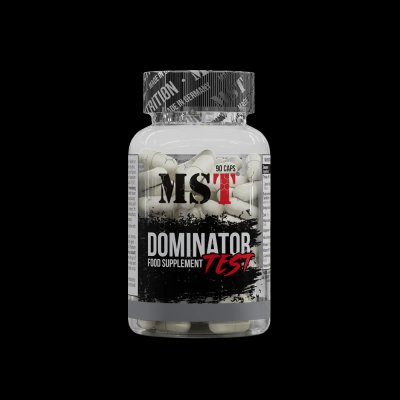 MST Dominator Test€28.90 In stock 90caps — products designed with these ingredient profiles. The label doses on each product are set by the manufacturer based on standard adult use.
When to Supplement and What to Expect
Natural testosterone boosters are not a substitute for the lifestyle factors that most powerfully support healthy testosterone: resistance training, adequate sleep, caloric sufficiency, and managing chronic stress. Studies consistently show that strength training is among the most effective non-pharmacological interventions for maintaining testosterone in older men.
If your baseline is already healthy, a natural booster is unlikely to produce dramatic changes. If you have nutrient deficiencies or high stress, correcting those factors — with or without a dedicated supplement — is likely to have more impact. Set realistic expectations: these products support, they do not replace, a health-promoting lifestyle.
For men looking to explore this category, the klassikalised testosterooni tostjad selection at MaxFit offers a range of options.
FAQ
Do testosterone boosters work the same way for seniors as for younger men?
Not necessarily. Younger men with intact hypothalamic-pituitary-gonadal axis function respond differently than older men whose regulatory systems have changed. Some ingredients, such as fenugreek, appear particularly relevant for preserving testosterone in older men rather than acutely elevating it beyond normal ranges.
Are natural testosterone boosters safe to take long-term?
For most healthy men, ingredients like ashwagandha, fenugreek, and ZMA formulas appear safe at recommended doses for several months. Long-term data beyond 12 months is limited. If you have a medical condition or take chronic medication, consult your physician before starting.
How long before I notice results?
If any response occurs, it typically appears over four to twelve weeks of consistent use. Very rapid changes (within days) are not consistent with how these ingredients are thought to work and should prompt skepticism about the product or the claim.
References
Harman, S. M., Metter, E. J., Tobin, J. D., Pearson, J., & Blackman, M. R. (2001). Longitudinal effects of aging on serum total and free testosterone levels in healthy men. Journal of Clinical Endocrinology & Metabolism, 86(2), 724-731. https://pubmed.ncbi.nlm.nih.gov/11158037/
Rink, L., & Gabriel, P. (2000). Zinc and the immune system. Proceedings of the Nutrition Society, 59(4), 541-552. https://pubmed.ncbi.nlm.nih.gov/11115789/
Topo, E., Soricelli, A., D'Aniello, A., Ronsini, S., & D'Aniello, G. (2009). The role and molecular mechanism of D-aspartic acid in the release and synthesis of LH and testosterone in humans and rats. Reproductive Biology and Endocrinology, 7, 120. https://pubmed.ncbi.nlm.nih.gov/19860889/
Wankhede, S., Mohan, V., & Thakurdesai, P. (2016). Beneficial effects of fenugreek glycoside supplementation in male subjects during resistance training. Journal of Sport and Health Science, 5(2), 176-182. https://pubmed.ncbi.nlm.nih.gov/30356905/
Wankhede, S., Langade, D., Joshi, K., Sinha, S. R., & Bhattacharyya, S. (2015). Examining the effect of Withania somnifera supplementation on muscle strength and recovery: a randomized controlled trial. Journal of the International Society of Sports Nutrition, 12, 43. https://pubmed.ncbi.nlm.nih.gov/26609282/



