
Testosterone Boosters for Athletes: What the Evidence Really Shows
Testosterone boosters are among the most marketed supplements in sports nutrition, yet few categories attract as much hype and as little rigorous scrutiny. This guide cuts through the noise: what these products actually do, which ingredients have decent evidence behind them, and who is realistically likely to benefit.
How Testosterone Relates to Athletic Performance
Testosterone is an anabolic hormone that influences muscle protein synthesis, bone density, red blood cell production, and recovery speed. In men, levels peak in the mid-twenties and decline gradually thereafter. In athletes, intense or prolonged training can transiently suppress testosterone, a phenomenon documented in endurance sports in particular (Cadegiani & Kater, 2017).
The practical implication is that athletes who are already training hard and eating adequately are unlikely to experience a large hormonal deficit — and therefore the room for a supplement to produce a meaningful lift is often smaller than marketing suggests.
Evidence for Common Ingredients
D-Aspartic Acid
D-Aspartic acid (DAA) stimulates the release of luteinising hormone, which in turn signals testosterone production. Short-term studies in men with below-normal testosterone levels have shown increases in circulating testosterone (Topo et al., 2009). However, trials in resistance-trained men with normal baseline levels showed no significant change in testosterone or performance outcomes (Willoughby & Leutholtz, 2013). This pattern suggests DAA may help those starting from a deficit but offers little to well-trained athletes with normal hormonal status.
Tribulus Terrestris
Tribulus has been popular in Eastern European sport for decades, but controlled trials consistently fail to show clinically meaningful testosterone increases in healthy men (Antonio et al., 2000). Its primary active compound, protodioscin, may support libido through pathways unrelated to testosterone. It is not a reliable performance booster.
Zinc and Magnesium (ZMA-type formulas)
Deficiency in zinc is associated with lower testosterone, and correcting a deficiency can restore levels toward normal (Prasad et al., 1996). Athletes who sweat heavily — particularly those in weight-class sports — are at risk of sub-clinical zinc depletion. For these individuals, a ZMA-type formula may provide genuine hormonal support. For athletes with adequate micronutrient status, the effect is marginal.
Strength and Endurance: What to Expect
No well-designed RCT has demonstrated that commercially available testosterone boosters increase muscle mass or maximal strength in men with normal baseline testosterone when training variables are controlled. The compounds most likely to show any effect do so in populations with documented deficiencies — sub-optimal zinc, low vitamin D, or sub-clinical hypogonadism — rather than in healthy, well-nourished athletes.
A Practical Protocol
If you decide to try a testosterone-support supplement:
- Address micronutrient gaps first. Have zinc and vitamin D levels checked. Correcting genuine deficiencies delivers a more reliable return.
- Use during high-volume training blocks. Periods of accumulated training stress are when hormonal support is most plausible.
- Set a realistic trial window. Eight to twelve weeks is a reasonable minimum to assess any subjective effect on recovery and training quality.
- Do not rely on it alone. Sleep quality, dietary protein adequacy, and training periodisation are larger drivers of testosterone status than any supplement.
Who Benefits Most
Athletes most likely to notice a meaningful effect are those who:
- Have confirmed low-normal testosterone (through blood testing)
- Are deficient in zinc, magnesium, or vitamin D
- Are in high training-volume phases where hormonal suppression is more likely
- Are over 35, when natural decline becomes more pronounced
Young athletes with healthy hormonal profiles, good nutrition, and adequate sleep are the least likely to experience a measurable performance benefit.
Choosing a Product
Look for products with transparent dosing and ingredients that match the research: DAA, zinc picolinate, and vitamin D are among the better-supported options. Products available at maxfit.ee in the testosterone booster category include OstroVit D.A.A 3000mg 90caps, MST Testo Boost Professional 90caps, and 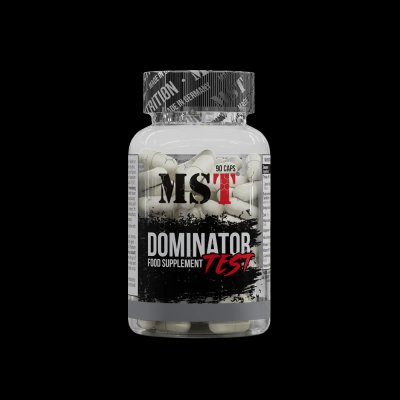 MST Dominator Test€28.90 In stock 90caps — all with clearly listed ingredient amounts.
Honest Verdict
Testosterone boosters are not fraudulent, but they are frequently oversold. The best-case scenario is a modest restoration of sub-optimal hormone levels in athletes with specific deficiencies or in high-volume training phases. For most healthy, well-nourished athletes, the effect size is small and may not be perceptible. Treat them as a supporting tool rather than a primary performance lever.
FAQ
Are testosterone boosters safe for long-term use?
Ingredients like zinc, DAA, and tribulus are generally considered safe at recommended doses for periods of several months. There is less long-term data beyond six months for some herbal extracts. Cycling — for example, eight weeks on and four weeks off — is a common precaution, though it lacks strong evidence as a requirement.
Do testosterone boosters work differently for men over 40?
Possibly. Natural testosterone decline accelerates after 35–40, so the relative hormonal deficit that these supplements target becomes more relevant with age. An older athlete is more likely to have sub-optimal levels that respond to supplementation than a 22-year-old in peak hormonal health.
Can testosterone boosters replace a proper training programme?
No. Training stimulus, progressive overload, adequate dietary protein, and sleep are the primary drivers of muscle development and hormonal health. No supplement compensates for deficits in any of these areas.
References
Cadegiani, F. A., & Kater, C. E. (2017). Hypothalamic-pituitary-adrenal (HPA) axis functioning in overtraining syndrome: findings from endocrine and metabolic responses on overtraining syndrome (EROS-HPA axis). Sports Medicine - Open, 3(1), 45. https://pubmed.ncbi.nlm.nih.gov/29222606/
Topo, E., Soricelli, A., D'Aniello, A., Ronsini, S., & D'Aniello, G. (2009). The role and molecular mechanism of D-aspartic acid in the release and synthesis of LH and testosterone in humans and rats. Reproductive Biology and Endocrinology, 7, 120. https://pubmed.ncbi.nlm.nih.gov/19860889/
Willoughby, D. S., & Leutholtz, B. (2013). D-aspartic acid supplementation combined with 28 days of heavy resistance training has no effect on body composition, muscle strength, and serum hormones associated with the hypothalamo-pituitary-gonadal axis in resistance-trained men. Nutrition Research, 33(10), 803-810. https://pubmed.ncbi.nlm.nih.gov/24074738/
Antonio, J., Uelmen, J., Rodriguez, R., & Earnest, C. (2000). The effects of Tribulus terrestris on body composition and exercise performance in resistance-trained males. International Journal of Sport Nutrition and Exercise Metabolism, 10(2), 208-215. https://pubmed.ncbi.nlm.nih.gov/10861339/



