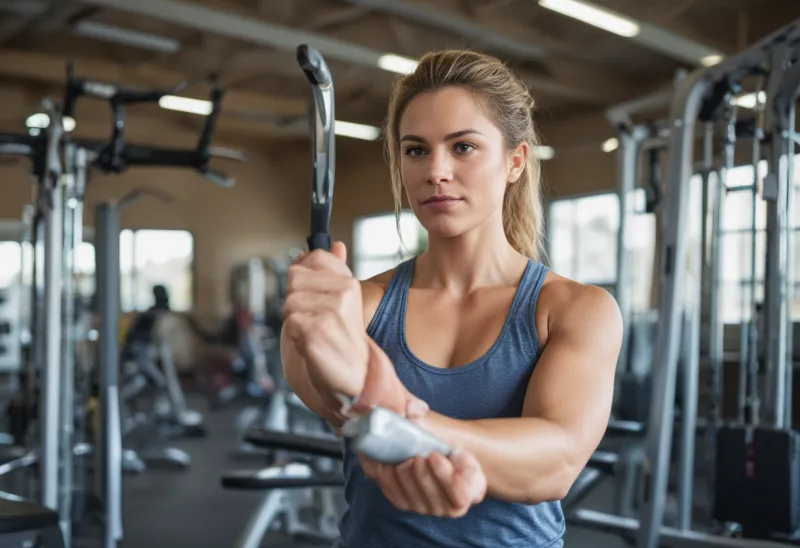
Does strength training actually build bone density in women?
Yes — and this is one of the rare cases where the honest answer is genuinely encouraging. Most things people try for bone health only slow the loss. Lifting heavy is one of the few interventions shown to actually increase bone mineral density in women who already have low bone mass. In the LIFTMOR trial, postmenopausal women with osteopenia or osteoporosis who did eight months of high-intensity resistance and impact training increased lumbar-spine bone mineral density by roughly 3%, with improved function and a strong safety record (Watson et al., 2018). For a tissue that usually drifts downward after menopause, going up a few percent is a big deal.
Building stronger bones after 40 — what's your next move?
Browse the rangeThat is the headline. Now let's expand the curiosities a real person types next: why bone falls after 40, why heavy beats light, how protein and vitamin D fit in, and what a sane first month looks like.
Why bone density falls — and why women feel it sooner
Bone is living tissue that constantly remodels. Up to about age 30 you build a peak "bone bank." After that, withdrawals slowly outpace deposits. For women, the drop in estrogen around menopause accelerates this — which is exactly why the over-40 window matters. The reassuring part: bone responds to mechanical stress. When a muscle pulls hard on bone, and when impact loads the skeleton, bone-building cells get the signal to lay down more material.
The key word is hard. Gentle movement maintains; meaningful load adapts. That's why walking, while wonderful for the heart, does little for spine and hip density on its own.
What the science actually says
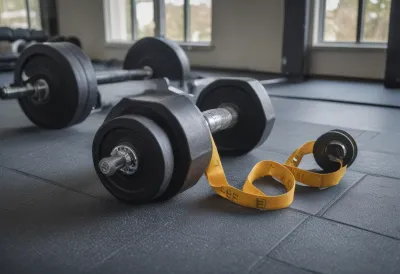
- Heavy resistance plus impact builds bone. The LIFTMOR protocol used barbell deadlifts, overhead press, back squats and jumping chin-ups at high intensity — and it raised spine BMD ~3% in eight months in women with already-low bone mass (Watson et al., 2018). Light, high-rep "toning" did not produce the same effect.
- Lifting adds muscle at any age. Resistance exercise adds roughly 1.1 kg of lean body mass in older adults over about 20 weeks, with more volume producing more (Peterson et al., 2011). More muscle means more pull on bone and better balance — fewer falls.
- Volume drives the adaptation. Muscle and strength gains scale with weekly training volume; each added weekly set contributes a small increment, and 10+ hard sets per muscle per week beats a token effort (Schoenfeld et al., 2017).
| Approach | Effect on bone density | Effect on muscle/balance |
|---|---|---|
| Walking only | Minimal for spine/hip | Low |
| Light "toning" (high reps, tiny weights) | Limited | Modest |
| Heavy resistance + impact | Can increase BMD ~3% | Strong |
The supporting cast: protein, vitamin D, and creatine
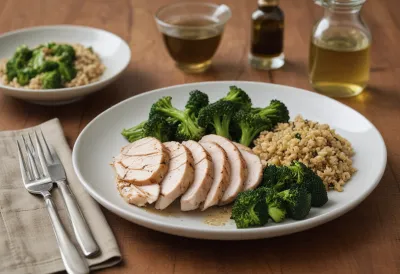
Training is the stimulus; nutrition is the raw material. Aim for adequate protein — roughly 1.6 g/kg/day maximises resistance-training gains in healthy adults, with the benefit plateauing around that point (Morton et al., 2018). Spreading it across meals helps. A quality powder such as ICONFIT Whey Protein 80 Strawberry 1kg or OstroVit 100% Whey Protein 700g Biscuit Dream makes hitting that target painless on busy days; browse the full range under protein powders.
Vitamin D matters because it supports normal muscle function and calcium handling, and northern-European winters make deficiency common. A daily D3 such as ICONFIT Softgel D3-Vitamin 4000 IU N90 or OstroVit Vitamin D3 + K2 90 tabs is a sensible base — see vitamin D. Creatine is worth a mention too: adding 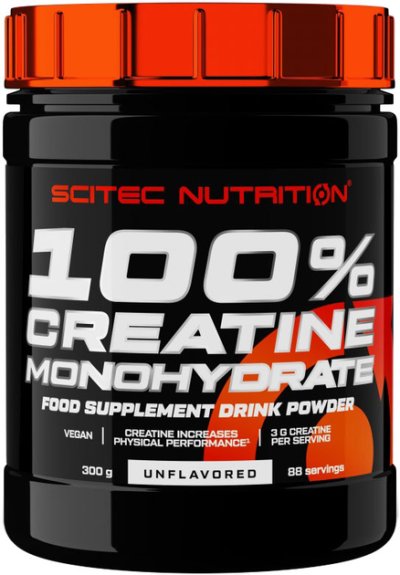 Scitec Creatine Monohydrate€25.90 In stock 300g to resistance training in older adults produced about 1.4 kg more lean tissue and greater strength than training plus placebo (Chilibeck et al., 2017), and it's well studied in women (Smith-Ryan et al., 2021). Explore creatine.
None of this replaces training — supplements support the work; they don't do it for you.
Practical takeaways: a sane first month
- Lift twice a week to start. Full-body sessions, 6–8 compound exercises (squat or leg press, hip hinge, row, press, carry).
- Go heavier than feels "ladylike." After learning form, work in the 6–10 rep range with weights that are genuinely challenging by the last 1–2 reps. Light pink dumbbells won't change your spine.
- Progress the load. Add a little weight or a rep when sets feel easy — the ACSM's progression principle for healthy adults.
- Add gentle impact if cleared by your clinician — heel drops, step-downs, low hops.
- Eat the protein, top up vitamin D, train consistently. Consistency over months is what moves a DXA scan.
MaxFit, based in Estonia, stocks the protein, vitamin D and creatine that support this kind of program; the lifting is on you, and it's worth it.
References
Watson, S. L., Weeks, B. K., Weis, L. J., Harding, A. T., Horan, S. A., & Beck, B. R. (2018). High-intensity resistance and impact training improves bone mineral density and physical function in postmenopausal women with osteopenia and osteoporosis: the LIFTMOR randomized controlled trial. Journal of Bone and Mineral Research, 33(2), 211–220. https://pubmed.ncbi.nlm.nih.gov/28975661/
Peterson, M. D., Sen, A., & Gordon, P. M. (2011). Influence of resistance exercise on lean body mass in aging adults: a meta-analysis. Medicine & Science in Sports & Exercise, 43(2), 249–258. https://pubmed.ncbi.nlm.nih.gov/20543750/
Morton, R. W., Murphy, K. T., McKellar, S. R., et al. (2018). A systematic review, meta-analysis and meta-regression of the effect of protein supplementation on resistance training-induced gains in muscle mass and strength in healthy adults. British Journal of Sports Medicine, 52(6), 376–384. https://pubmed.ncbi.nlm.nih.gov/28698222/
Chilibeck, P. D., Kaviani, M., Candow, D. G., & Zello, G. A. (2017). Effect of creatine supplementation during resistance training on lean tissue mass and muscular strength in older adults: a meta-analysis. Open Access Journal of Sports Medicine, 8, 213–226. https://pubmed.ncbi.nlm.nih.gov/29138605/
Schoenfeld, B. J., Ogborn, D., & Krieger, J. W. (2017). Dose-response relationship between weekly resistance training volume and increases in muscle mass: a systematic review and meta-analysis. Journal of Sports Sciences, 35(11), 1073–1082. https://pubmed.ncbi.nlm.nih.gov/27433992/
FAQ
Will lifting heavy make me bulky?
No. Hypertrophy scales gradually with training volume — roughly a fraction of a percent per added weekly set (Schoenfeld et al., 2017). Women lifting heavy gain strength, denser bone and better shape long before any dramatic size change, which most women never approach without years of dedicated effort.
Is it safe to start after 50 or 60?
Generally yes, and it's strongly worthwhile — the LIFTMOR trial ran a supervised high-intensity program in postmenopausal women with low bone mass with a strong safety record (Watson et al., 2018). Learn technique first, ideally with a coach, and clear any medical concerns with your doctor.
How long until I see a change in bone density?
Bone adapts slowly. Meaningful BMD change in the LIFTMOR study was measured at eight months (Watson et al., 2018). Strength and balance improve much sooner — often within weeks — which itself reduces fracture risk by preventing falls.