
What to Stack with Skin, Hair & Nails: Synergies & Conflicts
Skin, hair and nails supplements typically combine collagen peptides, biotin, silica, and zinc. Understanding which ingredients amplify each other — and which compete for absorption — helps you build a more effective daily stack.
Evidence-Based Synergies
Collagen + Vitamin C
Vitamin C is a required cofactor for the enzymes prolyl hydroxylase and lysyl hydroxylase, which stabilise collagen's triple-helix structure. Taking collagen peptides without adequate vitamin C may limit the fibroblast response. A randomised trial found that a supplement providing collagen peptides alongside vitamin C improved skin elasticity significantly compared with placebo after 12 weeks (Proksch et al., 2014). Products like OstroVit Collagen + Vitamin C 400g Ananass are formulated with this pairing in mind.
Biotin + B-Vitamins
Biotin is part of the B-vitamin family and shares metabolic pathways with riboflavin (B2) and pantothenic acid (B5). Ensuring general B-complex sufficiency maximises the activity of biotin-dependent carboxylase enzymes involved in fatty acid synthesis — essential for maintaining the lipid barrier of both skin and hair follicles. OstroVit Biotin Plus 100tabs delivers biotin alongside complementary micronutrients.
Zinc + Vitamin A
Zinc is necessary for retinol-binding protein synthesis, which transports vitamin A in the bloodstream. Zinc deficiency can therefore impair vitamin A activity even when dietary vitamin A is adequate. Ensuring adequate zinc supports the signalling cascades that maintain epithelial cell turnover in skin, hair follicles, and nails.
Marine Collagen + Hyaluronic Acid
Hyaluronic acid retains water in the extracellular matrix of the dermis. Combining hydrolysed marine collagen with hyaluronic acid has shown promising effects on skin hydration in several industry-sponsored and independent trials, though more large independent RCTs are still needed. 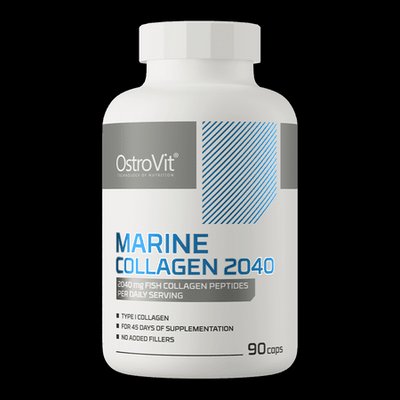 OstroVit Marine Collagen€13.90 In stock 2040mg 90caps and BIOTECHUSA Hyaluronic & Collagen 30 kapslit represent this combined approach.
Antagonistic Combinations
Zinc and Copper Compete
High-dose zinc supplementation suppresses copper absorption by inducing intestinal metallothionein, which binds copper preferentially. Copper is a cofactor for lysyl oxidase, the enzyme that cross-links collagen and elastin fibres. Chronic high-dose zinc (above roughly 40 mg/day) without copper co-supplementation can therefore paradoxically impair connective tissue quality.
Calcium Reduces Zinc and Iron Absorption
High calcium intakes — particularly from dairy or supplements — can inhibit non-haeme iron and zinc absorption when taken at the same meal. If you take a calcium supplement, spacing it at least two hours from zinc or iron-containing products is prudent.
Raw Egg White and Biotin
Avidin, a protein in raw egg white, binds biotin with very high affinity and blocks its absorption. Cooking denatures avidin. This interaction is rarely a practical concern for supplement users, but worth noting for anyone consuming large amounts of raw egg.
Timing Within a Stack
| Supplement | Best Timing | Notes |
|---|---|---|
| Collagen peptides | Before or with meals | Requires amino acid co-ingestion to drive synthesis |
| Vitamin C | With collagen | Maximises cofactor availability |
| Biotin | Any time, with food | Fat-soluble; small fat source improves absorption |
| Zinc | Between meals or at bedtime | Avoid with calcium-rich food |
| Hyaluronic acid | Morning or evening | No strong timing dependency |
Sample Stacks by Goal
Anti-ageing skin hydration: Marine or bovine collagen (5–10 g) + vitamin C (200–500 mg) + hyaluronic acid, taken once daily with a light meal.
Hair thickness and nail strength: Biotin (2.5–5 mg) + zinc (8–15 mg elemental, taken away from dairy) + B-complex.
Joint and connective tissue support: Collagen peptides + vitamin C + glucosamine/chondroitin/MSM complex.
You can explore the full category at maxfit.ee/et/category/nahale-juustele-ja-kuuntele.
What to Avoid
- Stacking very high-dose zinc (over 40 mg daily) without monitoring copper status.
- Taking collagen immediately after a high-fat, high-fibre meal if absorption optimisation is important — the amino acids absorb better on a relatively empty stomach.
- Using raw egg whites as a protein source alongside high-dose biotin.
- Combining multiple high-dose fat-soluble nutrients (vitamin A + vitamin E at gram doses) without medical supervision — fat-soluble vitamins accumulate.
FAQ
Does collagen actually reach the skin?
Hydrolysed collagen peptides are absorbed as di- and tri-peptides and free amino acids, and some peptide fragments — notably Pro-Hyp — have been detected in blood and are thought to stimulate fibroblasts. A meta-analysis of RCTs found oral collagen supplementation improved skin hydration and elasticity versus placebo (de Miranda et al., 2021).
Is biotin alone enough for hair growth?
Biotin deficiency does cause hair thinning, but true deficiency is uncommon in healthy adults. Most people with normal hair loss will not see dramatic effects from biotin alone. A broader approach addressing zinc, iron, protein intake, and thyroid function tends to be more useful.
How long before I see results from a skin and hair stack?
Collagen turnover in the dermis is slow. Most clinical trials use intervention periods of 8–12 weeks as a minimum before measuring outcomes. Expect at least two to three months of consistent supplementation before drawing conclusions.
References
Proksch, E., Segger, D., Degwert, J., Schunck, M., Zague, V., & Oesser, S. (2014). Oral supplementation of specific collagen peptides has beneficial effects on human skin physiology: a double-blind, placebo-controlled study. Skin Pharmacology and Physiology, 27(1), 47–55. https://pubmed.ncbi.nlm.nih.gov/23949208/
de Miranda, R. B., Weimer, P., & Rossi, R. C. (2021). Effects of hydrolyzed collagen supplementation on skin aging: a systematic review and meta-analysis. International Journal of Dermatology, 60(12), 1449–1461.
Solano, F. (2020). Metabolism and functions of amino acids in the skin. Advances in Experimental Medicine and Biology, 1265, 187–199. https://pubmed.ncbi.nlm.nih.gov/32761577/



