
Resveratrol for Vegans & Vegetarians
Resveratrol is a stilbene polyphenol naturally produced by plants in response to stress, injury, and infection. It occurs in the skin of red grapes, in berries such as blueberries and cranberries, and in particularly high concentrations in Japanese knotweed (Polygonum cuspidatum), which is the primary commercial source for supplements. Because all these sources are plant-derived, resveratrol is naturally suited to vegan and vegetarian diets.
Why Plant-Based Diets May Find Resveratrol Relevant
Vegans who consume a wide variety of fruits, particularly red and purple berries, already obtain resveratrol through their diet. However, the amounts achievable through food alone are typically modest relative to doses used in clinical research. For those interested in concentrated polyphenol support, a resveratrol supplement may complement dietary intake.
Resveratrol's primary pharmacological interest lies in its activation of sirtuin enzymes (particularly SIRT1) and its effects on AMPK pathways, which are associated with cellular energy sensing and longevity research. It also has antioxidant properties, acting as a direct scavenger of reactive oxygen species.
For plant-based athletes, the antioxidant and potential anti-inflammatory properties of resveratrol are the most practically relevant angles, though the clinical evidence for exercise-specific outcomes in humans remains mixed.
Vegan-Friendly Sources
Most commercial resveratrol supplements are produced from Japanese knotweed extract, which is entirely plant-derived. As with other capsule supplements, the key vegan check is the capsule shell: gelatin (animal-derived) versus HPMC, pullulan, or similar plant-based alternatives.
Red wine is sometimes cited as a dietary source, but its resveratrol content per serving is too variable and modest to reliably deliver pharmacologically relevant amounts, and alcohol itself introduces other considerations.
Dose Targets
Human clinical trials have used a wide range of resveratrol doses. A study by Timmers et al. (2011) used 150 mg of resveratrol per day and found metabolic improvements in obese men, including changes in mitochondrial function markers. Other trials have used doses ranging from 250 mg to 1000 mg per day.
Bioavailability is a notable challenge: resveratrol is rapidly metabolised and its effective systemic exposure is limited. Formulations combining resveratrol with piperine (black pepper extract) may improve absorption, though this should be checked for vegan compatibility. Micronised or liposomal forms are also explored for improved delivery.
What to Combine With Resveratrol
Resveratrol is frequently combined with other polyphenols for broader antioxidant coverage:
- Quercetin: another flavonoid with complementary sirtuin and antioxidant activity
- Pterostilbene: a methylated analogue of resveratrol with potentially superior bioavailability
- Vitamin C: general antioxidant synergy and potential to spare resveratrol from oxidation
At maxfit.ee the resveratrol category features NOW Natural Resveratrol 200mg 60 Veg. Capsules and OstroVit Resveratrol VEGE 60 vcaps -- both in plant-based capsules and suitable for vegans. For quercetin pairing, 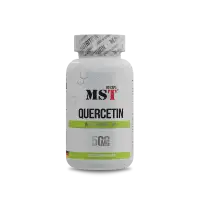 MST Quercetin Bromelain€26.90 In stock 60caps from the kvertsetiini category is a natural complement.
Choosing a Vegan Resveratrol Product
| Criteria | What to look for |
|---|---|
| Source | Polygonum cuspidatum (Japanese knotweed) extract |
| Trans-resveratrol % | Higher trans:cis ratio is preferred (trans form is more bioactive) |
| Capsule | HPMC or pullulan (vegan) |
| Dose | Clearly stated mg of resveratrol per serving |
| Additional ingredients | Piperine or liposomal form may improve absorption |
References
Timmers, S., Konings, E., Bilet, L., Houtkooper, R. H., van de Weijer, T., Goossens, G. H., Hoeks, J., van der Krieken, S., Ryu, D., Kersten, S., Moonen-Kornips, E., Hesselink, M. K., Kunz, I., Schrauwen-Hinderling, V. B., Blaak, E., Auwerx, J., & Schrauwen, P. (2011). Calorie restriction-like effects of 30 days of resveratrol supplementation on energy metabolism and metabolic profile in obese humans. Cell Metabolism, 14(5), 612-622. https://pubmed.ncbi.nlm.nih.gov/22055504/
Baur, J. A., & Sinclair, D. A. (2006). Therapeutic potential of resveratrol: the in vivo evidence. Nature Reviews Drug Discovery, 5(6), 493-506. https://pubmed.ncbi.nlm.nih.gov/16732220/
FAQ
Is resveratrol vegan?
Yes -- resveratrol is extracted from plant sources, primarily Japanese knotweed. Always verify the capsule shell is plant-based (HPMC or pullulan) and check for animal-derived excipients.
Does resveratrol actually extend lifespan?
The longevity research on resveratrol is compelling in animal models, but human evidence remains preliminary. It is best regarded as a polyphenol with antioxidant and metabolic properties rather than a proven longevity intervention.
What dose of resveratrol should I take?
Clinical trials have used doses ranging from 150 mg to 1000 mg per day. The optimal dose for any specific outcome is not firmly established. Products with 200-500 mg of trans-resveratrol per serving cover the range most commonly studied.



